

What if a shelf’s quietest focal point were a small sphere holding a fleeting moment of summer? Choosing decorative spheres for shelves can feel uncertain: the shape must sit gently among books and treasured objects, without making the arrangement feel crowded. A preserved dandelion offers more than form. It carries the memory of a season and the beauty of a wish once released to the wind.
A meaningful object needs room around it. A little breathing space lets the eye rest and gives the sphere a calm presence of its own. Its rounded form softens a shelf’s straight lines, while changing light can reveal the delicate seed head within.
This guide explores how scale, shape and light can help a botanical sphere find its place, and how a thoughtful arrangement can keep a shelf feeling open. It also considers why a Dandelion Sphere may mean more than a sculptural form: it is a fragment of nature, held in time, and a quiet reminder to pause in the everyday.
Key Takeaways
- Notice how the shelf’s books, objects and open spaces shape the feeling you want to create.
- Choose a sphere whose form and visual weight sit comfortably among the pieces around it.
- Let light and breathing room reveal the botanical detail without crowding the shelf.
- When arranging decorative spheres for shelves, begin with one focal point, then edit nearby objects with care.
- A Dandelion Sphere can bring memories of childhood wishes and changing seasons into an everyday setting.
Why a botanical sphere can change the feeling of a shelf
A shelf gathers the small evidence of a life: books returned to favourite passages, keepsakes from a journey, and objects chosen because they speak to us. Together, they form a quiet portrait of memory and taste. Among decorative spheres for shelves, a botanical sphere brings two forms together: the calm curve of an orb and the delicate structure of nature, preserved in time.
A botanical sphere is a rounded art object that brings a preserved natural form into view. It can change the rhythm of a shelf without requiring a complete rearrangement. Set among familiar things, one considered focal point gives the eye somewhere to rest. The shelf feels composed not because it holds more, but because one meaningful object has been given space.
What makes a sphere feel at home amongst books and keepsakes?
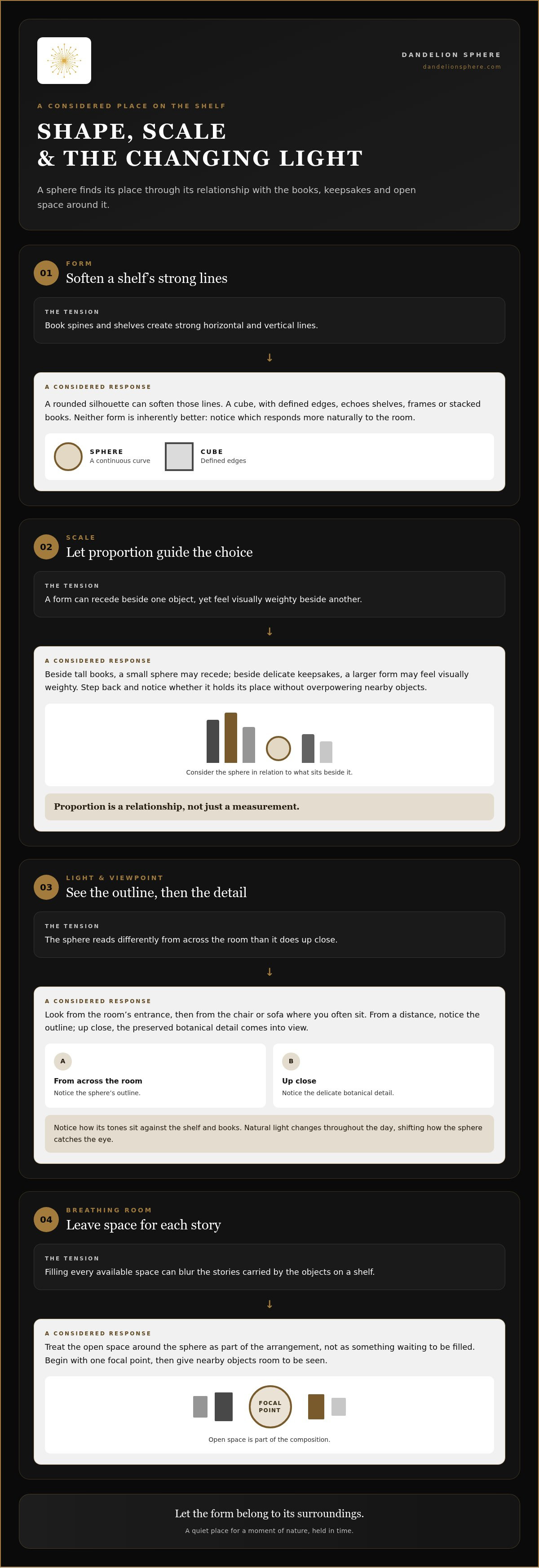
Book spines and shelves create strong horizontal and vertical lines. A rounded silhouette softens them, adding gentle contrast without disrupting their order. Let surrounding colours and shapes guide its position: a sphere might echo a pale book spine or provide a quiet counterpoint to dark wood. Consider the feeling of nearby keepsakes, too. The right place is where the objects can sit together without competing for attention.
A single botanical object can draw the eye precisely because it isn’t repeated everywhere. In visual art, principles of composition describe how form and space work together. On a shelf, the same idea applies: treat the open space around the sphere as part of the arrangement, not as something waiting to be filled.
A shelf as a small portrait of the people who live there
A considered shelf can hold curiosity, affection and a connection to the natural world. A favourite book may recall a past season of life; a botanical form may bring to mind a childhood wish, a garden or a passing summer. Choose objects for the associations they carry, then leave enough room for each to be seen. Filling every available space can blur those stories together.
A Dandelion Sphere holds the delicate form of a real dandelion, making a fleeting moment tangible. Placed with intention, it doesn’t need to dominate the shelf. It can simply be there: a quiet reminder that nature’s beauty is often brief, and that some moments are worth keeping close.
How shape, scale and light guide a sphere’s place on a shelf
A shelf is a small landscape of edges, intervals and changing light. Before choosing a form, notice what is already there: the upright rhythm of books, the outline of a vessel and the open space between objects. The right choice doesn’t simply fill a gap. It brings balance to what surrounds it.
Sphere or cube: which form suits the shelf?
A sphere has a soft, continuous outline that can ease the strong geometry of book spines and shelving. A cube feels more architectural, with defined edges that echo shelves, frames or stacked books. Dandelion Cubes offer this alternative form. Neither is inherently better; consider which responds more naturally to the lines already present in the room.
Scale is a relationship, not just a measurement. Beside tall books, a small sphere may recede; beside delicate keepsakes, a larger form may feel visually weighty. Step back and notice whether it holds its place without overpowering nearby objects. Proportion matters more than filling shelf space: the right form belongs to its surroundings, not merely to an empty spot.
Reading scale, colour and light in the room
Look at the shelf from the room’s entrance, then again from the chair or sofa where you often sit. From a distance, the sphere’s outline may matter most; up close, the preserved botanical detail comes into view. Notice how its tones sit against the shelf and books. Natural light changes throughout the day, shifting how the sphere catches the eye. Leave enough surrounding space for its detail to be seen.
The National Design Guide offers a wider perspective on how form, materials and nature contribute to considered design. At home, the same thoughtfulness can guide a shelf: choose a piece that feels in conversation with the room, rather than one that makes the room compete with it.
Collecting is also a way of making meaning through careful choice. A botanical sphere might sit beside books gathered over years, or stand alone as a small record of nature’s passing seasons. For further reflections on collecting and considered botanical display, explore the journal.
When the shape and scale feel settled, let the light and open space complete the composition. To spend time with the forms themselves, view the Dandelion Spheres and Cubes.
Botanical spheres and other shelf objects: choosing what belongs
A shelf can hold many kinds of meaning. Books invite us into other lives; framed art preserves a view or a face; vessels bring the quiet presence of useful forms. A botanical sphere offers a different kind of attention. Within its rounded outline, the delicate structure of a dandelion speaks of open fields, childhood wishes and a season that has passed.
There needn’t be a hierarchy among these objects. Ask what each brings to the arrangement. A favourite book may hold a memory of reading aloud. A small framed picture may recall a place. A vessel may be beautiful through its daily purpose. The sphere invites contemplation: a nature-inspired collector’s piece for someone drawn to the detail and symbolism of the natural world.
When a botanical sphere is the right focal point
Choose a sphere if you want the shelf to carry a quiet connection to nature, rather than another purely functional object. It can sit among familiar books and keepsakes; there’s no need to begin again or restyle every level. If decorative spheres for shelves feel too prominent in your room, first give one a little open space. Moving a nearby book or small object aside can make its presence feel considered rather than imposing.
Let the arrangement show you whether it belongs. If your attention returns naturally to the botanical detail, while the books and other pieces remain part of the whole, the balance may already be right. If the sphere competes with a cherished photograph or artwork, try another position before deciding it doesn’t suit the shelf.
When a simpler arrangement feels more considered
Sometimes the shelf doesn’t need another object. Remove a few pieces and pause. Notice which ones you miss, which stories feel important, and whether the remaining space brings a sense of ease. A shelf can be personal without holding something on every level; a single book, vessel or framed image may be enough to preserve its character.
Personal meaning can shape what we choose to keep close or give to someone else. For a gentle reflection on that thought, read the poetry of choosing a botanical gift. Whether the shelf holds a sphere or remains deliberately spare, let each object earn its place through the memory, curiosity or quiet pleasure it brings.
How to arrange a botanical sphere on a shelf with intention
Begin not by adding, but by making a little room. Objects can gather on a shelf almost without our noticing, until the eye has nowhere to rest. Arranging a botanical sphere is an invitation to pause, clear a small space and see the shelf anew.
Begin with space, then build a quiet composition
Temporarily move aside the objects around the place you have in mind. Set the sphere where it can be seen but won’t interrupt how you use the shelf. Then return a few pieces at a time. A book might bring a complementary colour; a keepsake might carry a memory worth placing nearby. Leave out anything that makes the arrangement feel crowded.
Clear a small area, place the sphere, then return only the objects that bring balance or meaning. This gives you a calm starting point, rather than asking you to work around visual clutter. Keep visible space around the sphere so its outline remains clear and its fine botanical detail can be noticed. Decorative spheres for shelves needn’t be surrounded by a grouping; sometimes a single object, with open space beside it, feels most at home.
Let the shelf belong to the room
Consider the shelf in its wider setting. A high shelf may be seen mostly from below; a low one may sit within the sightline of nearby furniture. Look from the doorway, then from the places where you usually sit. Does the sphere feel connected to the room’s visual rhythm, or does it call too loudly from its place?
Notice the room in its usual daylight, too. As the light changes, the sphere may shift from a gentle shape at a distance to a closer study of the preserved form. Make a small adjustment if a neighbouring object hides its outline or interrupts the view. Then step away once more. A composed shelf should feel considered from more than one angle, without making the rest of the room feel arranged around it.
For further reflections on the meeting of botanical art and the home, spend a moment with the Dandelion Sphere journal. To find a botanical focal point for your own shelf, explore the Dandelion Spheres and Cubes.
Choosing a Dandelion Sphere as a shelf display object
There is a familiar childhood ritual: finding a dandelion gone to seed, closing your eyes and sending a wish into the air. The seeds travel lightly. The moment does not last, yet its feeling can linger. A Dandelion Sphere brings the delicate form of a real dandelion into view as a botanical art object, holding a trace of that fleeting encounter with nature.
A fleeting moment, held in a place of its own
Set apart on a shelf, a preserved dandelion can offer a reason to pause between the ordinary moments of the day. Its fine seed head recalls open fields, summer afternoons and the quiet wonder of watching something fragile take flight. It is a moment suspended in time, not a claim that nature stands still, but a gentle acknowledgement of how beautiful its passing can be.
Taraxacum Orbis is the Latin name associated with Dandelion Sphere. The name lends a thoughtful note to a piece that begins with a familiar wildflower and invites us to look again. Among books and personal keepsakes, it can become a small point of stillness, with room around it for the botanical form to be seen.
Choosing a sphere that feels personally meaningful
Before choosing a place for one, consider what you’d like the shelf to remind you of each day. Perhaps it’s a childhood wish, a garden remembered or the turn from one season into another. Your answer can help you decide whether this is the right object for that particular space, and what you might place beside it, if anything.
A Dandelion Sphere is a collector’s piece rather than a conventional household product. Its purpose is not to serve a practical task, but to bring nature’s quiet artistry into view and give a fleeting form a lasting presence. If you’re drawn to decorative spheres for shelves, let personal meaning guide your choice, then give the object enough space to be appreciated without crowding the books and memories already there.
Some objects become part of a room through their usefulness. Others stay with us because of what they call to mind. A preserved dandelion can hold both a memory and a question: what wishes, seasons or small wonders would you like to keep close?
Explore the botanical spheres in the Dandelion Sphere collection.
Let a quiet focal point find its place
A shelf feels most like home when its objects are chosen with care. Consider how a sphere’s rounded form sits beside books and familiar keepsakes, how its scale relates to the space, and whether daylight reveals its delicate detail. Leave a little room around it. The pause is part of the arrangement.
Choosing decorative spheres for shelves is also a choice about meaning. Each Dandelion Sphere features a real preserved dandelion, a fleeting trace of nature that may recall childhood wishes or the turning seasons. As collectible botanical art, it can bring a quiet connection to the natural world into everyday life. Dandelion Cubes offer another form, with a more architectural presence.
Let the shelf remind you of something worth keeping close. If a botanical sphere feels at home in that space, explore the botanical spheres. Give your chosen piece room to breathe, and let its small moment of wonder accompany the days ahead.
Frequently Asked Questions
Is a sphere a good choice for a shelf?
Yes. A sphere can bring a gentle focal point to a shelf, especially among books and objects with straight edges. Its rounded outline softens the arrangement without requiring every nearby piece to change. Dandelion Spheres feature a real preserved dandelion, a small detail that can invite a moment of pause. Leave visible space around it so its form can be appreciated.
How do I choose the right sphere for a bookshelf?
Choose a sphere that feels in proportion to the shelf and the books beside it. A small form may disappear beside tall, visually weighty volumes, while one that dominates the shelf can draw attention away from everything else. Consider the surrounding colours, shapes and personal associations, then view the arrangement from the doorway and nearby seating. The right choice should feel connected to the room, not simply placed in an empty space.
Can I place a botanical sphere beside books and other objects?
Yes. A botanical sphere can sit beside books, framed art or a keepsake, provided each piece has room to be seen. Try pairing it with a few objects that share a colour, shape or personal meaning, then remove anything that makes the grouping feel crowded. The sphere needn’t stand alone, but its delicate botanical detail is easier to notice when neighbouring pieces don’t compete for the eye.
Where should I place a sphere on an open shelf?
Place it where its outline is visible and it won’t block books or items you reach for often. An open area beside a short stack of books can give the sphere a quiet presence, while a position near a framed image may make the grouping feel more personal. Check the view from the room entrance and your usual seat, and notice how natural daylight falls across the shelf.
Should I choose a sphere or a cube for shelf display?
Choose according to the shapes already present in the room. A sphere has a soft, continuous outline that can ease the straight lines of shelves and book spines. A cube has a more architectural presence and may echo frames or stacked books. Dandelion Sphere offers both Dandelion Spheres and Dandelion Cubes. Consider which form feels more at ease with your shelf, rather than treating either as the better choice.
How can I make a small shelf feel less crowded?
Begin by removing a few objects, then pause before adding anything back. Keep the pieces that matter most or bring a welcome contrast in shape or colour, and allow some shelf space to remain open. If you choose a sphere, give it a clear place rather than surrounding it with many smaller items. A more restrained arrangement can help each book and keepsake feel considered.
Disclaimer
The content on this website is provided for inspiration and informational purposes only. Articles reflect the philosophy and storytelling of Dandelion Sphere and are not intended as professional advice. While every effort is made to ensure accuracy, no guarantees are given regarding completeness or current applicability.


