

What if the purest remedy for a fractured workday isn't another digital timer, but an encounter with absolute stillness? Modern desks so often accumulate quiet agitation. Caught between relentless notifications and uninspiring, disposable plastic novelties, our attention splinters across screens until mental fatigue settles in. We instinctively search for calming desk objects to soothe our sensory overload, yet so many workplace items merely mimic the very distraction we long to escape.
You already recognise that deep clarity requires something far gentler. It asks for a pause, a breath, and a tactile return to the natural world. In this guide, you will discover how contemplative, nature-inspired pieces transform demanding work environments into sanctuaries of quiet focus. We explore how selecting a singular botanical art object anchors your awareness, elevates your desktop aesthetics, and restores a timeless sense of poise to the hours you spend creating.
Key Takeaways
- Understand how authentic calming desk objects replace restless screen fatigue with an intentional sanctuary of quiet clarity.
- Discover the sensory power of natural fractal forms and cool surfaces to gently interrupt cycles of mental overwhelm.
- Compare botanical, mineral, and kinetic pieces across sensory depth to curate an enduring focal point rather than a temporary diversion.
- Master a four-step ritual for positioning translucent pieces within peripheral daylight, inviting effortless moments to pause and breathe.
- Explore the timeless poetry of Taraxacum Orbis, where a fleeting dandelion seed head is held forever in crystalline stillness.
The Architecture of Stillness: Why Modern Workspaces Demand Calming Desk Objects
Modern work unfolds within a flicker of light. We inhabit endless digital corridors, moving between urgent messages, shifting spreadsheets, and demanding deadlines. Our attention fractures. The mind longs for an anchor. This is why calming desk objects have quietly transitioned from simple accessories into vital sanctuaries of quiet focus. True calming desk objects are not mere trinkets; they are intentional, tactile focal points that invite us to pause, breathe, and gather our thoughts.
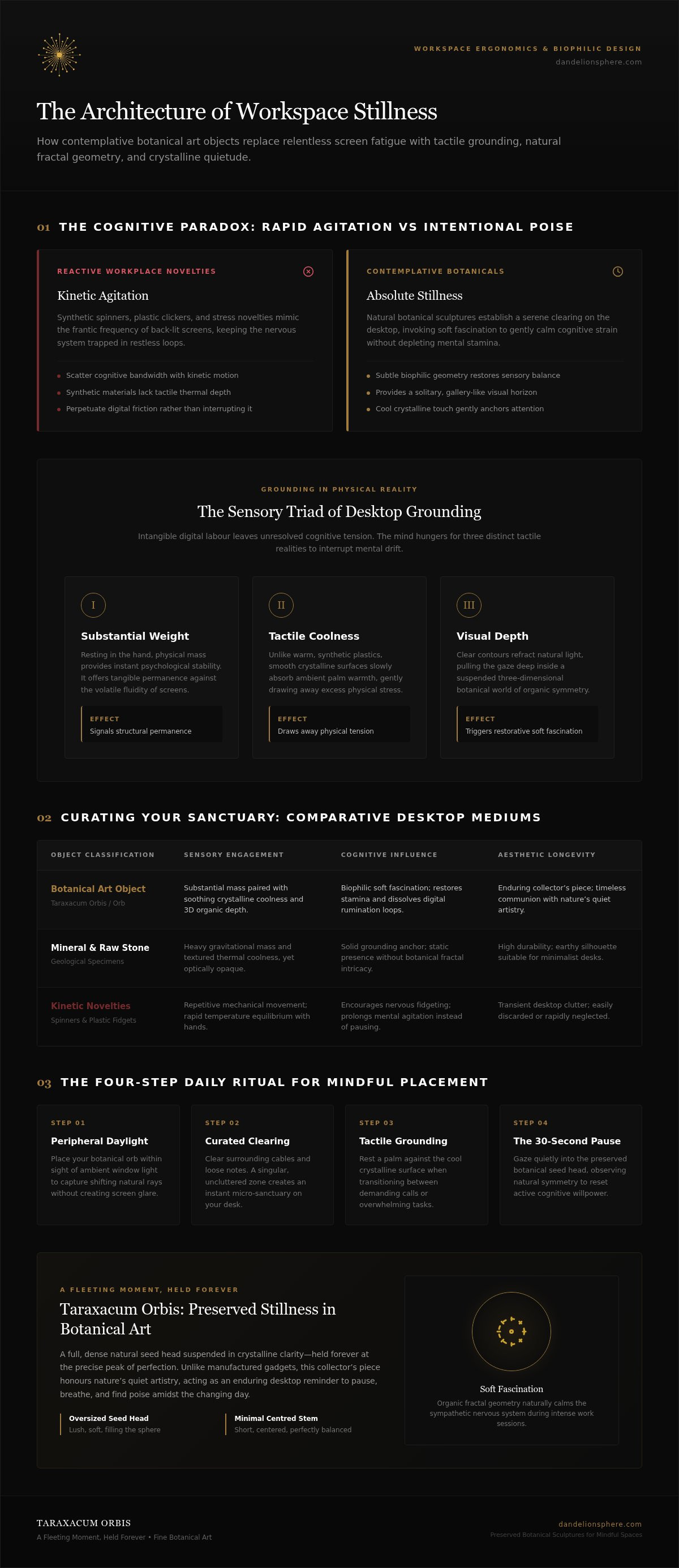
Many contemporary workspaces rely on noisy plastic spinners or mechanical clickers to manage restless energy. Yet these items often introduce frantic kinetic agitation into an already overstimulated environment. They mimic the rapid pace of the screen. In contrast, contemplative pieces offer absolute poise. By honouring natural geometry, they soothe the central nervous system through biophilic harmony, turning a busy desk into a place of quiet reflection.
Digital Fatigue and the Need for Tangible Anchors
Intangible digital labour leaves an unresolved cognitive tension. We complete hours of complex work without ever touching a single outcome. The mind hungers for weight, permanence, and texture. Resting your palm against a cool, smooth, stationary surface provides instant sensory grounding. As an applied expression of Mindfulness, a physical desktop anchor interrupts mental drift, offering a serene tactile presence that gently pulls wandering thoughts back into the current breath.
Visual Rest: Creating a Micro-Sanctuary on Your Desk
Glancing away from back-lit monitors toward a quiet, harmonious silhouette gives your eyes immediate relief. Chaotic desk clutter scatters cognitive bandwidth, whereas a single, refined artistic focal point establishes an oasis of order. Consider your desktop a curated landscape. Introducing a solitary botanical art object creates an intentional clearing, a peaceful visual horizon that sustains patience, protects focus, and lends your daily environment a hushed, gallery-like poise.
Tactile Anchors and Visual Solace: How Contemplative Objects Restore Focus
Rumination traps attention in narrow loops. When an intricate project stalls or an inbox overflows, thoughts circle endlessly. Breaking this mental spiral requires an immediate sensory reorientation. Instead of reaching for synthetic stress balls that encourage frantic fidgeting, contemplative calming desk objects gently re-engage our senses. Their unyielding stillness invites presence rather than agitation.
A profound shift occurs when you introduce genuine organic patterns to your workspace. The natural geometry found within wildflowers and botanical structures elicits what environmental psychologists term soft fascination. This spontaneous, gentle visual engagement calms our nervous system without draining active willpower. Clinical research shows that regular mindfulness can support both mental and physical well-being, and taking a deliberate thirty-second pause to admire crystalline botanical symmetry acts as an accessible, everyday reset for sustained creative stamina.
The Biophilic Connection: Inviting Nature to the Workspace
Humanity carries an inherent biological longing for organic flora and raw earth. In windowless or technology-dense settings, this absence manifests as subtle mental weariness. Preserved seed heads capture nature's quiet artistry, offering an enduring communion with the cycles of the outdoors. They become quiet reminders of impermanence, lending a sense of grace to your everyday desktop environment.
Weight, Texture, and Temperature: The Sensory Triad
True grounding requires an interplay of three physical sensations: mass, texture, and thermal response.
- Substantial weight: A solid piece resting in the hand provides immediate psychological weight, signalling permanence and stability during moments of uncertainty.
- Tactile coolness: Unlike warm plastic, smooth crystalline surfaces draw away excess physical tension as they slowly absorb ambient palm warmth.
- Visual depth: Clear contours bend light, drawing the gaze past the immediate surface into a three-dimensional world of suspended botanicals.
You can discover reflective essays exploring this sensory balance within the journal, or curate your own peaceful working alcove by exploring the botanical collection.
Curating Your Workspace Sanctuary: Comparing Different Types of Calming Desk Objects
Surrounding yourself with calming desk objects requires discernment. A desktop is sacred territory. Every item positioned upon it either scatters concentration or anchors it. When evaluating contemplative companions for your daily environment, four essential criteria reveal their true value: sensory depth, aesthetic refinement, physical durability, and the quality of mental stillness they cultivate.
- Kinetic designs: Offer active motion, yet the continuous movement often introduces visual restlessness into shared offices.
- Raw minerals and timbers: Deliver organic textures, though opaque stones can lack visual depth and light interaction.
- Botanical art objects: Suspend a fleeting natural moment in pristine clarity, providing silent balance and visual rest.
Those seeking an intentional focal point may explore the collection to discover pieces that celebrate this quiet elegance.
Kinetic Sculptures Versus Still Artistic Pieces
Spinning brass tops, balance pendulums, and shifting sandscapes promise soothing distraction. In quiet moments, their rhythmic arcs hold a fleeting charm. Yet perpetual motion often invites nervous tracking. The eye darts after the turning metal; the hand reaches out to spin it once more. Motion creates anticipation. Stillness creates quiet. A motionless, sculpted piece asks for nothing. It merely exists, offering visual poise without demanding your active participation.
Natural Minerals, Carved Woods, and Botanical Spheres
Natural materials bring an undeniable warmth to clinical work surfaces. Polished walnut blocks and rough mineral geodes feel grounded, yet their visual forms remain completely static. They do not hold light. In contrast, a crystalline botanical sculpture captures a fragile whisper of summer, holding delicate wildflower pappus in perpetual balance. The translucent sphere bends morning sunlight across your work surface, transforming simple ambient illumination into a quiet dialogue between nature and architecture. It becomes a memory made tangible, resting peacefully beside your pen.
Mindful Placement: How to Integrate Calming Desk Objects Into Daily Work Rituals
An intentional object requires an intentional home. Simply placing quiet pieces amongst scattered stationery diminishes their restorative power. To function as genuine anchors of clarity, calming desk objects must live in harmony with your natural workflow, situated where sightlines rest without competing with active tasks.
Consider this four-step choreography for desktop positioning:
- Clear a perimeter: Leave a hand span of empty space around the piece, giving the eye immediate breathing room.
- Map the non-dominant flank: Rest the sculpture opposite your writing hand to avoid accidental knocks during urgent typing.
- Chart the sunlight: Position the piece where natural side-lighting captures internal contours without casting harsh screen glare.
- Align with natural pauses: Ensure it sits within your gentle peripheral arc, approximately thirty degrees off direct screen focus.
Lighting, Sightlines, and Peripheral Harmony
Light changes everything. Position a botanical orb where morning warmth or late-afternoon sunbeams filter through a nearby window. The luminous interior geometry acts as an optical sanctuary. When eyes grow tired from back-lit text, shifting focus slightly outward allows tired ocular muscles to soften. Keeping the immediate perimeter bare preserves this tranquil clearing, turning your periphery into a wellspring of calm.
The Sixty-Second Pause: A Tactile Reset Ritual
Demanding schedules require conscious breathing spaces. When closing one call and preparing for the next, initiate a sixty-second ritual. Pick up your botanical sculpture, resting its cool weight in both palms. Inhale deeply for four counts, hold for four, and release for six. As breath flows, trace the delicate dandelion seed pappus suspended within the crystal-clear sphere. The intricate natural radial symmetry interrupts spinning thoughts, returning your attention to the present room.
You can discover deeper contemplative guidance within the studio journal, or curate your own mindful working sanctuary when you shop the curated pieces today.
Taraxacum Orbis: Experiencing Stillness with the Dandelion Sphere
Amidst the frantic pace of the modern workday, stillness remains elusive. It can't be forced; it must be welcomed. Amongst all calming desk objects, the Dandelion Sphere by Taraxacum Orbis stands apart as an enduring presence. It doesn't clamour for attention through ticking gears or restless motion. Instead, it offers a gallery of quietude, an exquisite botanical art object capturing an ethereal seed head suspended in crystalline clarity.
Here, nature's quiet artistry is held forever. A fragile sphere of gossamer filaments, preserved at the very threshold of flight. When professional demands surge, this timeless piece acts as a gentle compass, turning your workspace into a sanctuary of sustained poise.
A Fleeting Moment Held Forever
We all carry memories of summer meadows. A sudden breeze. A wish carried by the wind. In youth, a dandelion clock represented boundless curiosity and untamed afternoons. Through museum-quality botanical preservation, that fleeting moment escapes decay. Each delicate seed parachute remains perfectly aligned in flawless spherical symmetry, untouched by passing hours or drafts. It rests upon your table as a memory made tangible, a quiet fragment of summer held safe within the architecture of your room.
The Contemplative Collector’s Piece for Refined Desks
More than a desktop focal point, this botanical sculpture serves as an heirloom collector's piece. The tactile experience offers immediate solace. Lift the cool botanical orb from its place. Its reassuring heft grounds the senses, whilst the polished, curved exterior absorbs warmth from your hands. Pausing to examine its crystalline depth interrupts the cycle of fatigue, restoring perspective when choices feel overwhelming.
Discerning curators can explore the art collector piece guide to delve into the philosophy of botanical preservation. When you wish to transform your own daily environment with authentic calming desk objects, discover calming objects that bring nature's poetry into lasting focus.
Curating Your Desktop Sanctuary of Quiet Focus
A tranquil workspace doesn't emerge by accident. It is intentionally curated, one thoughtful choice at a time. By replacing restless screen fatigue and disposable novelties with authentic calming desk objects, you invite deliberate pauses into your daily rhythm. The intricate geometry of the natural world softens visual strain, whilst the grounding weight of crystalline forms restores mental clarity right when demands feel heaviest.
The Dandelion Sphere by Taraxacum Orbis stands as an enduring testament to this balance. As a fine botanical art object capturing authentic wildflowers in eternal symmetry, its pristine museum-quality clarity offers both reflective depth and sensory solace. Give your mind the gift of an enduring pause. Discover the calming stillness of the Dandelion Sphere and bring a whisper of timeless nature back to your everyday desk sanctuary.
Frequently Asked Questions
What makes an object calming for a desk?
An object brings calm when it provides a quiet refuge rather than competing for your attention. Authentic calming desk objects combine substantial physical weight, tactile coolness, and organic symmetry. They give overstimulated senses a place to rest. By reflecting the silent geometry of nature rather than artificial complexity, they soften the optical harshness of screens and gently anchor wandering thoughts during demanding workdays.
Can holding a tactile desk object genuinely lower workday anxiety?
Yes, engaging physical touch provides an immediate biological signal of safety. When stress accelerates mental chatter, lifting a solid, cool piece breaks the cognitive spiral. The thermal shift as crystalline material absorbs palm warmth, combined with grounding physical weight, activates sensory stillness. This simple physical interaction pulls attention away from digital tension and returns awareness to the physical present.
How do botanical art objects compare with mechanical fidget devices?
Botanical art objects cultivate deep stillness, whereas mechanical devices often perpetuate restless energy. A preserved botanical specimen asks nothing of the observer. Its natural geometry invites soft visual contemplation instead of continuous physical manipulation. Rather than masking workplace tension through mechanical clicking or spinning, it offers a peaceful sanctuary of quiet clarity that encourages deep, uninterrupted breathing.
Where is the ideal location to position a calming object on a busy desk?
The ideal placement sits within your gentle peripheral arc, roughly thirty degrees to the side of your primary monitor. Positioning the object on your non-dominant side prevents accidental disturbance during focused typing. Ensure it enjoys a dedicated halo of open space and receives indirect natural daylight, allowing your eyes to rest upon luminous organic symmetry between challenging tasks.
Is the Dandelion Sphere delicate to handle during daily pauses?
While the dandelion seed head suspended inside is extraordinarily fragile, the solid crystalline sphere protects it completely. The smooth exterior is designed for reassuring daily touch. You can lift, hold, and turn the botanical sculpture in your hands during reflective pauses without disturbing the gossamer seeds held in eternal stillness inside. It balances poetic delicacy with solid permanence.
How does natural sunlight affect crystalline botanical objects on a desk?
Gentle, indirect daylight transforms crystalline botanical pieces into living studies of illumination. As morning sun softens into late afternoon light, angled rays reveal the intricate radial architecture of the dandelion pappus. To preserve natural colours across decades, place the sculpture away from harsh, magnifying direct sunbeams, allowing soft ambient daylight to illuminate its timeless interior geometry.
Why are motionless objects considered more grounding than moving desk toys?
Motionless objects invite true presence because they do not demand sensory tracking. Kinetic toys inevitably trigger an involuntary cognitive impulse to watch, anticipate, and restart their motion. Movement creates subtle anticipation, whereas absolute stillness provides an unmoving anchor. Resting your gaze on stationary calming desk objects allows the central nervous system to settle, restoring focus without secondary distraction.
Disclaimer
The content on this website is provided for inspiration and informational purposes only. Articles reflect the philosophy and storytelling of Dandelion Sphere and are not intended as professional advice. While every effort is made to ensure accuracy, no guarantees are given regarding completeness or current applicability.


