

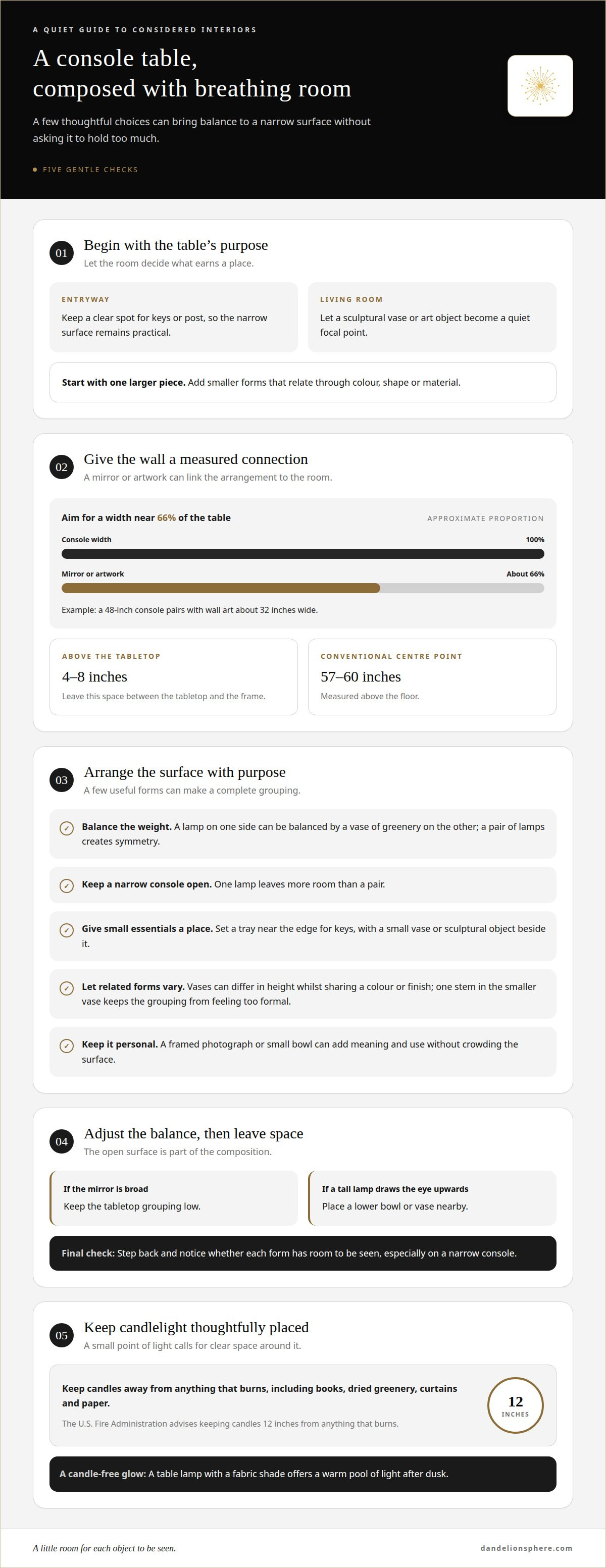
A console table comes together when each object has room to be seen. Choose decorative objects for a console table in materials and finishes that echo the table, then balance their heights and shapes rather than filling every space. If you hang a mirror or artwork above it, aim for a width around 66% of the table and leave 4 to 8 inches between the tabletop and the frame.
It’s easy to see why a console can feel difficult to style: it sits in view, yet its narrow surface leaves little room for excess. The answer is often not more objects, but a quieter sense of connection. This guide shows how to pair wood, metal, glass and other finishes, suit different interior styles, and arrange a few meaningful pieces with balance. Thoughtful choices help the display feel considered while leaving room for everyday life.
Key Takeaways
- Choose lamps, vases, trays and sculptures with the table’s scale and purpose in mind; let each piece earn its place.
- Echo a console’s material or finish in a few carefully chosen details, while contrasting textures can bring warmth and depth.
- Layer books with a small object to create a gentle change in height and a sense of collected character.
- Group pieces with varied shapes and heights, then leave breathing room so the display feels composed rather than crowded.
- Consider a botanical art object when you want to bring a fleeting moment from nature into the arrangement.
1. How Do You Decorate a Console Table?
Begin with the table’s purpose and the space around it. In an entryway, keep the narrow surface practical by reserving a clear spot for keys or post. In a living room, a sculptural vase or art object can become a quiet focal point. Choose one larger piece first, then add smaller forms that relate through colour, shape or material.
Next, consider the wall. A mirror or artwork above the table can connect the display to the room. Aim for a width near 66% of the table’s width. For example, a 48-inch console pairs with wall art about 32 inches wide. Place the piece 4 to 8 inches above the tabletop; a conventional centre point is 57 to 60 inches above the floor. A round mirror suits an entryway, reflecting light and offering a useful last glance before leaving.
Balance the objects across the table. A lamp on one side can be matched by a vase of greenery on the other, while a pair of lamps creates symmetry. On a narrow console, a single lamp leaves more room. Place a tray near the edge for keys, then set a small vase or sculptural object beside it. A vase set works best when the vessels differ in height but share a colour or finish. One stem in the smaller vase can keep the grouping from feeling too formal.
A framed photograph or small bowl can make the arrangement personal and useful without crowding the surface.
Candles add a soft point of light, but place them thoughtfully. The U.S. Fire Administration advises keeping candles 12 inches from anything that burns. Keep a lit candle well away from books, dried greenery, curtains and paper. For a candle-free glow, use a table lamp with a fabric shade. Its warm pool of light can make the entryway feel welcoming after dusk.
Finish by stepping back to assess the balance. If the mirror is broad, keep the tabletop grouping low; if a tall lamp draws the eye upwards, place a lower bowl or vase nearby. Leave space between objects, especially on a narrow console. This breathing room lets each form stand out, from a practical tray to the delicate line of a single stem.
2. Matching objects to console materials and interior styles
Let the console’s material guide your first choices. A dark wooden table pairs well with a ceramic vase, a softly aged frame or a brass-toned accent. Pale timber welcomes woven textures and understated botanical shapes. With metal, glass or stone, decide whether you want harmony or contrast. A matte vessel softens a polished surface, while a clear glass form keeps a weightier arrangement from feeling dense.
For a traditional console, combine pattern and detail with a light touch. Florals and stripes can sit together when they repeat a colour, such as soft blue in a framed print and striped vessel. A carved wooden frame or small brass bowl can add a sense of history. Keep one pattern quieter than the other so the arrangement feels collected, not crowded.
Modern and mid-century interiors often favour clean silhouettes. Pair a low, streamlined console with a rounded ceramic form, or set a sculptural glass object against a simple metal frame. Repeating one accent colour in a book cover and small vessel can connect the pieces. In a minimal room, leave the tabletop visible: the open space becomes part of the composition.
In a farmhouse or rustic room, let natural materials tell the story. A weathered timber console pairs easily with a stoneware vase, a wood-framed print or a bowl with an uneven edge. Keep colours close to the room’s quieter tones, then add one darker accent for definition. Minimal styling draws attention to the table’s grain, patina and small irregularities.
Colour can set the mood, too. In a coastal interior, light shades and natural elements create an airy, relaxed arrangement; try a sand-coloured vase beside a print of open water. In a living room with warm timber, muted greens and clay tones echo the natural palette. Repeat one colour in two places, such as a cushion and a vessel, to connect the display with the wider room.
Before settling on a combination, place each object on the table and view it from the doorway. Notice whether its finishes relate to nearby furniture, flooring or picture frames. If the room already holds strong patterns, choose calm forms; if its surfaces are plain, a more expressive piece can offer a gentle point of interest. For a nature-led accent, explore botanical forms for the home, where the fleeting shape of a seed head can meet wood, stone or glass.
3. Layering books and decorative objects
Books give a console display depth and a quiet sense of purpose. Stack two or three, then place a small object on top, such as a smooth stone or sculptural keepsake. The covers create a raised platform, while the object draws the eye. Choose books with similar shades or related subjects so their spines feel thoughtfully grouped rather than random.
Start with the largest book at the bottom. A broad art volume beneath a slimmer book creates a stable, stepped base. Turn the spines towards the room if their titles or colours add interest; face the page edges forward if the covers feel too busy. On a narrow tabletop, one compact stack adds height without taking over the available surface.
Books and magazines can bring personal meaning as well as colour. A travel guide to a favourite place, a book of poetry or a gardening magazine hints at the stories within a home. Select a few items with a shared thread, such as landscape photography or botanical illustration. The grouping then becomes a small window into the reader’s interests.
Texture matters as much as colour. A linen-bound book beside a glazed ceramic vase sets a soft, tactile cover against a reflective surface. For a quieter pairing, try a cloth spine with unglazed pottery; for contrast, place a dark hardback beside pale stone. Repeat a shade in a book cover and a nearby object to link the pieces without making them identical.
Patterns need breathing room. If a book cover has a bold floral print, keep the object above it simple, perhaps a plain sphere or small carved form. When the books are muted, a patterned cover or illustrated spine can become the focal detail. This measured contrast makes the arrangement feel layered rather than crowded.
Try the stack in place before adding anything else. Set two or three books slightly off-centre, then place a small object near one corner of the top volume. Leave the title visible and keep the object low enough not to hide the cover’s strongest detail. A slim magazine can sit beside the stack, while a ceramic vase at the opposite end adds height. The result has rhythm, texture and a lived-in feel.
4. Styling principles such as varied heights, grouping, and balance
A well-composed entryway table has a clear rhythm: a taller shape, a lower grouping and open space between them. Try a slender lamp beside a low bowl, then add a small ceramic piece near the centre. Varying heights guide the eye across the surface. Similar colours or materials connect the arrangement, even when the shapes differ.
How many objects should you put on a console table? For a minimalist display, two or three impactful objects can feel intentional; a group of three also gives the arrangement a simple structure. Let the table’s width and the objects’ scale guide your final choice, and leave enough bare surface for each piece to stand out.
Choose sizes in proportion to the console’s width, height and visual weight. A broad, low table can support a wider arrangement, while a slim entryway table suits compact pieces that don’t crowd its edges. Pair a taller object with lower forms, keeping the grouping in proportion to the table so no single piece overwhelms it.
Use symmetry as a starting point, not a strict rule. A mirror can create a visual centre: place matching objects on either side for a formal effect, or balance a lamp with a vase of similar visual weight. A weathered, wood-framed mirror leaning against the wall adds rustic character and can make the space feel larger.
For rustic styling, let the table’s grain and patina show. A stoneware vessel, a small stack of books and one natural form add texture without hiding the wood. Minimalist styling calls for even more restraint: two or three considered objects, such as a smooth bowl and a sculptural form, can hold attention through their shapes and spacing.
Common missteps include filling every gap, using several objects of the same height, or mixing unrelated finishes without a connecting detail. Edit the arrangement by removing one piece, then look again from the room’s entrance. If every object competes for attention, keep the strongest shape and let the open space provide contrast.
In homes with children or pets, favour stable, low-profile pieces and keep fragile or easily pulled objects out of reach. The CPSC’s Anchor It! campaign reports that 73% of child tip-over deaths involved climbing or force. Secure a console table against tipping, and avoid placing tempting, lightweight objects near its edge.
5. Decorative objects in different materials and finishes
Material affects how an object catches the light. A glazed ceramic vessel reflects it softly, while unglazed clay has a quieter, earthy presence. On a pale wooden console, either can bring gentle contrast: choose glaze for a brighter note or matte clay to echo the grain. In a living room, this small difference can shape the whole display.
Wood adds warmth, but its tone matters. Honey-coloured oak sits naturally beside woven fibres and warm stone, while dark walnut can ground lighter forms. Avoid matching every wooden surface exactly. Instead, repeat a related tone in a frame or bowl, then let another material, such as ceramic, distinguish the arrangement.
Metal brings a different kind of presence. Brushed brass adds a muted golden note beside dark timber; blackened metal gives pale stone a clearer outline. Polished finishes catch the eye, so one small metal accent may be enough. If the console already has metal legs, echo that finish in a modest object rather than adding competing reflections.
Glass brings visual lightness to a substantial surface. A clear vessel lets the colour and texture behind it remain visible, while coloured glass gives the display a deliberate focal point. Pair a transparent form with a tactile material, such as linen or rough stone. This contrast keeps the arrangement from feeling too smooth or uniform.
Stone and ceramic make an appealing counterpoint. A veined marble bowl beside a simple clay form combines natural pattern with a quieter surface. On a rustic console, a rough stone object can sit against weathered wood; in a modern interior, smooth stone and a clean-lined vessel feel more composed. In either case, one pronounced texture is easier to appreciate than several equally strong ones.
Consider finish as well as colour. A matte object absorbs light and can soften a glossy console, while a polished surface brings definition to unfinished timber. Choose a linking detail, such as warm undertones shared by a brass accent and a brown stone vessel. Then vary the textures rather than every colour, so distinct materials feel connected.
Before settling the display, place the objects together and view them from across the room. Notice whether the finishes compete, disappear against the console, or create a useful contrast. Remove the least connected piece, then let the remaining materials tell a clearer story. To bring a trace of the natural world into this mix, explore nature-led pieces for your display.
Taraxacum Orbis - Dandelion Sphere: Dandelion Spheres
Dandelion Sphere offers Dandelion Spheres for a console display that needs a touch of nature and stillness. Each botanical art object holds a real dandelion, capturing a fleeting moment in a clear, solid form. Set one beside books or against a quieter surface, where its delicate silhouette can be seen without competing with other pieces.
Choose a nature-inspired accent when your arrangement feels complete but lacks a personal focal point. Dandelion Cubes offer another form to consider, while a Dandelion Sphere can also make a meaningful gift for someone who treasures botanical beauty. Each brings a reminder of passing seasons into the home.
If you’d like to explore these botanical pieces for your space, contact Taraxacum Orbis - Dandelion Sphere.
Let the display become part of your story
A console can hold more than a pleasing arrangement. It can mark a threshold: a place to set down the day, notice the changing light or remember a season gone by. Let the decorative objects for a console table speak to something you cherish, rather than simply filling the surface. One meaningful presence can make an everyday passage through the home feel quietly personal.
As the months turn, allow the display to change with them. A remembered journey, a treasured book or a botanical form may each have its moment. The most lasting interiors aren’t fixed; they gather meaning over time through the objects we choose to keep close.
If you’re ready to find a nature-inspired piece for your home, explore the botanical collection. Let your next choice bring a little wonder into the everyday.
Frequently Asked Questions
How can you style a console table?
Start by noticing what happens around the table each day. If it sits near a front door, allow for bags, post and anything set down in passing. In a living room, consider whether it faces a sofa or a doorway, as this affects what deserves to be seen. First, clear the surface, then return only pieces suited to the location.
What decorative objects work best on a console table?
Choose decorative objects for a console table that suit the room’s needs as well as its mood. A small clock can help in a hallway; a dish for loose change works well beside the door. Framed photographs add a personal note, while a compact vase can bring a seasonal stem indoors. Choose objects you’ll enjoy seeing or using, rather than items chosen just to fill an empty spot.
How do you style a console table with decorative objects?
Consider the view from the room where you spend the most time. A console facing a sofa should look considered from a seated position, not just from the doorway. Check that picture frames stand securely and that accessories won’t catch on sleeves or bags as people pass. If you include a lamp, route its cable neatly towards the nearest socket.
How do you arrange console table objects using the rule of three?
Give three objects distinct purposes: one can be useful, one can hold a memory, and one can add a natural detail. For example, a small clock, a framed family photograph and a stem in a narrow bottle each bring a different quality. This gives the grouping a personal logic instead of making the objects feel like a set bought for the table.
How do you style a console table in an entryway without blocking walkways?
Consider movement through the entrance, including the door’s swing and the space needed to remove a coat or carry shopping. Keep the floor beneath the table clear if people often pass with bags or pushchairs. Avoid placing fragile pieces near the edge, where a hurried movement could knock them. The arrangement should keep the entrance easy to use at its busiest.
What lamps, mirrors and artwork pair well with console table styling?
Let a mirror reflect something pleasant, such as a garden view or favourite artwork, rather than a cluttered corner. Choose a picture whose subject suits the room, then consider how its frame relates to nearby doors or window frames. For a lamp, check where its light falls after dusk and whether the cable can reach a socket without crossing a walking route.
How do you style a console table for a modern, farmhouse or traditional home?
Use the room’s existing details as a starting point. In a modern home, notice shapes repeated in furniture and lighting; in a farmhouse interior, draw on objects with personal or well-used histories. In a traditional room, architectural details such as mouldings can guide your choice of frame or finish. Repeat one familiar detail on the console to connect it with the surrounding space.
Disclaimer
The content on this website is provided for inspiration and informational purposes only. Articles reflect the philosophy and storytelling of Dandelion Sphere and are not intended as professional advice. While every effort is made to ensure accuracy, no guarantees are given regarding completeness or current applicability.


