

What if your desk could hold a little more than the day’s work? Thoughtfully chosen desk accessories for nature lovers bring the changing seasons into view: a leaf’s quiet pattern, the warmth of wood, or a flower held in memory. Their presence can make a workspace feel more welcoming without crowding it.
Begin with one piece that draws your eye, then give it room to breathe. Keep everyday tools close at hand, and let natural textures and gentle colours soften the space around them. A clear surface matters as much as what rests upon it.
This guide explores nature-inspired pieces and the small choices that help them work together. Find ideas for balancing beauty with everyday use, arranging objects thoughtfully, and creating a calm corner that feels personal. The aim isn’t to bring the whole outdoors inside, but to make room for a quiet reminder of its poetry.
Key Takeaways
- Choose natural forms and textures that bring a sense of the seasons into your working day.
- Arrange accessories by purpose, leaving a gentle rhythm between practical items and personal details.
- Explore botanical and wildlife-inspired organisers to give everyday essentials a place of their own.
- Consider recycled or sustainably sourced materials when choosing pieces for a more nature-conscious workspace.
- Discover how a preserved dandelion can become a quiet botanical presence, held in time.
1. Benefits of nature-inspired desk accents
A small natural detail can change the feeling of a working day. A fallen leaf, a wooden pen holder or a smooth stone brings the outdoors into view, offering a quiet focal point between tasks. Chosen for its shape or texture, a single piece can make room for a moment of pause amid the day’s demands.
Light lends these details a changing beauty. A clear glass or crystal object catches the daylight; as the sun moves, reflections shift across the desk. Pale stone beside warm-toned wood brings a quiet contrast, adding depth without asking for attention. In this small corner of the room, the passing hours become part of the scene.
Natural details carry their own histories. The delicate shape of a leaf or the softened line of a small branch can recall a walk outdoors, a turning season, or a moment when the world seemed to slow. Such traces of nature bring a personal warmth to the workspace, making the everyday feel a little less ordinary.
Even the simplest natural pieces invite a gentler way of looking. Their fine marks and changing textures ask us to notice what might otherwise pass unseen. Set apart from the busy edges of the desk, they offer a quiet reminder of the beauty found in impermanence.
In the United States, nature-inspired desk pieces may bring to mind national parks, wildlife or native plants. A familiar bird or a leaf from close to home can connect an everyday workspace with a landscape held in memory. These small reminders make the outdoors feel near, even on an ordinary working day.
Whether shaped by nature or chosen for its natural character, a desk accent can feel most at home when it belongs to its surroundings. A wooden holder, a stone or a botanical detail each brings a different presence to the space. The loveliest choice is often the one that invites the eye to rest, and leaves room for thought.
2. Tips for arranging a nature-inspired workspace
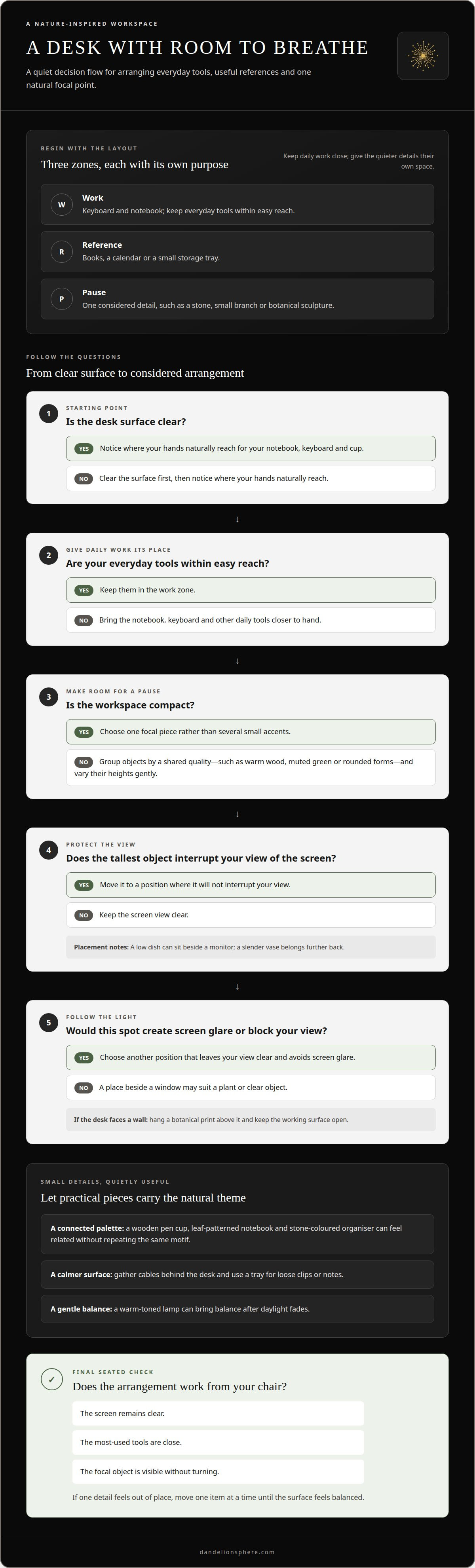
Begin with the desk itself, not the objects. Clear the surface, then notice where your hands naturally reach for a notebook, keyboard and cup. Keep daily tools within easy reach, and reserve a quieter corner for nature-inspired pieces. This simple division gives practical work its place while keeping a botanical detail in view.
Think in three zones: work, reference and pause. Place the keyboard and notebook in the work zone. Keep books, a calendar or a small storage tray in the reference zone. Let the pause zone hold one considered object, such as a stone, small branch or botanical sculpture. The arrangement feels composed because each piece has a purpose.
Position the tallest object where it won't interrupt your view of the screen. A low dish can sit beside a monitor, while a slender vase belongs further back. Group objects by a shared quality, such as warm wood, muted green or rounded forms. Vary their heights gently; matching every shape can make the desk feel like a display shelf.
Follow the light across the room before settling on a place. A spot beside a window may suit a plant or clear object, but avoid screen glare and anything that blocks your view. If the desk faces a wall, hang a botanical print above it and keep the working surface open. A warm-toned lamp can bring balance after daylight fades.
Let useful objects carry the natural theme. A wooden pen cup, leaf-patterned notebook and stone-coloured organiser can feel connected without repeating the same motif. Gather cables behind the desk, and use a tray for loose clips or notes. In a compact workspace, choose one focal piece rather than several small accents.
Before finishing, sit in your usual working position. Check that the screen remains clear, the most-used tools are close, and the focal object can be seen without turning. Move one item at a time until the surface feels balanced. For a lasting focal point, explore botanical nature collectibles that bring a quiet fragment of the outdoors to your workspace.
When choosing a finishing detail, decide what role it should play before browsing: a reminder of the outdoors, a soft colour accent or a small sculptural pause. Online marketplaces offer thousands of relevant results for nature-inspired desk accessories, so a clear preference can help narrow the options. Look for a piece that suits the scale and materials already on your desk, rather than buying several items to fill an empty space. A single well-chosen object can connect the work area to the rest of the room without competing with the tools you use every day.
Consider how an item will feel during an ordinary work session, not just how it looks when the desk is tidy. Choose a finish that is easy to clean, and make sure the object can be moved readily when you need more room. If you're unsure, leave the space bare for a while and notice whether a corner feels unfinished. Add one piece and view the arrangement from your chair. The best choice brings natural character while keeping the workspace comfortable, useful and easy to reset.
3. What are the best nature-inspired desk accessories for nature lovers?
The most meaningful desk objects bring the natural world into the quiet rhythm of work. The grain of wood, the shape of a leaf or the trace of a wildflower can offer a moment to pause amid the day’s tasks. These small reminders need not be elaborate; sometimes a natural form is enough to make an everyday space feel more considered.
Wooden organisers hold the small tools of the day, their grain lending a sense of warmth to a surface often given over to paper and screens. In the presence of wood, even the simple act of reaching for a pen can feel connected to the slower rhythms of the natural world.
Botanical stationery carries nature into the thoughts and notes that fill a working day. Ferns, wildflowers or leaves on a notebook can recall a walk or a change of season; a small botanical motif may be enough to let the imagination wander briefly beyond the desk.
Nature-themed desk sets can bring a gentle sense of harmony to everyday work. A sage-green accessories set contains 12 pieces, though the meaning of such objects lies less in their number than in the moments they accompany: a note taken, a thought gathered, a plan beginning to form. The natural world need not be far away while we work.
Small botanical displays offer a quiet focal point. A pressed flower, a smooth stone or a single dried stem can hold the memory of a season and bring stillness to a busy day. In their modest presence, these natural forms remind us that beauty often asks only for a moment of attention.
Natural materials bring their own quiet poetry to the working day. Cork and wood carry the traces of the living world into familiar routines, making even a small, well-used object feel connected to something beyond the desk. A botanical detail or natural texture can be a quiet reminder to pause, and to notice the fleeting beauty woven through ordinary life.
4. What are popular botanical and wildlife-themed desk organisers?
Botanical organisers often borrow their forms from leaves, seed heads and woodland plants. A file holder printed with fern fronds can keep loose papers upright, whilst a drawer insert patterned with oak leaves brings order to smaller supplies. These designs work best when the motif stays legible. Pair one patterned organiser with plain folders, rather than layering competing prints.
For pens and brushes, choose a stable pot with a single botanical detail. A carved leaf, fine vine pattern or muted floral illustration adds interest without hiding the object’s purpose. A wide opening suits frequently used pencils; narrower compartments keep scissors and rulers apart. Check that the base sits firmly, especially near a desk’s edge.
Wildlife themes offer a different kind of presence. Foxes, hares and kingfishers appear on pencil cases, clip holders and small storage boxes. Choose a familiar animal or one linked to a favourite landscape. A single illustrated fox can bring warmth to a work surface, while repeated animal motifs may make a small desk feel visually busy.
Vertical organisers help reclaim space. A tiered paper holder with a pressed-flower print separates letters, notebooks and documents without spreading them across the desk. Look for open sides if you need to see each category quickly. For a calmer arrangement, place current papers at the front and archive folders behind, keeping the working surface clear.
Small items need their own quiet order. A shallow dish shaped like a ginkgo leaf can hold clips, drawing pins or a memory card. A compartment box with a bee or butterfly illustration separates supplies more carefully. Keep tiny objects away from the keyboard, where they can slip between keys or disappear beneath papers.
Material and finish affect daily use. Wipeable surfaces suit organisers that hold ink pens or frequently handled tools. Unfinished wood may show marks more readily, whilst a smooth coated surface can be easier to clean. Match the organiser’s size to what it holds, then leave room beside it for writing and movement.
A thoughtful choice begins with one question: what needs a home? Choose a fern-patterned file holder for loose pages, a wildlife pencil case for portable tools, or a leaf-shaped dish for small essentials. Let the motif recall a garden, woodland walk or favourite bird. Then let the organiser serve its purpose quietly, bringing a little nature into the rhythm of work.
5. What eco-friendly desk accessories are made from recycled or sustainable materials?
Recycled paper makes useful desk essentials, from notebooks and folders to pen holders formed from layered sheets. Look for clear descriptions of the material, rather than relying on green colours or leaf motifs. A recycled-paper organiser suits letters and notes; a sturdy cover helps it withstand regular handling. Choose an item that replaces something you already use.
Cork offers another natural option. A cork desk mat can protect the surface beneath a keyboard, whilst a coaster helps prevent mug rings. Its warm, quiet texture pairs well with simple stationery. Check that the mat lies flat and fits the working area, leaving room for a notebook and mouse.
Reclaimed wood can give trays, pen rests and storage boxes a second life. Its grain and small variations make each surface distinct. For daily use, inspect the joins and edges, and choose a finish that feels smooth to the touch. A shallow reclaimed-wood tray can gather clips and keys without taking over the desk.
Bamboo is used for items such as pen cups, rulers and phone stands. Consider the whole object, not only its main material: a bamboo holder with unnecessary packaging may not suit your priorities. Look for specific information about its material and finish. A simple design is often easier to keep, use and pair with other belongings.
Recycled metal can appear in wire baskets, clips and desk stands. These pieces suit papers or tools that need to remain visible. Before choosing a stand, consider the weight and size of what it will hold. A stable base matters for a phone stand; a compact wire basket works better for loose notes than scattered supplies.
Labels help distinguish recycled content from renewable materials. Read product descriptions for the named material, its source and any stated coatings. Don’t assume that words such as “natural” or “eco” explain how an item was made. Prefer durable objects with a clear purpose, since repeated replacement can undermine a careful choice.
Build a coherent workspace with one or two materials. Pair a cork mat with a reclaimed-wood tray, or recycled-paper folders with a bamboo pen cup. Let colour and texture connect the pieces, while keeping the surface practical. For a nature-led focal point beside these everyday essentials, explore botanical nature collectibles.
Taraxacum Orbis - Dandelion Sphere: Nature Collectibles
Taraxacum Orbis - Dandelion Sphere offers Nature Collectibles for those who want a lasting trace of the natural world nearby. A desk can hold more than useful objects. It can also hold a memory of a summer meadow, a childhood wish, or the quiet movement of seeds on the wind.
Dandelion Spheres bring a real dandelion flower into view, preserving its delicate form as a moment suspended in time. Set one where a glance can find it between tasks: beside a notebook, on a shelf above the desk, or in a quiet corner away from daily clutter. Its presence offers a small invitation to pause.
Botanical Art Objects speak to readers drawn to nature’s quiet artistry and the practical rhythm of a workspace. Rather than filling every surface, choose one as a focal point. A sphere near a favourite book, for example, can connect the living world with the ideas gathered on the page. The botanical art objects sit naturally among the things that make a space feel personal.
These pieces may also appeal to collectors who value the poetry of impermanence. A seed head is fleeting in the open air; preserved in a botanical sculpture, its delicate silhouette becomes something to return to. It can sit amongst books or stand alone, bringing a natural shape into a considered interior without needing a larger arrangement.
A botanical piece can hold meaning beyond a particular occasion. For a nature-loving friend, whether marking a housewarming or a birthday, a preserved dandelion recalls the wish made before a seed head was scattered, and the hope that something beautiful might linger. The gesture feels personal when it reflects a shared memory or affection for the seasons.
Choose a piece when you want your workspace to feel more personal, or when a thoughtful gesture should hold a lasting connection to nature. Let it complement the objects already there, rather than compete with them. A single botanical presence can be enough: a small reminder of open fields, changing light and time passing gently.
Questions about these pieces can be shared with Taraxacum Orbis - Dandelion Sphere.
Make room for a moment of wonder
A workspace is never only a place for tasks. It can also hold a pause, a memory or a small reminder of the world beyond the window. Let the objects you choose reflect what you want to carry into each day: the calm of a woodland path, the lightness of a seed in the air or the stillness of a garden after rain.
The best desk accessories for nature lovers aren’t necessarily numerous. One meaningful piece, given room to breathe, can become part of the way a workspace feels. Choose something that draws you back to a moment you value, then let it sit quietly among the tools of everyday life.
For a botanical piece that keeps nature’s fleeting beauty close, discover the Dandelion Sphere collection. A small, lasting presence can make the familiar feel newly considered. Let your desk become a place where the day’s work and nature’s quiet poetry meet.
Frequently Asked Questions
How much do nature-themed desk accessories typically cost?
Costs vary with material, construction and whether you choose a single item or a coordinated set. A recycled-paper notebook, wooden organiser and botanical art piece involve different materials and levels of detail, so a theme alone doesn’t determine the price. Compare the item’s practical use, finish and durability, then set a budget for the role it needs to fill. Prices for a botanical art object depend on the individual piece.
Which nature-themed desk accessories are practical for small workspaces?
For a small workspace, choose pieces that use vertical surfaces or serve more than one purpose. A slim wall pocket with a fern print can hold loose correspondence without occupying the desk. A compact wooden monitor riser with space beneath it can lift the screen and shelter a notebook. Measure the available wall and desk area first, then choose accessories that leave clear room for your hands.
Disclaimer
The content on this website is provided for inspiration and informational purposes only. Articles reflect the philosophy and storytelling of Dandelion Sphere and are not intended as professional advice. While every effort is made to ensure accuracy, no guarantees are given regarding completeness or current applicability.


