

What makes a graceful desk companion feel at home among notes, books and daily rituals? Often, it is the balance between presence and beauty: an object that invites a pause and brings a fleeting moment from nature into view.
Choosing one is about more than appearance. Material, shape and dimensions affect how it sits on a desk, whilst price and a sense of occasion can shape whether it feels right as a personal keepsake or a museum-inspired gift.
Here, you’ll discover how a preserved dandelion compares across these details, from glass and stone to botanical forms. We’ll consider how size influences its presence, what can shape differences in price, and why a nature-inspired piece may carry particular appeal as a gift. A small object can hold a moment suspended in time.
Key Takeaways
- A preserved dandelion holds the memory of a fleeting moment, a quiet reminder of nature’s beauty.
- Its form recalls the wish carried by the wind and the delicate passage of the seasons.
- Each seed head invites us to pause and notice the poetry of nature in the everyday.
- Time moves on, yet a small natural wonder can keep a moment close in memory.
- Within its dome, a fragment of summer lingers: the beauty of impermanence, held forever.
Dimensions and weight
A botanical object gathers our attention quietly, bringing the poetry of nature into the spaces we inhabit. Its proportions shape the way it rests among familiar things, while its weight gives it a tangible presence.
Dimensions
A stated measurement offers a small glimpse of an object’s scale. One Dandelion magnifier measures 3.8 inches in diameter. A wild-flower example is listed at 10 cm. These figures describe different objects, each with its own character; they are less a direct comparison than an invitation to imagine their presence.
A Taraxacum Orbis - Dandelion Sphere may feel intimate beside a book, while a broader botanical form draws the eye across a surface. A dome, sphere or cube occupies space in its own way, shaping the quiet conversation between nature and the objects around it.
Within a preserved seed head, each fine filament seems to hold a fleeting moment. Its outline and scale become part of the experience: a fragment of summer, a memory made tangible, a reminder of the natural world’s delicate artistry.
Weight
Weight, like form, contributes to an object’s presence. A compact glass form may feel different from a wider one, even before its details come into view. In the hand, its substance offers a quiet counterpoint to the dandelion’s airy seeds.
Some botanical objects invite movement from room to room; others seem to belong to one particular place. A smooth sphere has a different character from a form with flatter sides. Each shape asks us to notice how nature’s quiet artistry meets the everyday.
Dimensions describe occupied space; weight lends a sense of physical presence. Together, they give a Taraxacum Orbis - Dandelion Sphere its particular way of belonging among the things we live with and remember.
The right proportions depend on the setting and the feeling an object brings to it. On a small writing desk, a modest form may offer a moment of stillness; on a generous surface, a more sculptural presence can unfold. Beyond measurement, what lingers is the sense of a fleeting moment, held forever.
Paperweight materials and shape
Materials such as stone, metal and clear solid forms create distinct impressions on a desk. Shape changes how each object catches light, occupies space and feels in the hand.
Material choices
Glass offers a clear view through its surface, making colour and detail visible from different angles. Crystal can bring a brighter play of light. Stone tends to draw attention to its own grain and tone, whilst metal creates a more solid, reflective presence. A ceramic form may introduce a softer, opaque finish.
Compare the material with the mood of the desk. A clear glass piece can sit quietly beside white paper, while dark stone may stand out against a pale surface. Metal can echo a lamp or pen, creating a visual connection between objects. These examples help reveal whether contrast or harmony matters more.
Surface finish also changes the impression. Polished glass reflects the room; a softly coloured ceramic piece gives a gentler effect. A transparent body can make an enclosed flower or seed head seem suspended. Consider what remains visible from your usual seat, rather than judging only from a close view.
Shape options
A sphere presents a continuous curve, with no obvious front or back. A dome gives the eye a clear focal point, while a cube introduces defined edges. Oval forms can feel more elongated, and floral shapes echo petals or leaves. Each silhouette changes how the object relates to nearby stationery.
Look at the contact between shape and surface. A rounded base may shift slightly when touched, whereas a flat base sits with a more settled outline. A cube’s corners create clear boundaries beside a notebook. A dome can frame a small detail at its centre, drawing attention inward.
Shape influences how the object is seen across the room. A sphere catches light around its curve; a cube shows distinct faces as the viewpoint changes. A low dome may leave more of the desk visible behind it. Picture each beside a familiar item, such as a diary or a folded note.
For a composed desk, repeat one visual quality. Pair a round glass form with a curved lamp, or set a stone oval beside a rectangular notebook. The contrast can be equally deliberate: a clear sphere against dark wood makes its outline distinct. For botanical inspiration, explore botanical forms in glass as another way to bring nature’s quiet artistry into view.
Prices and sale prices
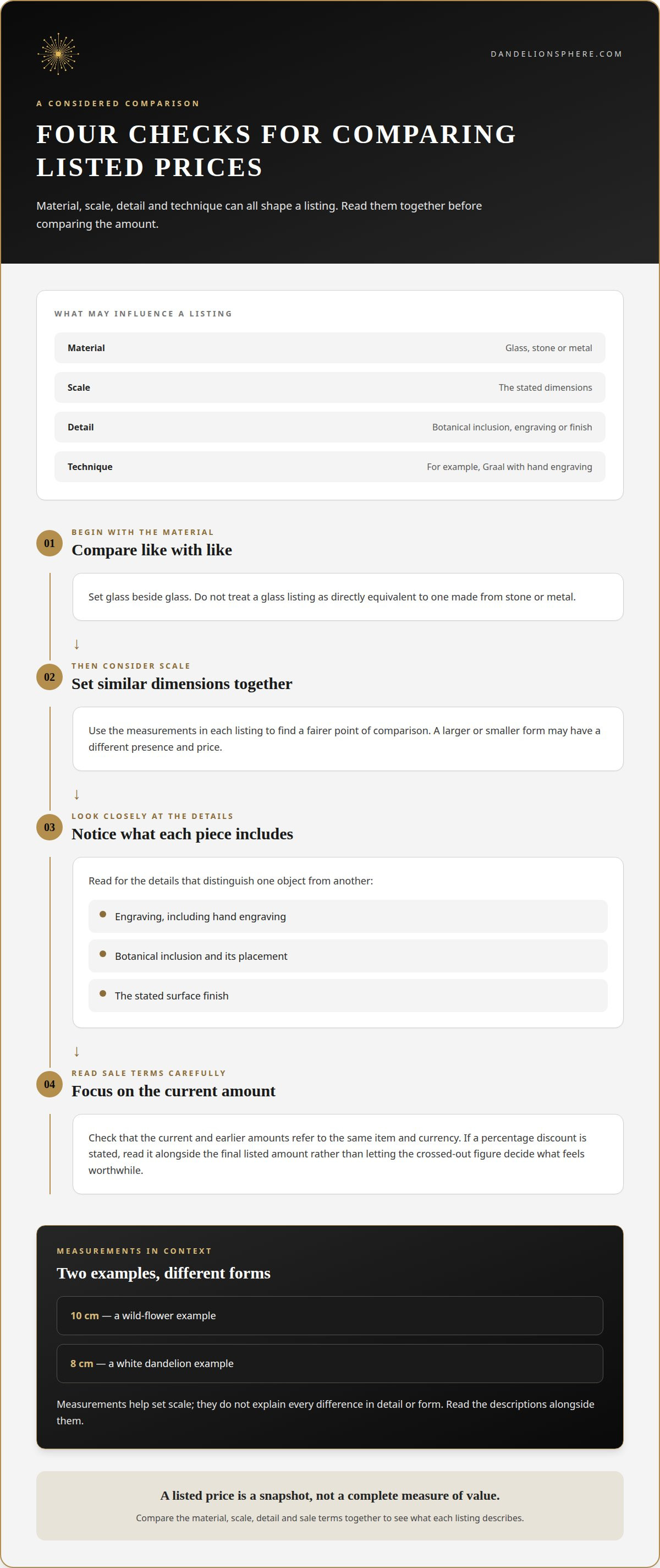
Price reflects more than the shape on a desk. Material, scale, detail and technique can all influence a listing. Compare like with like: a clear dandelion piece, a wildflower design and an engraved object differ in more than appearance.
A listed price is a snapshot, not a complete measure of value. A floral design may include careful placement of botanical details. A piece made using the Graal technique with hand engraving carries a different kind of surface detail. These distinctions help explain why two objects of similar size may sit at different price points.
Read each listing for what the amount covers. Look for the stated material, dimensions, finish and any included presentation. A 10 cm wild-flower example and an 8 cm white dandelion example offer useful comparisons, but their prices alone would not explain their different details or forms. Compare descriptions alongside measurements.
Sale labels need the same close reading. A reduced amount may appear beside an earlier listed amount, sometimes with a stated percentage discount. Check that both figures describe the same item and currency. Then consider the final listed amount, rather than letting a crossed-out figure determine what feels worthwhile.
For a clear comparison, use these steps:
- Match the material. Compare glass with glass, rather than with stone or metal.
- Match the scale. Set similar dimensions beside each other.
- Compare detail. Notice engraving, botanical inclusion and finish.
- Read the sale terms. Distinguish the current amount from the earlier listing.
A Graal-engraved design, for instance, offers a different visual treatment from a simple clear form. That difference may matter more to one buyer than a larger size. Another person may value the botanical subject above surface detail. Decide which feature carries meaning for you, then assess the listing in that light.
For a gift, also consider whether the object feels suited to its recipient. A preserved dandelion can suggest a wish, a season or a remembered place. Those associations cannot be reduced to a sale label. They can, however, clarify why one design feels more considered than another.
There is no single price that defines a suitable choice. Material, form and detail shape the comparison; personal meaning shapes the final decision. Read the description carefully, compare equivalent features, and let the object’s particular qualities guide your judgement.
Are there safety or care concerns with glass or crystal desk paperweights?
Glass and crystal reward a little care. A stable place and gentle cleaning help preserve their clear surfaces.
Choose a level area, such as the centre of a desk. Keep the object away from the edge, where a sleeve or notebook might knock it. A crowded writing space also raises the chance of accidental contact. Leave room around a glass sphere or crystal dome, especially beside frequently moved stationery.
Lift the object with both hands when moving it. Avoid sliding it across a wooden desk, as grit beneath its base could mark the surface. Set it down gently on a clear spot. If the base feels uneven, choose another position before placing loose pages nearby.
For everyday cleaning, use a clean, soft cloth. Wipe away fingerprints with light pressure, then turn the object to reach each side. A slightly damp cloth can lift stubborn marks; dry the surface afterwards. Avoid rough pads, which may leave visible scratches on polished glass or crystal.
Keep cleaning simple. Strong household products may leave a film or affect nearby finishes. Don’t spray cleaner directly onto a glass dome, particularly when it contains a botanical detail. Put a small amount on the cloth instead, and wipe only the exposed outer surface.
Temperature changes deserve attention. Don’t move a cold glass object straight beside a strong heat source, such as a radiator. Avoid placing it where direct sunlight concentrates through a curved surface. A shaded desk or shelf offers a steadier setting for clear glass and crystal.
Before choosing a position, consider who uses the room. A desk shared with children, pets or frequent visitors needs a quieter corner. Keep the object away from the edge and from areas where bags or books are regularly placed. A stable shelf may suit a fragile, highly detailed piece better.
Look over the surface during routine dusting. If you notice a chip, crack or rough edge, stop handling it casually. Move it carefully to a secure place, away from hands and loose paper. Damaged glass can have sharp edges, so avoid using it to hold pages.
These habits need not interrupt the object’s presence. A soft cloth, a clear space and careful handling are often enough for ordinary desk care. For a glass or crystal piece, thoughtful placement protects both its delicate appearance and the calm, reflective moment it brings to a working day.
Dome paperweight
A clear solid form gives a small botanical detail its own quiet space. Its curved surface gathers light, while its base rests on the desk. Inside, a real dandelion seed head can become the centre of attention. The form suits someone who wants one clear focal point, rather than several competing details.
Look first at the dome’s profile. A low curve feels close to the surface; a taller dome gives its contents more visual prominence. A clear dome can reveal a botanical form from several viewpoints. A coloured or engraved surface may draw attention to the glass itself. Consider which detail you want the eye to notice first.
Next, consider the base. A flat base gives the piece a distinct footprint and helps it sit steadily. A rounded edge softens the transition between the object and desk. Dust or grit beneath the base can mark a polished surface, so set it down on a clean area rather than sliding it into place.
A piece’s contents affect its mood. A preserved dandelion suggests a wish once carried on the wind. A small wildflower can recall a summer walk or a familiar garden. A single subject creates a simple composition; several details may make the interior feel fuller. Choose what best reflects the memory you want nearby.
Placement changes how the curved surface appears. Beside a notebook, the piece can become a contemplative pause between tasks. Near a window, daylight may reveal details within it. Keep it clear of the desk’s edge and busy areas, where a passing sleeve or book might knock it. A calm, stable position lets its shape remain the focus.
For a gift, a botanical piece can feel personal without being elaborate. A dandelion may mark a birthday, a new home or a friendship. Consider the recipient’s desk and preferred style. A clear form suits a quiet, uncluttered setting; a distinctive sculptural piece may feel at home amongst collected objects.
Care follows the same gentle logic. Use a clean, soft microfibre cloth to dust the exterior. Lift the piece before cleaning beneath it, rather than dragging its base across the desk. Keep it away from excessive heat and prolonged direct sunlight. A clear position protects the view and allows the preserved detail to remain visible.
A dome offers both a useful weight and a small scene held in view. If botanical forms speak to you, explore botanical spheres for another expression of nature’s quiet artistry.
Taraxacum Orbis - Dandelion Sphere
Taraxacum Orbis - Dandelion Sphere offers a quieter way to bring nature’s artistry to a desk. Its botanical pieces hold a fleeting dandelion moment in view, making them an alternative for anyone drawn to meaning as much as practical use.
Choose a Dandelion Sphere or Dandelion Cube as a small focal point, or consider a botanical art object when the gift should carry a deeper sense of memory. These pieces suit a desk where a natural detail can invite a pause, rather than simply hold a page in place.
If you’re weighing up what feels right for your space or for someone you cherish, contact Taraxacum Orbis - Dandelion Sphere for a thoughtful conversation.
Choose a moment to keep close
A desk holds the small ceremonies of each day: a note begun, a thought returned to, a wish quietly remembered. A botanical sculpture can carry meaning beyond its practical role, becoming a personal reminder of nature’s fleeting beauty.
Let the final choice reflect what you hope to preserve. Perhaps it recalls a summer afternoon, a garden in bloom or someone who loves the natural world. Dandelion Sphere gives this feeling form through Dandelion Spheres, botanical art objects and luxury gift objects. Each offers a distinctive way to bring a fragment of nature into everyday life.
There is no need to hurry towards a decision. Notice which object feels most at home with the person or place you have in mind. The botanical collection is a quiet reminder that some fleeting moments are worth keeping close.
Frequently Asked Questions
Which desk objects make thoughtful choices for women?
The most meaningful choice reflects the person’s taste and daily surroundings. A clear glass dome may appeal to someone who loves botanical details, while a smooth stone form can complement a quieter, natural palette. A Dandelion Sphere, with a preserved dandelion held within it, can be a memory made tangible. Consider whether the recipient is drawn to simplicity, sculptural forms or objects that carry a story.
What materials are desk objects made from, and how durable are they?
Common materials include glass, crystal, metal, stone and ceramic. Each has its own character and asks for a little care: glass and crystal can chip if dropped, while grit beneath stone may mark a polished surface. Metal can scratch, too. Gentle dusting with a clean, soft microfibre cloth helps care for a Dandelion Sphere, a moment from nature held in a clear solid form.
How heavy should a desk object be to hold papers securely?
There is no single ideal weight for every desk. A small note needs less restraint than a large sheet near an open window. Consider the paper’s size, the air movement around the desk and the object’s contact with the surface. A broad, stable base can help it stay in place. A Dandelion Sphere has a reassuring presence, though its deeper purpose is to hold a fleeting moment of nature in view.
What is the average price of a desk object?
There is no single average that meaningfully captures every material, size and level of detail. A simple form and an intricately worked crystal piece belong to different traditions, so an average can obscure more than it explains. The value of an object may lie not only in its materials, but in the memory or feeling it brings to mind. A preserved dandelion, for instance, can call back a summer wish carried by the wind.
Which designs are popular, including floral, crystal and minimalist styles?
Botanical forms, clear designs and uncluttered geometric shapes each speak to different tastes. A sphere can frame a flower or seed head; a plain shape offers a quieter outline. Minimalist forms sit easily beside simple stationery, while botanical details bring meaning and narrative. A Dandelion Sphere holds a preserved seed head in view, a quiet reminder of nature’s beauty and the wishes of childhood.
How do crystal, glass, metal and stone desk objects compare?
Crystal and glass create transparency and reflections, though both need careful handling. Metal offers a more opaque, often reflective surface; stone brings natural grain and colour. The choice is as much about feeling as appearance: consider the desk’s finish and the qualities that draw you in. A Dandelion Sphere has a glass-like clarity, framing a fleeting moment from nature.
What should I consider when choosing one as a gift?
Think of the recipient’s surroundings, preferred colours and connection to nature. An object that recalls a garden memory or a childhood wish can hold meaning beyond its form. A Dandelion Sphere brings a preserved dandelion seed head into view, inviting a moment of quiet reflection on time, memory and the beauty of impermanence.
Disclaimer
The content on this website is provided for inspiration and informational purposes only. Articles reflect the philosophy and storytelling of Dandelion Sphere and are not intended as professional advice. While every effort is made to ensure accuracy, no guarantees are given regarding completeness or current applicability.


