

Flowers need not fade to remain part of a garden or home. Eternal flower sculptures bring botanical forms into view: metal flower art can suit an outdoor setting or an indoor display when its scale, finish and placement feel right.
Their appeal is easy to understand. Flowers hold memories of a season, a garden in bloom or a wish carried on the wind. In metal, familiar shapes become a quiet presence, distinct from the changing life around them.
This article explores how custom metal flower art and metal daisy sculptures can suit different spaces. Consider proportion, setting and the feeling you want a sculpture to bring, whether it stands among green leaves or rests within a considered display. A small pause in the everyday, a fragment of nature held in another form.
Key Takeaways
- Learn how metal flower forms are shaped, and which design choices influence their final character.
- Explore how flower type and material can change the look and feel of a sculpture.
- Understand what may affect how long an outdoor or indoor piece remains at its best.
- See which considerations shape the cost of a custom sculpture in the United States.
- Use location, style and display setting to guide your search for a piece that feels right for your space.
How are eternal flower sculptures made?
A metal flower begins with an observation and takes shape through drawings, shaped parts and finishing. Unlike a preserved bloom, it doesn’t contain a real flower. Its petals and stem are interpretations, formed from metal to suggest a rose, daisy or another botanical shape.
First, choose the flower and decide how it should read from a distance. A daisy needs a clear centre and distinct petals; a poppy may depend on broad, open forms. The maker sketches the outline and considers how the flower will stand, lean or turn towards the light.
Next, consider the metal and the scale of each element. Steel can create a firm structure, whilst copper offers a warmer colour that changes character over time. A tall stem needs enough support for its flower head, while a small tabletop sculpture calls for different proportions from a garden feature.
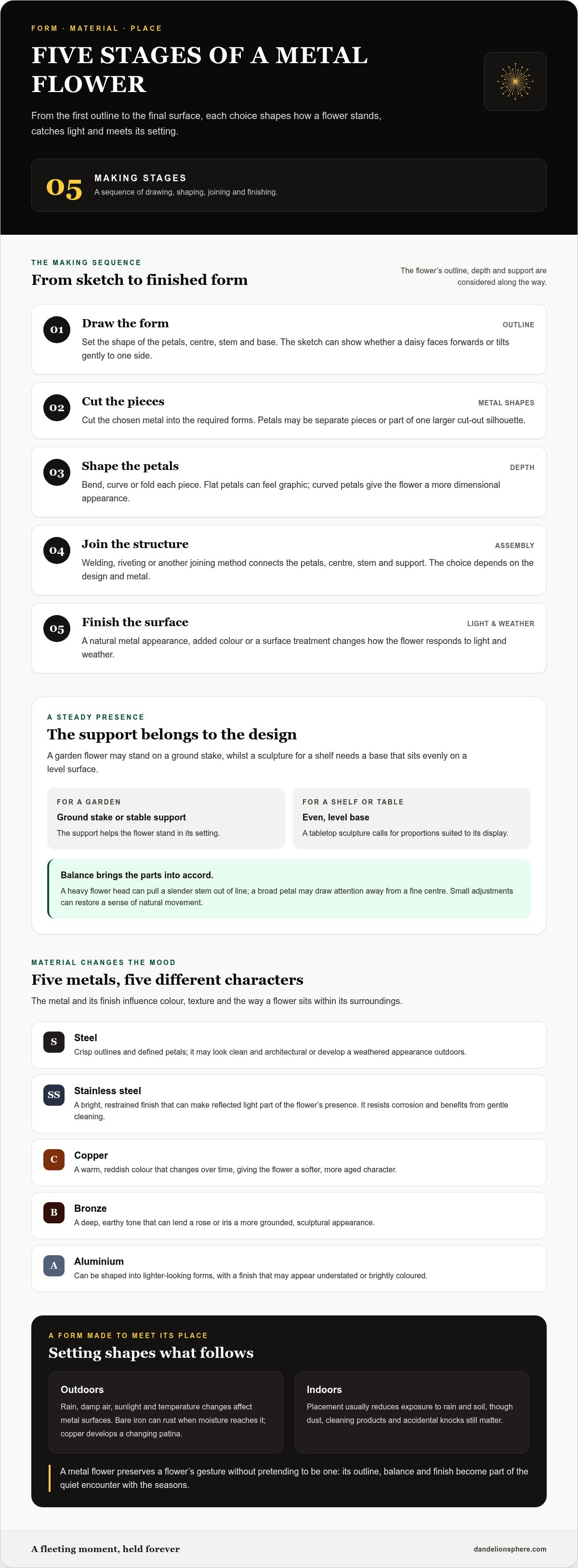
- Draw the form. A sketch sets the shape of the petals, centre, stem and base. It can show whether a daisy will face forwards or tilt gently to one side.
- Cut the pieces. The maker cuts the chosen metal into the required forms. Petals may be separate pieces, or part of one larger cut-out silhouette.
- Shape the petals. Each piece is bent, curved or folded to create depth. A flat metal flower can feel graphic; curved petals give it a more dimensional appearance.
- Join the structure. Welding, riveting or other joining methods connect the petals, centre, stem and support. The method depends on the design and the metal.
- Finish the surface. The maker may leave a natural metal appearance, add colour or apply a surface treatment. The finish changes how the flower responds to light and weather.
The support deserves as much thought as the flower. A stem may extend into a ground stake, attach to a plate or meet a separate base. A garden daisy needs a stable way to stand in its setting; a sculpture for a shelf needs a base that sits evenly on a level surface.
Before finishing, the maker checks the balance and the relationship between the parts. A heavy flower head can pull a slender stem out of line; a broad petal may draw more attention than a fine, delicate centre. Small adjustments can restore a sense of natural movement.
That balance helps eternal flower sculptures feel like more than literal copies. A metal daisy can preserve a flower’s gesture without pretending to be one. Its form is drawn, cut, bent, joined and finished, then placed where its silhouette can quietly meet the seasons.
What flowers and materials are used in eternal flower sculptures?
A metal flower can recall a familiar garden bloom without using a living petal. Daisies, roses, poppies, tulips and lilies each have a distinct outline. A daisy is recognised by its central disc and radiating petals; a tulip by its cup-shaped head. These defining forms guide the sculptor’s choice of metal and how its surface is shaped.
A flower’s silhouette matters as much as its name. A rose can be represented with layered petals, while a poppy’s open cup creates a broader, simpler profile. Lavender suggests slender stems and clustered florets. In a garden, these shapes affect how the sculpture reads against foliage, stone or open sky. A bold sunflower may stand out across a lawn; a small snowdrop can feel quieter beside a path.
- Steel suits crisp outlines and defined petals. Its appearance can remain clean and architectural, or develop a weathered look when the surface is left to change outdoors.
- Stainless steel offers a bright, restrained finish. It can suit a contemporary display, where reflected light becomes part of the flower’s presence.
- Copper brings a warm, reddish colour. As its surface changes, the flower can take on a softer, more aged character.
- Bronze is associated with a deep, earthy tone. It can lend a rose or iris a more sculptural, grounded appearance.
- Aluminium can be shaped into lighter-looking forms. Its finish may appear understated or brightly coloured, depending on the treatment.
These choices create different effects. A polished stainless-steel daisy feels different from a copper poppy, even at a similar size. Colour, surface texture and the amount of visible metal between petals all influence the result. Slender lines may suit a delicate snowdrop; a sunflower can carry broader shapes without losing its recognisable form.
Some sculptures combine metals or pair a metal flower with a stone or timber base. A dark iron stem against pale stone creates contrast, while a copper bloom beside wood feels warmer. The base also affects placement: a ground stake suits a planted border, whereas a flat base is better for a table or shelf.
To choose thoughtfully, start with a flower you recognise, such as a daisy or rose. Then consider its scale, colour and setting. A garden sculpture may need a finish that works with surrounding plants and surfaces; an indoor piece can be chosen to suit the room. The material gives the flower its character, while the flower carries the memory.
How long do eternal flower sculptures last?
A metal flower doesn’t wilt like a living bloom. Its lifespan depends on the metal, surface finish, construction and surroundings. A stainless-steel daisy sheltered indoors faces different conditions from an iron poppy in an exposed garden border. The material sets a starting point; weather and care shape what follows.
Outdoors, rain, damp air, sunlight and temperature changes affect surfaces over time. Bare iron can rust when moisture reaches it. Copper develops a changing patina, altering its colour rather than retaining a newly polished appearance. Stainless steel resists corrosion, though its surface still benefits from gentle cleaning. Every finish responds to its setting.
Indoor placement usually reduces exposure to rain and soil, but dust, cleaning products and accidental knocks still matter. A flower beside a bright window may receive stronger sunlight than one in a hallway. A sculpture on a busy garden path is also more likely to be bumped than one tucked among established plants.
- Iron: Keep water from collecting around joints and inspect the surface for rust. A suitable protective finish can help limit exposure.
- Copper: Expect its colour to deepen or shift as a patina forms. That change is part of copper’s character, not necessarily damage.
- Stainless steel: Remove dirt with a soft cloth and mild cleaning. Avoid harsh products that may mark its finish.
- Painted metal: Watch for chips around petal edges and stems. Repairing damaged areas helps prevent moisture reaching the metal underneath.
Placement is part of caring for a sculpture. Set a garden stake in stable ground, away from lawn equipment. For a tabletop flower, choose a level surface where it won’t be repeatedly disturbed. In either setting, clear leaves and trapped water from the base before they linger.
“Eternal” describes the intention behind the art, not a promise that every material remains unchanged. Metal can last, while colour, texture and finish evolve. For comparison, preserved real roses are described as lasting up to 3 years. That figure concerns preserved flowers, not metal sculptures, which don’t contain living petals.
A simple care routine helps: inspect the base and joints, remove dirt, then address visible wear with care suited to the metal. A copper daisy can age naturally; a painted steel tulip may need attention where its coating has chipped. These choices shape whether a sculpture keeps its original finish or gathers the marks of time.
Cost of eternal flower sculptures in the United States
There isn’t one standard cost for a metal flower sculpture in the United States. The final amount reflects its size, metal, design detail and finish. A simple steel daisy and a large, layered copper rose involve different amounts of material and work. Comparing eternal flower sculptures by flower name alone won’t show what shapes the price.
Begin with scale. A small flower for a shelf uses less metal than a tall garden piece with a broad head and extended stem. Larger forms may also need a wider base or stronger support. These choices affect the sculpture and the effort required to make and finish it. For eternal flower sculptures, the intended setting helps define which features matter most.
- Metal: Steel, copper, bronze and aluminium differ in material cost and working needs.
- Detail: Separate petals and a shaped centre take more steps than a flat silhouette.
- Finish: A natural surface, polished appearance or applied colour each calls for different preparation.
- Support: A ground stake, plate or display base changes the design and materials involved.
- Custom features: A specific flower, pose or combination of metals can add design work.
Consider a metal daisy. A straightforward outline with a single stem is a simpler project than a three-dimensional bloom with individually shaped petals. A copper finish may also require a different process from painted steel. When comparing estimates, look for the same features in each so you can make a like-for-like comparison.
Before requesting an estimate, note the flower, approximate dimensions, intended setting and preferred metal. Specify whether the sculpture will stand in a garden or sit on a surface. A photograph of the intended location can clarify scale, while a sketch can show whether you prefer an open poppy or a compact tulip.
Then look closely at what each estimate includes. Check whether it describes the metal, surface finish, support and any custom design work. Delivery and installation may also affect the total, depending on the sculpture and its destination. Separating these elements makes it easier to understand why designs differ.
Shape your budget by deciding which qualities matter most. Choose a modest size if the flower’s outline is the priority. Give the petals or centre more detail if close viewing matters. For a garden piece, consider the support and finish carefully. The cost follows the choices that help a sculpture feel at home in its setting.
Where can I buy eternal flower sculptures near me
In the United States, start a nearby search with your town or neighbourhood and the phrase “metal flower sculpture”. Add a flower name, such as “metal daisy”, to narrow the results. For garden placement, include “outdoor” or “garden art”; for an indoor display, try “tabletop” or “shelf sculpture”. These terms help distinguish metalwork from preserved flowers.
Local galleries, garden-art events and makers’ markets may display metal flower work in person. Seeing a steel poppy beside a copper rose gives you a clearer sense of scale, colour and finish than a small photograph can. Galleries may also show how a sculpture looks alongside stone or timber.
Online listings can help you discover pieces beyond your immediate area. Search by flower, metal and setting. “Stainless-steel daisy for garden” is more precise than “flower art”. Read descriptions carefully to see whether the work is metal sculpture or a preserved botanical form.
Before choosing, compare the details that affect how a piece will suit your space:
- Flower shape: Check whether a daisy has an open centre or a rose uses layered petals.
- Material and finish: Look for the named metal and surface, such as polished steel or patinated copper.
- Scale: Compare stated dimensions with the border, patio or shelf where you intend to place it.
- Support: See whether the design uses a garden stake, flat base or another form of support.
- Setting: Look for a clear description of whether it is intended for indoors, outdoors or either setting.
A photograph beside a familiar object can help you judge proportion. For example, a metal daisy shown beside a garden pot is easier to picture than one photographed close-up against a plain background. If you’re seeking eternal flower sculptures for a particular space, a sketch or photograph of that location can clarify the scale and shape you have in mind.
“Near me” can mean seeing a piece locally, or finding a design that can reach your home. Compare the viewing experience, delivery details and intended setting before deciding. If you’d also like a botanical presence indoors, view nature-inspired pieces for a quieter interpretation of a flower held in time.
Taraxacum Orbis - Dandelion Sphere: Dandelion Spheres
Dandelion Sphere offers another way to hold a flower in memory. Rather than shaping metal into petals, its Dandelion Spheres preserve real dandelion seed heads in a clear solid form, keeping a fleeting natural moment at the heart of a botanical art object.
For a quiet indoor presence, explore Dandelion Spheres, Dandelion Cubes and other Botanical Art Objects. Each piece contains a real dandelion, with its delicate structure and the childhood ritual of making a wish before its seeds drift away. Luxury Gift Objects offer another way to mark a meaningful moment with nature’s quiet artistry.
If a real dandelion held in time feels closer to what you’re seeking, explore the collection. For a thoughtful conversation about the pieces, contact Taraxacum Orbis - Dandelion Sphere.
Choose a flower that feels like yours
A flower chosen for a garden or a room can hold more than its shape. It may recall a childhood summer, a quiet walk or the moment a wish rose into the air. Let that memory guide your next choice. The right form is the one that carries meaning for you.
Imagine where you’d like that memory to linger, perhaps beside a familiar path or somewhere you pause each day. Take time to notice which shapes and details feel most like your own story.
Let curiosity lead you towards a piece that feels personal. Explore the collection and see what speaks to you. A small reminder of nature can make an ordinary moment feel newly meaningful.
Frequently Asked Questions
What are eternal flower sculptures?
Eternal flower sculptures are lasting artworks that represent flowers in materials such as metal, rather than living petals. A metal daisy, for example, keeps a flower’s recognisable form as a sculptural object for a garden or interior. “Eternal” describes the intention to create a lasting floral presence, not a guarantee that every material or finish remains unchanged. The phrase can also distinguish these sculptures from real flowers preserved in a display.
What are popular styles and occasions for eternal flower sculptures?
Styles include crisp steel outlines, bright stainless steel, warm copper, and layered or open flower forms. The article gives no occasions for gifting or displaying them.
Disclaimer
The content on this website is provided for inspiration and informational purposes only. Articles reflect the philosophy and storytelling of Dandelion Sphere and are not intended as professional advice. While every effort is made to ensure accuracy, no guarantees are given regarding completeness or current applicability.


