

A calming corner isn’t a timeout. It’s a quiet, welcoming place where a child can pause when feelings grow too large. Creating a calming corner in your home begins with a peaceful spot and a few familiar things that help the child feel safe and settled.
It needn’t be elaborate. A cushion, a favourite book or a treasured soft toy may feel more reassuring than a collection of new things. The important thing is that your child chooses to use the space, and that it is never treated as a punishment. Here, you’ll learn what a calming corner is, how to choose a suitable place and how to introduce it gently. We’ll also look at familiar items that may offer comfort and how to notice what soothes your child. A small, quiet pause can become a steady part of the day, a place to gather themselves before returning to the world beyond.
Key Takeaways
- Choose a quiet, comfortable spot where your child can feel safe and step away from distractions.
- Begin with a few familiar items, then notice which ones seem to offer comfort and which may feel overwhelming.
- Introduce the space when everyone is calm, and let your child help shape how it feels and works.
- Keep the corner separate from play, and make it an invitation to pause rather than a punishment.
- Adjust the space over time, guided by your child’s preferences and the way they respond.
What is a calming corner?
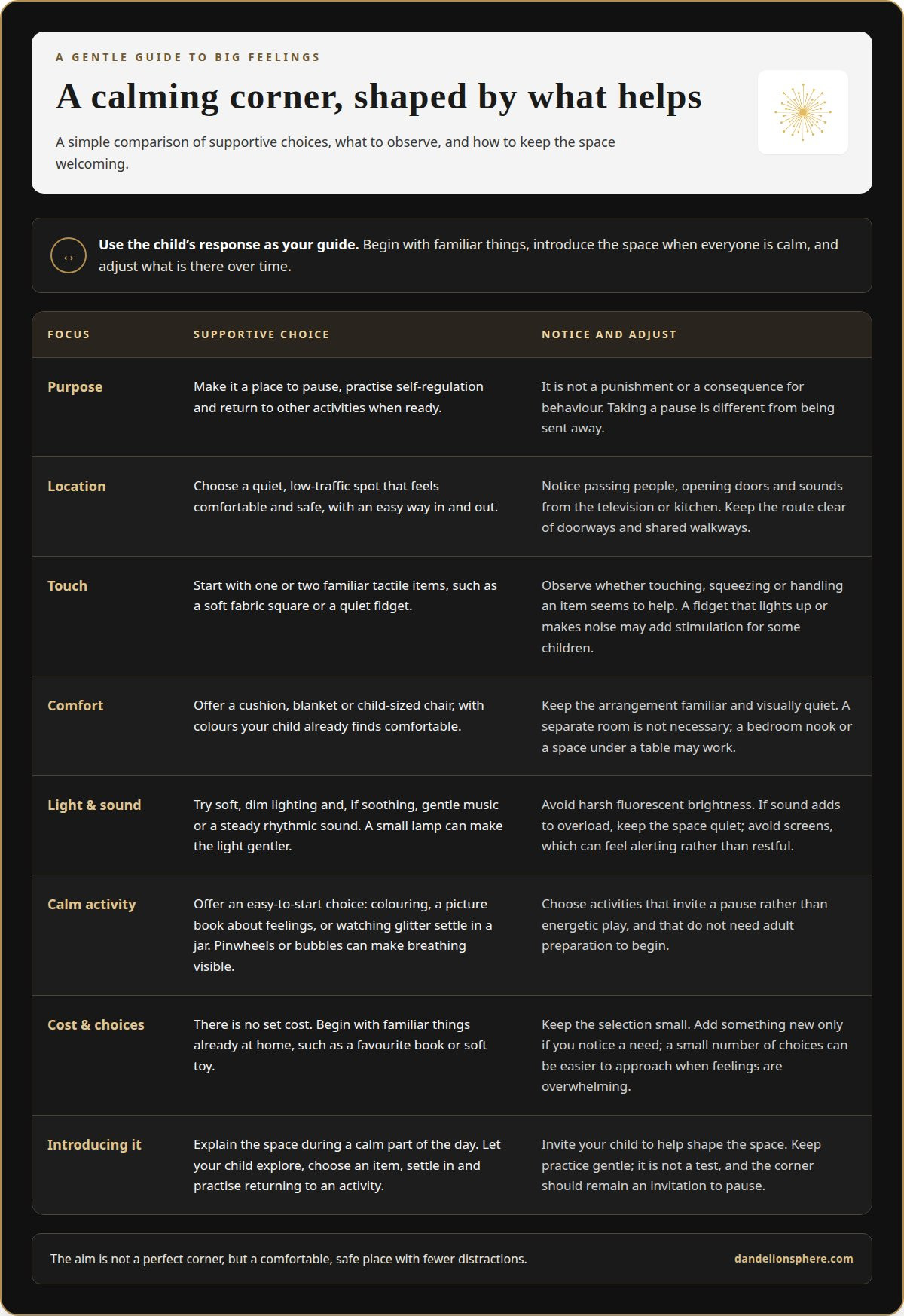
A calming corner is a chosen place where a child can pause when feelings become overwhelming. Unlike a time-out space, it isn’t imposed as punishment. It offers room to practise self-regulation and return to other activities when ready.
There’s no set cost: begin with familiar things already at home, then add only what suits your child. Choose colours they find comfortable, soft, dim lighting rather than bright fluorescent light, and steady, gentle sounds if these feel soothing.
-
Gather calming tools and sensory supports
Start with one or two tactile items your child already knows, such as a soft fabric square or a quiet fidget. Notice whether squeezing, touching or handling the object seems to help them settle. A fidget that lights up or makes noise may add stimulation for some children, so let your child’s response guide what stays. Noise-cancelling headphones can also help soften surrounding sounds.
Keep the selection simple. A small number of choices is easier to approach when a child is already overwhelmed.
-
Choose sensory activities and soft surfaces
Add a comfortable place to sit, such as a cushion, blanket or child-sized chair. Then offer a calm activity: colouring, a picture book about feelings, or a glitter jar made with clear glue, water and glitter. Watching the glitter settle can give a child a gentle focus for slow breathing. Pinwheels or bubbles can also make breathing visible and playful.
Choose items that invite a pause rather than energetic play. Keep activities easy to start without adult preparation.
-
Consider colours, lighting and sounds
Make the corner visually quiet with colours your child already finds familiar and comfortable. Keep the lighting soft and dim, avoiding harsh fluorescent brightness. A small lamp can create a gentler atmosphere than a brightly lit room. The aim isn’t to follow a perfect palette, but to reduce visual intensity for this particular child.
If sound helps, try steady, calming music or a rhythmic sound at a gentle volume. If sound adds to the feeling of overload, keep the space quiet instead. Avoid screens, which can feel alerting rather than restful.
-
Understand its purpose and cost
Think of the corner as a place to practise coping skills, not as a consequence for behaviour. Explain its purpose when your child is calm, and remember that choosing to take a pause is different from being sent away. Familiar items can make the space feel reassuring, rather than like another rule to follow.
To keep costs low, begin with a cushion, favourite book or soft toy already at home. Add something new only if you notice a need. Your child’s comfort matters more than filling the space.
Choosing a quiet location
The first practical step in creating a calming corner in your home is to choose a quiet, low-traffic spot. Notice where your child naturally pauses after busy moments, then consider whether that place stays peaceful during your family’s usual routines.
- Notice the household’s movement. Check where people walk, where doors open and where sound travels from the television or kitchen. A hallway alcove may look tucked away but still feel busy as family members pass. A quieter end of a living room or a bedroom nook may offer more privacy. Observe the spot at different times of day before settling on it.
- Choose a place that feels comfortable and safe. Your child should be able to reach it without climbing over furniture or moving obstacles. Keep the space accessible, with a clear way in and out. A corner beside a familiar bookcase may feel less exposed than a central seat. As you continue creating a calming corner in your home, let your child’s comfort guide where it belongs.
- Adapt the arrangement to a small home. A separate room isn’t necessary. Try one end of a quiet sitting area, a cushion beside a bedroom wall, or a defined space under a table. A folded blanket can mark the place without taking up much room. Keep the arrangement clear of doorways and shared walkways so it remains easy to use during everyday household activity.
- Keep the location distinct from play. Decide which activities belong in the corner, such as reading a book about feelings, drawing or using a quiet tactile object. Store them together in a small basket rather than among everyday toys. If your child stops choosing an activity, ask about it calmly and notice what they reach for instead. Rotate the choices while keeping the spot familiar.
To create the space, choose a quiet place, make its boundary clear and arrange a few activities your child recognises. Creating a calming corner in your home can be gradual: notice how the location feels in use, then adjust it to your child’s needs.
Consider the location from your child’s point of view: would they feel comfortable and safe using coping strategies there? A spot that seems quiet to an adult may still distract a child, so notice whether the surroundings draw their attention away. If the place feels uncomfortable or distracting, consider another option and let your child’s response guide the choice. The aim isn’t a perfect corner, but a comfortable, safe place where your child can use coping strategies with fewer distractions.
Teaching children to use the space
Introduce the corner before a difficult moment arrives. A calm conversation gives children time to understand its purpose and practise using it.
- Show the space during a calm part of the day. Sit beside your child and explain that the corner is a place to pause when emotions feel difficult. Practise choosing an item, settling in and returning to an activity. For example, your child might look at a book about feelings or squeeze a soft ball. Rehearsing makes the steps familiar before stress rises. Keep your words simple, and let your child explore without turning practice into a test.
- Invite your child to shape the routine. Ask what helps them feel comfortable and which coping skills they’d like to try. Agree on how long a break might last, how they can ask for more time and which behaviours keep the space safe. A sand timer can make the beginning and end of a pause visible. Five minutes may be a useful starting point, while your child’s needs guide whether they’re ready to return or need longer.
- Offer the corner, but don’t force its use. If your child begins to feel overwhelmed, gently remind them that the space is available. Don’t send them there as punishment or insist they go when distressed. With your child’s permission, sit nearby and help them choose a strategy. If closeness feels unwelcome, model slow breathing from a little distance. Agree that your child can return to their activity when they feel ready.
- Notice what changes, then adjust together. One child may settle by colouring; another may need quiet or movement. Observe your child’s response after they use an item, then discuss it later without judgement. If the corner is rarely used, ask calmly what feels uncomfortable or unhelpful. Let one child use the space at a time, so it remains a personal pause rather than another shared play area. With practice, children may begin noticing body cues and choosing a break independently.
A calming corner can support children as they learn to recognise emotions and practise self-regulation. Having a familiar place to pause may ease stress and make returning to learning feel more manageable.
Regular access may also mean fewer emotional outbursts. Practise coping skills together when everyone is calm. Punishment doesn’t teach children to manage feelings, and immediate isolation may backfire.
Using familiar items and observing what helps
For children or adults, begin with familiar, easy-to-clean objects: a soft garment, favourite toy, cushion or simple fidget. Choose a few, then notice which ones help the person feel comfortable and settle.
-
Choose familiar household items
Gather objects already used at home, such as a well-loved stuffed animal, a familiar scarf or a smooth stone. Their meaning may matter as much as their texture: a familiar object can make the corner feel reassuring rather than strange. Keep the first selection small, with one activity from each category, such as touch, reading or drawing. Avoid filling every surface, since too many choices can feel overwhelming.
-
Add comfort items and cosy seating
Make room for a comfortable place to settle, perhaps a low chair, floor cushion or beanbag. A soft blanket or familiar pillow can make the area feel restful, while curtains may soften visual distractions. For some children, a movement seat allows gentle movement while seated. Weighted blankets or pillows may provide deep-pressure input; observe the child’s response and preferences rather than assuming the sensation will suit everyone.
- Notice how each item is used. Watch what happens before, during and after a child reaches for a fidget. Does handling it seem to ease tension, or do its sound and movement add stimulation? A quiet object may suit one child, while another prefers a textured item. Let the child’s behaviour guide your choices, and remove anything that appears distracting or uncomfortable.
- Refresh the selection gradually. Keep useful items together and swap out objects that no longer attract interest. For example, replace an untouched tactile toy with a familiar fabric or a simple movement option. Choose items that are easy to clean, especially those handled often. Change one thing at a time so you can see whether the new choice makes the corner more welcoming or less calming.
- Let the person’s preferences lead. Ask a child which object they’d like to keep close, or let an adult choose something with personal meaning. A familiar object can connect the quiet space with an ordinary, comforting part of home life. Keep choices within reach, but avoid turning the corner into a storage area. Its purpose is to offer a few supportive options, not to gather every toy or comfort item.
Over time, these small observations help reveal what feels soothing to each person. A corner needn’t stay unchanged; familiar objects can come and go as needs and preferences shift.
What a calming corner is
Its deeper purpose lies in the relationship between a child, their feelings and the space around them. Think of it as a small part of home that makes room for noticing, choosing and returning to the day.
- Make room for feelings, not only quiet. A child may still feel sad, cross or unsettled while sitting in the corner. The aim isn’t to make every difficult emotion disappear. Instead, the space can help them notice what’s happening and find a response that feels manageable. Calm might mean taking a breath, asking for company or simply being still for a little while.
- Let choice give the space its meaning. Invite your child to name what the corner means to them, perhaps calling it their pause place or reset spot. Their own words can make the idea easier to remember and use. Avoid describing it as somewhere they must go when they’ve done something wrong. A child’s sense of ownership grows through being heard, not by having adults arrange the space entirely for them.
- Notice the difference between retreat and reconnection. A pause is useful when it helps a child return to an activity, conversation or family routine in their own time. It needn’t be measured by perfect stillness or an immediate change in mood. For instance, a child may leave the corner still disappointed but feel ready to explain what upset them. That small shift can matter more than appearing cheerful.
- Keep expectations realistic. A calming corner is one supportive part of family life, not a solution to every source of distress. If a child is upset about a recurring problem, the space may offer a moment to gather themselves, but the underlying concern still needs attention. Treat what they share afterwards as meaningful. Listening can help adults understand whether a routine, relationship or demand needs thoughtful change.
- Let its meaning evolve as your child grows. A younger child might understand the corner through a simple name or picture; an older child may prefer privacy and less conversation. Revisit how the space feels as interests and needs change. Ask what they’d keep, remove or rename. The corner remains useful when it reflects the child who uses it now, rather than an outdated idea of what comfort should look like.
Taraxacum Orbis - Dandelion Sphere: Luxury Home Accents
Dandelion Sphere, a concept by Tertius Collection, offers luxury home accents that bring nature’s quiet artistry into a home. Each Dandelion Sphere holds a carefully preserved real dandelion in a clear solid form. It isn’t a sensory tool for a child’s calming corner, but a botanical art object for a shared living space, where it can serve as a gentle reminder to pause.
Choose a Dandelion Sphere when you’d like a meaningful object that reflects the beauty of nature and the passage of time. These botanical art objects also make thoughtful gifts for a new home or a moment that matters. Every purchase includes a Certificate of Authenticity.
For a considered conversation about a Dandelion Sphere, contact Taraxacum Orbis - Dandelion Sphere.
Let a quiet moment take root
A child’s needs change with the day, the season and the small discoveries of growing up. Let the corner change gently with them. A familiar space can become part of home’s quiet rhythm: not a perfect arrangement to maintain, but a pause that belongs to your family.
As you continue creating a calming corner in your home, leave room for small signs of comfort: a favourite colour, a familiar texture or a little space to breathe. These details needn’t be elaborate. Their meaning comes from the care with which they’re chosen.
For another way to keep nature’s fleeting beauty close, explore Dandelion Spheres and botanical art objects. Let one become a thoughtful presence in your home, separate from the calming corner and its practical comforts. Begin with what feels right for your family, and allow the quiet to grow in its own time.
Frequently Asked Questions
What do I need?
Decide how your child can show what they need, especially if speaking feels difficult in the moment. A simple card with choices such as “quiet”, “company” or “leave me be” can make preferences easier to communicate. You might also agree on a small signal that means they’d like you nearby. Keep the arrangement easy to understand, and let your child help choose the words or symbols.
What is a calming corner and what is it used for?
Use the corner to practise recognising early signs of overwhelm, not only in response to a difficult moment. During a calm check-in, ask your child how their body feels when frustration begins: perhaps their hands tighten or their voice gets louder. Agree on a phrase they can use to request a pause. This shared language can help you respond before a disagreement grows.
Where should you put a calming corner at home?
Consider your child’s access needs as well as the room itself. Check whether they can reach the space comfortably, move around it without obstacles and use it without asking someone to shift furniture. Notice changing conditions too: sunlight may fall across one spot in the afternoon, or household noise may rise during a particular routine. A short trial during those busier moments can reveal whether the location works.
How can you make a calming corner on a budget?
Try the space without buying anything first, then ask your child what feels missing. This helps distinguish a genuine need from an appealing extra. Avoid buying themed sets or several similar items at once. If one change would make the corner easier to use, consider whether something already at home could serve that purpose before spending.
How can you adapt a calming corner for sensory needs or neurodivergent users?
Make the choices clear without relying on spoken instructions alone. A small visual menu can show options such as “stay”, “more space” or “finished”, so your child can point rather than explain. Ask about preferences when they’re settled, then respect their answer during a difficult moment. Sensory comfort can change with fatigue, illness or the demands of a particular day, so keep communication open.
What safety considerations matter when setting up a calming corner for children?
Check the space from a child’s height and remove anything they could trip over, pull down or put in their mouth. Secure nearby furniture, keep cords out of reach and choose objects suited to your child’s age and habits. Make sure the exit remains clear, and decide how a caregiver can offer support without blocking it. Review the arrangement whenever your child’s abilities or interests change.
Disclaimer
The content on this website is provided for inspiration and informational purposes only. Articles reflect the philosophy and storytelling of Dandelion Sphere and are not intended as professional advice. While every effort is made to ensure accuracy, no guarantees are given regarding completeness or current applicability.


