A single breath of wind. A field of gold turned to silver. Then, nothing but a memory. We often find ourselves mourning the transition of the seasons, watching as the delicate beauty of a meadow vanishes before we've truly seen it. This is the quiet ache of modern life. We move too quickly. We lose our tether to the earth's soft cycles amongst the rush of the everyday. You likely feel this loss when surrounded by mass-produced objects that fill a room but leave the spirit empty.
There is a profound peace to be found in the philosophy of art preserving nature. It's a way to pause the clock. To hold the impossible. You'll discover how ephemeral nature art transforms fleeting botanical moments into timeless sculptures of stillness. We'll explore the journey of the Taraxacum Orbis, seeing how a botanical orb becomes a vessel for a childhood wish. Held forever. A moment suspended in time. Let us slow down. Let us look closer at the poetry of nature’s quiet artistry.
Key Takeaways
- Explore the hushed philosophy of art preserving nature and how a single biological second is granted an eternal life.
- Discover how a botanical orb serves as a quiet sanctuary, reconnecting your home to the forgotten rhythms of the seasons.
- Understand the emotional resonance of the Taraxacum Orbis as a vessel for memory and the timeless act of making a wish.
- Learn why a museum-quality nature object offers a unique narrative that mass-produced pieces simply cannot replicate.
- Appreciate the technical mastery involved in suspending a natural wonder within a state of perfect, permanent stillness.
The Poetics of Ephemeral Nature Art: A Breath Held in Time
The meadow is hushed. Light leans against the tall grass whilst the summer air remains perfectly still. In this golden pause, a single dandelion stands. It is a sphere of impossible geometry. Fragile. Poised. A masterpiece of engineering that a single breath of wind would scatter to the edges of the earth. This is the starting point of our contemplation. It is where the wild meets the eternal.
To understand this form of expression, one must consider the history of Ephemeral art. It is the practice of honouring the transient. In our world, it is the preservation of a fleeting biological second. It is the act of art preserving nature not through imitation, but through suspension. We take the briefest pulse of life and ask it to stay. We capture the pulse of a season before it fades into winter.
Think of the dandelion. To a child, it is a miracle. A vessel for a secret wish. We held them in small, sun-warmed hands. We watched the seeds drift away, carrying our hopes into the sky. These seeds are symbols of our own passing moments. They remind us that beauty is often found in what we cannot keep. By holding them still, we create a sanctuary for memory.
A modern movement is emerging. We call it the alchemy of stillness. It is a quiet rebellion against the frantic pace of the world. By choosing to freeze a natural wonder in its most vulnerable state, we invite a sense of reverence. It is a way to organise the chaos of time into a single, silent point of focus.
The Beauty of the Brief
The ephemeral is nature’s most honest state. We feel a deep, rhythmic pull toward these fading things because they mirror our own journey. It is a human instinct to protect what is delicate. Nature is chaotic. It grows. It withers. It moves in a constant, restless cycle. Art offers a contrast. It provides a profound quietude. It allows us to observe the intricate details of nature’s quiet artistry without the threat of decay.
A Memory Made Tangible
A natural wonder becomes a vessel for personal nostalgia. It is no longer just a plant. It is a fragment of a specific afternoon. A memory of a loved one. The transition from a wild bloom to a museum-quality nature object is a silent ceremony. This form of art preserving nature creates a dialogue between space and time. It places a piece of the infinite within our reach. A collector’s piece that tells a story of beginnings and endings.
Art as a Sanctuary: The Philosophy of Preservation
The artisan acts as a silent witness. They are a mindful guide for the observer. In a world that demands our attention through noise, the act of art preserving nature offers a different path. It is a path of quietude. It is a sanctuary. Whilst the external world moves in a relentless cycle of growth and decay, the collector’s piece offers a pause. A breath held against the tide of time. This is not a struggle against the natural order. It is an appreciation of it.
Clarity is essential here. It is both a physical requirement of the medium and a mental state for the viewer. To look into a botanical orb is to find a centre. The seeds must appear weightless. They should look as if they are floating in a thought rather than held in a physical form. When the medium becomes invisible, the mind can finally settle. We move from the frantic external world to an internal peace. We find stillness. We find ourselves.
Honouring Nature’s Quiet Artistry
Nature remains the primary artist. The human is merely the curator of its finest, most overlooked details. There is a mathematical wonder in the geometry of a seed head. It is a pattern that feels both ancient and new. This cultural significance of environmental observation is reflected in the art and design research review, which validates the deep connection between our surroundings and our creative expression. You may find this legacy of the bloom beautifully explored in our feature on the botanical art collector piece. It is a study in curating eternal stillness.
The Rhythm of the Seasons in One Object
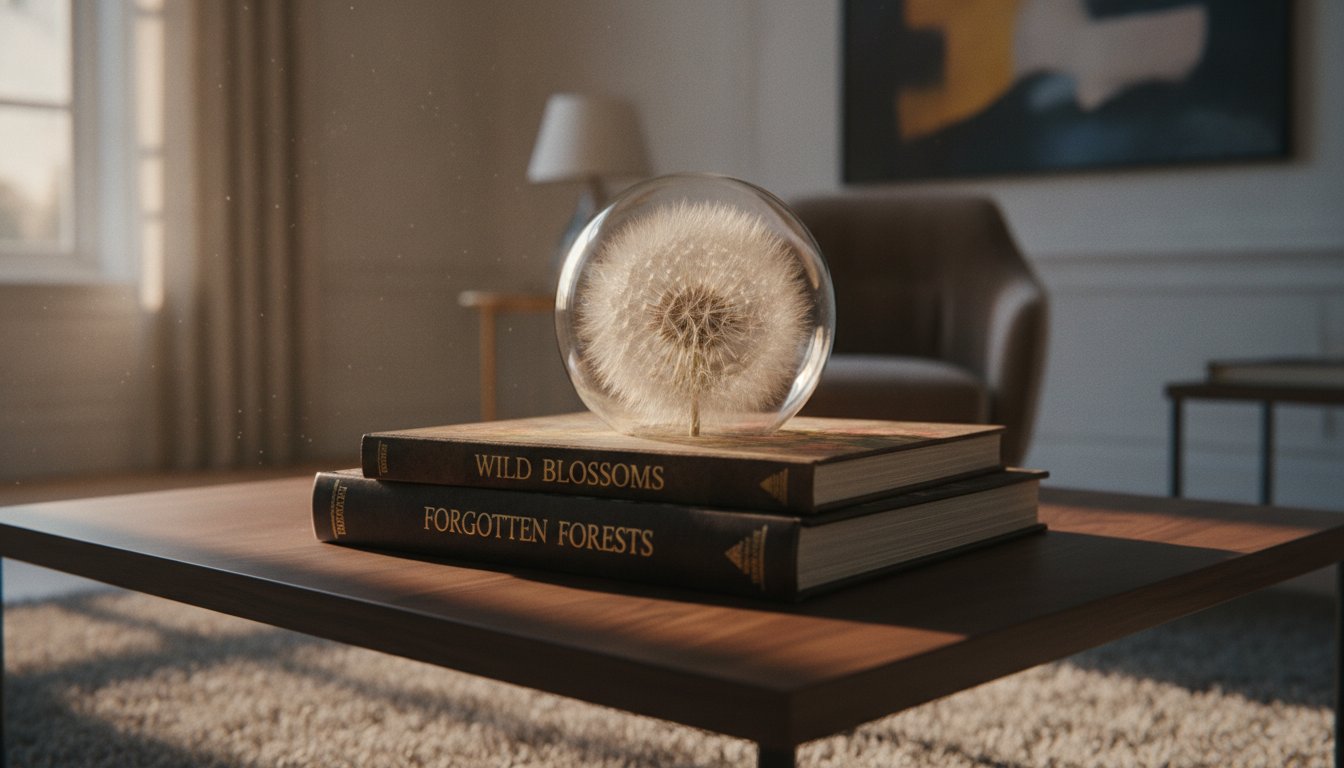
A single botanical orb can hold the weight of an entire summer afternoon. It is a sensory experience of perfect clarity. You can almost feel the warmth of the sun on the grass whilst looking at the delicate structures held within. This is a moment suspended in time. For those seeking to create a serene living space, such a natural wonder provides an emotional anchor. It reminds us that even in a fragmented world, beauty can be kept whole. If you wish to bring this stillness into your own home, you might explore our botanical art objects. Each one is a story of a season, told in silence.
Curation vs. Creation: A New Medium for Natural Wonders
A painting is an echo. It is a beautiful, skilled interpretation of the wild, but it remains a representation. There is a shift occurring within the world of fine botanical art. We are moving beyond the brushstroke. We are moving toward presence. Instead of a canvas that mimics the light, we find ourselves drawn to the light itself, caught within the delicate architecture of a natural wonder. This is the ultimate expression of art preserving nature. It is not a portrait of a flower. It is the flower, held in a state of impossible grace. A breath. A pause. A fragment of life that refuses to fade.
Technical mastery is required to achieve this stillness. The seeds of a dandelion are designed for departure. They are programmed for flight. To keep them perfectly intact, poised as if for a journey that will never come, requires a hushed and methodical patience. It is a dialogue with the fragile. This botanical sculpture becomes a Statement Object for the home. It doesn't shout for attention. It invites a hushed conversation. It asks the viewer to slow down. To breathe. To notice the intricate geometry of the infinite that usually escapes our hurried gaze.
The Botanical Sculpture as a Modern Centrepiece
A botanical interior accent does more than occupy a surface. It organises the light within a room. It draws the eye to a single, silent point of focus. You can find a deeper reflection on this relationship in our journal, The Botanical Interior Accent, which explores the dialogue between nature and space. Amongst a curated collection of objects, a single botanical sculpture offers a minimalist appeal. It is a fragment of the meadow, brought indoors to ground the spirit.
Museum-Quality Nature Objects
What defines a collector’s piece? It is a balance of clarity, integrity, and the poetry of the specimen. It is the profound difference between a simple nature object and a museum-quality nature object that carries a soul. Every detail must be visible. Every seed must be preserved in its natural state, free from the distortions of time. The Taraxacum Orbis represents the pinnacle of this artisanal pursuit, where the ephemeral is granted an eternal stage. This shift toward the physical specimen represents a new era of art preserving nature, where the viewer no longer looks at a canvas, but at the heartbeat of the meadow itself.

The Emotional Resonance of Nature’s Art Objects
Close your eyes. Remember the weightless feel of a dandelion held between two fingers. The sharp intake of breath. The silent wish. We were taught early on that beauty is fleeting. We learned that the things we love most are often the ones we must eventually let go. In a world that feels increasingly fragmented, we seek a sense of timelessness. We look for anchors. The philosophy of art preserving nature provides this emotional weight. It isn't just an object. It's a mirror. It reflects our own desire to hold onto the light whilst the shadows of the seasons lengthen.
Collectors in 2026 are moving away from conspicuous consumption. There is a tectonic shift toward art that offers deep emotional resonance. A botanical orb doesn't just sit on a shelf. It breathes with you. It reminds you that even the most fragile parts of our lives can be given permanence. It is a dialogue with the infinite, held within a clear, silent space. It is a way to hold a wish forever. This resonance is not found in the grand or the boisterous, but in the quiet poetry of nature's artistry that remains when the rest of the world is rushing.
A Zen Focal Point for the Workspace
The workspace is often a place of noise. Digital clutter. Endless lists. Placing a botanical orb on a desk or mantle creates a silent centre. It organises the focus. The intricate geometry of the seeds offers a calming effect, grounding the mind whilst you work. It is a silent companion. A preserved natural wonder doesn't demand your attention. It waits for it. It offers a moment of serenity whenever your eyes wander from the screen. It reminds you of the quiet rhythms that exist beyond the digital glow.
The Poetry of Giving
The act of giving is a ceremony. A meaningful gift carries a weight that a traditional nature keepsake cannot match. It is a piece of a season. A fragment of a meadow. When you give a Taraxacum Orbis, you aren't just giving an object. You're giving a memory made tangible. It marks life's quietest milestones with a sense of reverence. Whether it's a housewarming or a birthday, these objects connect the recipient to the earth's soft cycles. You can find more reflections on the art of meaningful giving in our Journal.
If you feel the pull toward these silent storytellers, we invite you to browse our collection of nature collectibles and find the piece that speaks to your own journey.
Taraxacum Orbis: A Fragment of Summer Held Forever
The Taraxacum Orbis is the final, hushed word in our story. It represents the ultimate expression of ephemeral nature art. Earlier, we explored the alchemy of stillness as a philosophy. Now, we arrive at the physical manifestation of that thought. A summer pulse. Held in perfect suspension. This is art preserving nature in its most refined state. Here, the wild is no longer subject to the wind. It is granted a stage of crystal clarity. A place where time has no weight.
The creation of each piece is a hushed ceremony. It begins in the quiet of the morning. Each seed head is selected with a curator’s reverence. There is no rush. Only a methodical, patient observation. The artisanal process is a meditation on the fragile. We ensure that every delicate, silvered filament remains poised. Exactly as nature intended. The result is a crystal-clear botanical sculpture that captures the light of a finished season. It is a vessel for the sun. A memory of a warm afternoon made tangible for the spirit.
The Stillness of Making
The journey from the wild meadow to the botanical orb is meticulous. It is a transition of states. Each natural wonder is entirely unique. It can never be replicated. No two seed heads follow the same geometry. No two wishes carry the same weight. We prioritise the integrity of the specimen above all else. By using only the finest materials, we ensure that each piece remains a timeless aesthetic object. It is a commitment to permanence. This philosophy of art preserving nature allows us to honour the intricate details that usually vanish in a single, restless breath of air.
Begin Your Collection
A mindful home is a collection of stories. It is a sanctuary from the rush of the modern world. A Dandelion Sphere acts as a profound Conversation Piece. It doesn't demand a loud response. Instead, it invites a shared moment of reflection. It encourages a deeper, more rhythmic connection to the passing of the seasons. We invite you to explore our shop to find your own moment of stillness. Perhaps you'll find a fragment of a childhood memory. Or a reminder of a wish yet to be spoken. To hold a botanical sculpture is to hold a wish that never flies away. It's about finding beauty in the brief. Keeping the delicate, forever.
A Wish Granted Permanence
The meadow's silence is no longer out of reach. We've explored the alchemy of stillness and the profound shift from mere representation to true presence. You've discovered how art preserving nature allows a single, fragile second to become a sanctuary for the soul. Each botanical orb is a museum-quality preservation of a real specimen. Handcrafted in our boutique art studio. Every piece remains a unique, one-of-a-kind natural wonder. A fragment of a summer afternoon, held forever in a state of impossible grace.
This is the poetry of nature's quiet artistry made tangible. It's a way to organise the chaos of the modern world into a single, silent point of focus. We invite you to Explore the Taraxacum Orbis Collection and find the natural wonder that resonates with your own memories. Let the light of a finished season ground your home in serenity. The wish you made as a child is still here. It's waiting for you to notice its stillness.
Frequently Asked Questions
What is ephemeral nature art and how does it differ from traditional art?
Ephemeral nature art is the preservation of a fleeting biological second. Traditional art often seeks to mimic the wild through paint or stone; this medium holds the actual specimen in a state of impossible stillness. It's the practice of art preserving nature by capturing a moment destined to vanish. It transforms the transient into something eternal. A breath held against the tide of time.
Can a real dandelion be preserved without losing its delicate seeds?
Yes, a real dandelion can be held perfectly intact within a botanical orb. It requires a hushed and methodical ceremony of preservation to ensure the seeds don't fly away. Each seed head is treated with a curator’s reverence. The geometry remains poised. Poised for a flight that never comes. It's a dialogue with the fragile. A victory for stillness.
How do you ensure the botanical orb remains crystal clear over time?
We ensure lasting clarity through a commitment to museum-quality materials and a slow, deliberate artisanal process. The medium is designed to be invisible. This allows the observer to focus entirely on nature’s quiet artistry. Such integrity protects the poetry of the specimen for years to come. It keeps the moment suspended in time. It remains a clear sanctuary for the mind.
Is a preserved botanical sculpture considered a sustainable art form?
A preserved botanical sculpture is a testament to mindful living and the appreciation of the earth's soft cycles. It avoids the waste of mass-produced home accents by focusing on individual, unique natural wonders. This approach encourages a deeper connection to seasonal rhythms. It's a sustainable way to honour nature’s artistry. Each piece is a fragment of the earth, kept with care.
Why are dandelions specifically chosen for these nature art objects?
Dandelions are chosen for their profound connection to childhood memories and the act of making a wish. They represent the ultimate fleeting moment. Their intricate, spherical geometry is a mathematical wonder. Holding one in a collector’s piece allows us to keep a fragment of summer forever. It's a mirror for our own reflections on impermanence. A wish granted permanence.
How should a fine botanical art piece be displayed to best capture the light?
To best capture the light, a fine botanical art piece should be placed where natural rays can pass through its centre. A mantle or a desk near a window is ideal. The light organises the focus of the room. It creates a zen focal point. The object grounds the mind whilst the light dances through the seeds. It becomes a silent companion in your space.
What makes a Taraxacum Orbis a museum-quality nature object?
A Taraxacum Orbis is defined by its absolute clarity and the integrity of its botanical specimen. It is a museum-quality nature object because it offers a state of perfect suspension without distortion. Each piece is a unique natural wonder. It carries the authority of an observer who finds meaning in overlooked details. It's a legacy of the bloom. A statement of intent.
Can these botanical sculptures be used as meaningful memorial gifts?
These botanical sculptures serve as deeply meaningful memorial gifts by making a memory tangible. They represent a life or a moment that has passed but is held forever in stillness. It's a way to give a fragment of a season. A comforting reminder of the poetry of nature. It's a gift that speaks in a hushed, reverent voice. A memory made tangible for the spirit.
Disclaimer
The content on this website is provided for inspiration and informational purposes only. Articles reflect the philosophy and storytelling of Dandelion Sphere and are not intended as professional advice. While every effort is made to ensure accuracy, no guarantees are given regarding completeness or current applicability.


