

What if a botanical collectible could invite you to build a flower, or hold a real one just as time found it? In this botanical collectibles series, that distinction matters. A buildable bloom offers the pleasure of making; a preserved botanical carries the quiet presence of nature itself.
It’s easy to see why both appeal. Some pieces offer a mindful pastime, while others draw us back to a season, a childhood wish or a fleeting moment outdoors. Yet when every choice is described simply as “botanical”, it can be difficult to see which pieces belong together, or which will feel meaningful rather than interchangeable.
Here, we’ll explore the difference between buildable botanical sets and preserved botanical art, then consider how to choose and bring pieces together with purpose. Among them is the Dandelion Sphere, holding a real dandelion in a moment suspended in time. It is not a recreation of a flower, but an encounter with nature’s quiet artistry. Perhaps a thoughtful collection begins there: with the forms that speak to us, and the memories we hope to keep close.
Key Takeaways
- A botanical collectibles series can feel connected through a shared subject or mood, even when its pieces take different forms.
- Compare pieces by what they preserve or represent, the experience they invite, and the visual language they bring to a collection.
- Choose a collecting thread that feels personal, such as seed forms, seasonal memories or the poetry of impermanence.
- Add pieces deliberately, guided by what draws you in rather than by an idea that a collection must be large or uniform.
- Dandelion Spheres, limited edition Dandelion Spheres and Dandelion Cubes feature real dandelion flowers, each holding a fleeting moment of nature.
What makes a botanical collectibles series worth collecting?
At the edge of a path, a dandelion seed head catches the light. One breath, and its delicate form may be carried elsewhere. The moment is brief, yet it can stay in the mind for years. Botanical collectibles give that attention a form, gathering objects connected by flowers, leaves, seeds or memories of the natural world.
A botanical collectibles series is a group of objects brought together by a shared botanical subject, collecting purpose or visual language, rather than by one required format. A series might follow a particular flower, explore the changing seasons or gather pieces that each speak to a collector’s connection with nature. Its unity can be quiet and personal. It needn’t follow fixed rules or consist of matching pieces.
The central difference is how each object meets nature. Some recreate a bloom through building or artistic interpretation. Others preserve a real botanical, holding its particular shape and presence in a moment suspended in time. Neither approach is inherently more meaningful. They offer different ways of looking, making, remembering and collecting.
What can belong in a botanical collectibles series?
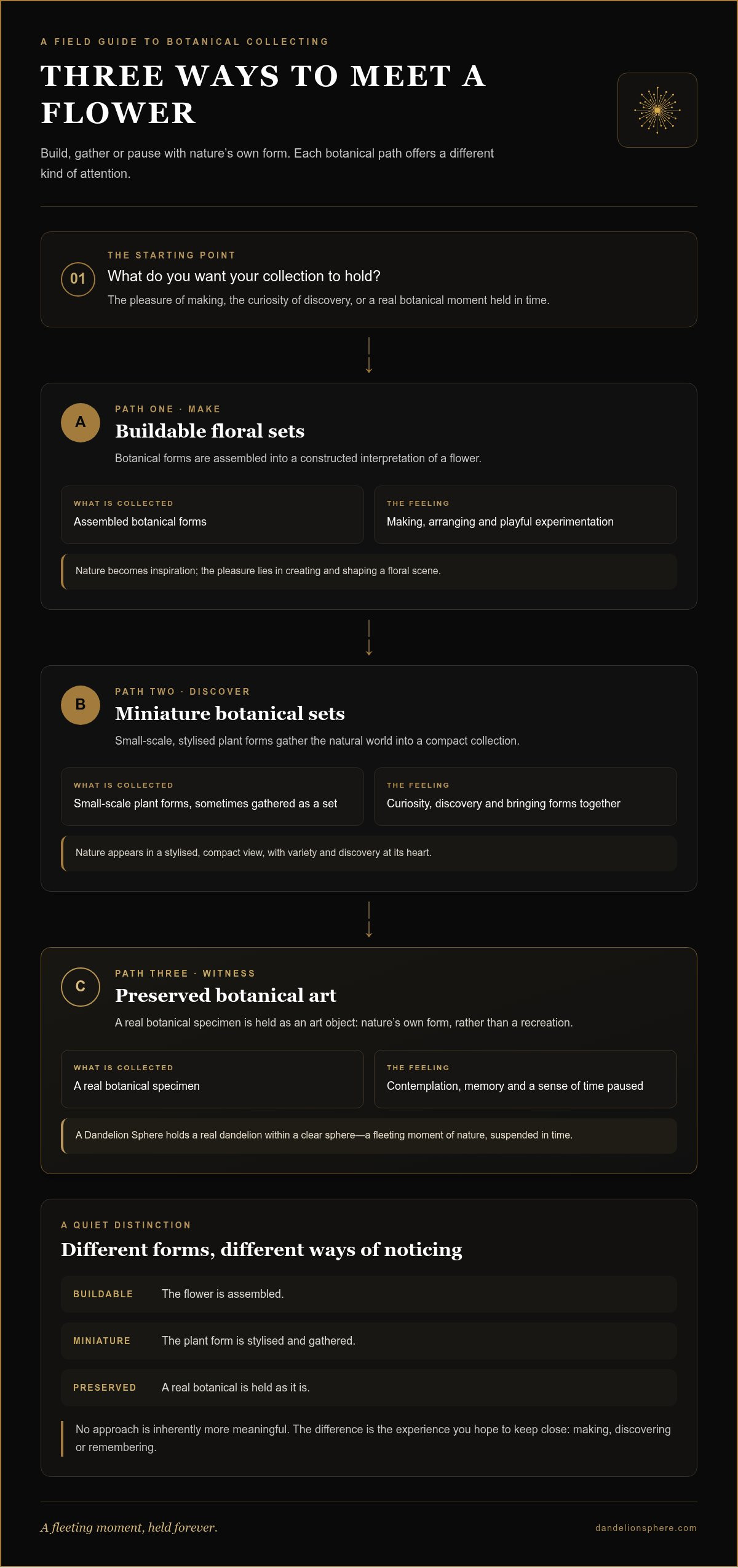
Buildable floral sets invite the collector to assemble an interpretation of a flower, noticing its parts as they come together. Miniature botanical collections gather small-scale representations of plants or garden forms, often appealing through variety and discovery. Preserved botanical art takes another path: it presents a real botanical as nature’s art object, rather than a constructed likeness.
Each form creates a distinct relationship with nature. Building can make creation part of the pleasure; a miniature collection can encourage curiosity about different forms; preserved botanical art draws attention to a specific natural moment. Botanical illustration offers another connection between close observation and image-making, with a history and purpose explored in Botanical illustration.
Why collectors are drawn to botanical objects
Often, it begins with a detail: the fine architecture of a seed head, the colour of a leaf in autumn or the first flower opening after winter. These small encounters link objects to the seasons and to memories of being outdoors. A dandelion can recall childhood wishes, whispered before its seeds were sent into the air.
Collecting, at its most thoughtful, is not simply accumulation. It is a practice of noticing. A chosen piece may hold a memory of a place, a season or a feeling that would otherwise fade. The question is not only how an object looks, but what it helps you see again.
That is what can make a series worth keeping: a thread of meaning that grows between its pieces and the person who gathers them. One collector may follow botanical form; another may be drawn to impermanence, remembrance or the quiet wonder of a flower. The collection becomes a way of paying attention, with each object marking a moment worth returning to.
Buildable blooms, miniature sets, or preserved botanicals: how do they differ?
A flower can be encountered in more than one way. It may be assembled, imagined at a smaller scale or held in its real botanical form. Each approach offers a different kind of attention: the pleasure of making, the curiosity of gathering or the stillness of witnessing a fleeting moment made tangible.
Different botanical formats answer different collecting desires: some invite you to create a flower, whilst others let you keep company with one nature has already made. The distinction isn’t a measure of worth. It helps reveal what you hope a collection will offer.
| Form | What is collected | How nature appears | The feeling it invites |
|---|---|---|---|
| Buildable floral sets | Assembled botanical forms | A constructed interpretation of a flower | Making, arranging and playful experimentation |
| Miniature botanical sets | Small-scale plant forms, sometimes gathered as a set | A stylised, compact view of the natural world | Curiosity, discovery and the pleasure of bringing forms together |
| Preserved botanical art | A real botanical specimen held as an art object | Nature’s own form, rather than a recreation | Contemplation, memory and a sense of time paused |
Constructed flowers and miniature botanical sets
Buildable floral sets turn collecting into an active encounter. Pieces are joined and arranged to suggest familiar blooms, giving the collector room to shape a botanical scene. Miniature sets offer a different pleasure: gathering small, stylised forms, sometimes with the added surprise of discovering which one is inside. These formats make building or collecting part of the experience, with nature as inspiration rather than the material itself.
Their appeal lies in possibility. A bloom can be arranged, reimagined or placed alongside another form. For some, the pleasure is in the process; for others, it is in the finished composition. Neither needs to imitate nature perfectly to hold meaning. Each offers its own imaginative way of noticing flowers.
Preserved dandelions as nature’s art objects
A preserved botanical begins with the real thing. Dandelion Sphere pieces feature real dandelions within clear spheres, retaining the presence of a flower rather than building a likeness from separate parts. The fine structure of the seed head belongs to that particular botanical moment. It recalls the instant before a wish is carried away on the wind.
This difference can shape a collector’s intention. A constructed bloom speaks of interpretation and making; a preserved dandelion brings the viewer close to nature’s own quiet artistry. For collectors considering how a natural form can hold memory and stillness, the botanical art collector piece offers a further reflection.
To encounter this approach through the Dandelion Sphere collection is to meet a botanical moment preserved, not recreated. The right form is the one that answers your own way of looking: through the joy of making, the wonder of gathering or the quiet recognition of a flower held in time.
How to compare botanical collectibles before choosing a series
Choosing begins with a quiet question: what would you like this piece to bring back to mind? A flower can be a subject to build, a form to gather or a real botanical moment held close. No approach is inherently better. The most considered choice is the one that feels at home with your reasons for collecting.
Use these points as a guide, rather than a scorecard. They can help you compare a single object with a wider botanical collectibles series, without assuming every piece must belong to a large or matching group.
- Nature, real or interpreted: Consider whether you’re drawn to a constructed interpretation of a flower or to the presence of real plant material. One offers the pleasure of a botanical idea made into form; the other keeps the attention on nature’s own detail.
- Collecting purpose: Ask what you want collecting to mean. It might be a mindful activity, a record of changing seasons, an expression of a particular interest or a way to keep a memory near.
- Visual language: Notice shape, scale, colour and the feeling an object brings to its surroundings. You may be drawn to playful stylisation or to the stillness of a single natural form.
- Personal resonance: Look beyond appearance. Does the piece recall a childhood wish, a garden, a season or a moment you’d otherwise forget? That private connection can give an object lasting significance.
Does a botanical collectible need to be part of a large set?
No. Collecting can centre on one meaningful object or grow into a broader series. A single nature’s art object may have a clear identity through its subject, the memory it evokes or the idea it represents. A seed head, for instance, might stand for the beauty of impermanence, even when it isn’t joined by other pieces. Let coherence come from what matters to you, not from a required number of objects.
Which qualities matter most to a botanical collector?
Begin with authenticity: understand whether the botanical is real or interpreted, then consider how it’s presented. Next, notice the object’s mood. Does it feel lively, contemplative, nostalgic or quietly curious? Finally, listen for your own response. Visible botanical detail may first catch your eye; the story or memory it stirs may be what keeps it meaningful.
These questions make comparison more personal and less dependent on size or completeness. You might prefer pieces that invite arranging and change, or one that gives a fleeting natural form a lasting presence. The right choice needn’t satisfy every criterion. It should feel true to the way you want to notice nature.
If you’d like to explore nature-led collector’s pieces, the Dandelion Sphere shop offers a quiet place to encounter its botanical forms. Let your attention linger, then choose in keeping with what you hope to remember.
How to shape a botanical collection with a sense of meaning
A meaningful collection rarely begins with a plan to gather everything. It begins with attention: a seed carried on the breeze, a leaf turning at the edge of autumn, a flower that brings back a particular afternoon. From there, a personal thread can take shape, giving a botanical collectibles series a sense of continuity without asking every piece to look alike.
Let the process unfold gently:
- Notice what draws you. Is it the fine structure of seed heads, the quiet presence of leaves or the colour and feeling of a particular season?
- Choose a thread. Gather around a botanical form, a memory, a season or the poetry of impermanence. A childhood wish carried by the wind might become as meaningful a theme as a particular flower.
- Add with intention. Before bringing in another piece, consider what it contributes. Does it deepen the thread, offer a thoughtful contrast or hold a memory of its own?
This is an invitation, not a rulebook. A collection can change as your attention changes. One piece may lead to another years later; some may remain distinct, connected by the feeling they awaken rather than by matching shapes. The thread helps you recognise what matters, without restricting what you may love.
Choose a thread that feels personal
A theme rooted in personal memory often has room to grow. You might follow the forms of seeds, gather pieces that recall spring’s first colour or return to a wish once whispered over a dandelion. Such a thread can unite different botanical forms and interpretations without making them identical. Its coherence lies in the story you recognise between them, and that story may become clearer with time.
Let each piece keep its own quiet presence
Once pieces come together, consider how they meet the room. A little space between them can help each form stand out. The surrounding light may reveal a detail at one hour and soften it at another; a considered setting can help a collection feel at home without overwhelming its surroundings. There is no single arrangement to follow. Attend to how the pieces sit together and to the atmosphere they create.
A collection gains meaning not through abundance, but through the attention given to each piece.
The relationship between botanical objects and their surroundings can be part of the collecting story, too. A room’s colours, textures and changing light may offer a quiet conversation with the forms gathered within it. This is explored in the reflection on the botanical interior accent, where nature and room are considered together.
When you’re ready to see how a real dandelion can become part of a personal collecting thread, explore the Dandelion Sphere forms. Let the choice begin with what you wish to remember.
Dandelion Sphere: a preserved botanical within a collectibles series
There is a particular stillness in a dandelion seed head. Each fine filament seems poised between staying and taking flight. Dandelion Sphere offers a way to encounter that familiar flower not as a constructed likeness, but as a real preserved botanical held within a clear sphere. Its presence brings the mind back to open skies, childhood wishes and the fleeting beauty of a summer afternoon.
In a botanical collectibles series, this offers a distinct kind of connection. Rather than gathering forms made to resemble nature, a collector may choose a piece that holds nature’s own quiet artistry. The appeal lies not in claiming that time has stopped, but in having a small reminder of how a moment once looked and felt.
A real dandelion, held as a collector’s piece
A constructed bloom begins with interpretation. A preserved dandelion begins with a real flower, with its own delicate shape and presence. That difference can lend a nature’s art object a particular intimacy: it brings the viewer close to a fleeting botanical moment, inviting memory and wonder without needing to explain them. The flower recalls the beauty of impermanence and the wish to keep something of a season near.
Each Dandelion Sphere is centred on a real dandelion flower. The result is less an image of a bloom than an encounter with one. For a collector, that distinction can matter: the object’s meaning rests in its relationship with an actual botanical, not simply in its outline or resemblance.
Finding the form that belongs in your collection
Dandelion Spheres and Dandelion Cubes offer different forms for this preserved botanical. Limited edition Dandelion Spheres are also part of the collection. Consider what draws you in: the enclosing roundness of a sphere, or the clear-edged presence of a cube. Neither needs to be the “right” choice for every collector. What matters is how its shape meets your own sense of the dandelion and what you hope it will call to mind.
A form may echo a wish once made in a garden, or simply invite a pause in the present. It may become a quiet point of recognition within a wider collection, or stand alone as a personal keepsake. Let your response guide you, rather than an idea that a collection must be complete or uniform.
For those who collect through memory and feeling, a preserved flower can offer a different kind of companionship from a recreated bloom. Its meaning may deepen each time it brings back a childhood summer, the first warm days of spring or the simple wonder of watching seeds drift away.
Explore the botanical pieces in the shop at your own pace, and see which form feels closest to your own story.
A fleeting moment, held forever.
Let your next collecting choice begin with wonder
A collection needn’t arrive at a final form. It can remain a question, an invitation to look again at the natural world and notice what might otherwise pass unseen. Let the pieces you keep open a door to fresh curiosity, rather than mark the end of your search.
Perhaps that is the quiet pleasure of a botanical collectibles series: it can accompany a way of seeing, attentive to small wonders and the moments that stay with us. There’s no need to hurry towards the next choice. Let your interest settle, then follow it where it leads.
If you feel ready to explore, visit the Dandelion Sphere shop and discover the botanical forms. May your next encounter bring a little more wonder into the everyday.
Frequently Asked Questions
Can botanical collectibles come from more than one series?
Yes. A personal collection can include pieces from several series, makers or periods. To keep track, make a simple catalogue with each piece’s title, maker, series name and date acquired, where known. This can help you recognise connections over time, especially when two objects look alike but come from different sources. A collection can have more than one history and still feel distinctly your own.
Are botanical collectibles always made from real plants?
No. Some are based on plants through imagery or interpretation, whilst others include botanical material. If the distinction matters to you, read the object description carefully and look for a direct statement about its materials or origin. A lifelike appearance alone doesn’t establish that a real plant is present. Keeping a note of what each piece represents can also make your collection easier to understand later.
What does Taraxacum Orbis mean?
Taraxacum Orbis is the name associated with Dandelion Sphere. Taraxacum is the botanical genus name for dandelions, whilst orbis is a Latin word associated with a sphere or circle. Together, the words evoke the dandelion in a rounded form. The name also belongs to the parent company, giving the familiar flower a formal identity alongside its everyday associations with gardens, changing seasons and wishes.
Does a limited edition mean every botanical collectible is one of a kind?
No. A limited edition describes a bounded edition, but the term alone doesn’t mean each piece is individually unique. Pieces within an edition may share a form or design; the label doesn’t tell you whether individual differences exist, how many pieces there are or what makes one distinct from another. Treat those as separate questions, and rely on the details given for the particular edition rather than assumptions about the phrase.
Can a botanical collection include both playful and contemplative pieces?
Yes. A collection can welcome different kinds of pieces without needing to resolve them into one mood. To make sense of the mix, keep a short inventory and note what each piece contributes, such as a building experience, an image to study or a memory to revisit. This lets you see the range of your collection clearly, even as its pieces offer different kinds of enjoyment.
How can I make a botanical collection feel personal rather than simply accumulated?
Before adding a piece, give yourself time to decide whether you’ll still value it beyond the first impression. A useful practice is to record when it joined your collection and what drew you to it, then revisit the note later. If the reason still feels alive, the object has earned its place. This small pause can make collecting more deliberate, whilst leaving room for curiosity and change.
Disclaimer
The content on this website is provided for inspiration and informational purposes only. Articles reflect the philosophy and storytelling of Dandelion Sphere and are not intended as professional advice. While every effort is made to ensure accuracy, no guarantees are given regarding completeness or current applicability.


