

The most meaningful birthday gift is often one that says a lot without demanding attention. Choose it with the milestone, the recipient’s interests, and the colours and styles they already love in mind. A lasting keepsake or an experience to enjoy now can both feel significant when they reflect the person receiving them.
It’s easy to feel that a birthday calls for something extraordinary. Yet what stays with us is often quieter: a detail that recalls a shared memory, suits an everyday ritual, or makes someone feel truly seen.
This guide will help you choose a meaningful birthday gift for different life transitions and relationships. Follow the recipient’s habits and personal tastes, from favourite colours and styles to the small pleasures that shape their days. Consider what might linger long after the wrapping is gone: a story, a wish, or a fleeting moment of nature preserved in a form they can return to.
Key Takeaways
- Match the gift to the life moment: a lasting keepsake may suit a milestone, whilst an experience may feel right for a birthday meant to be enjoyed now.
- Notice what the recipient uses, collects, and returns to in their everyday life; these habits can reveal what will feel personal.
- Choose colours and styles that belong naturally in the recipient’s world, then add a note that gives the gift its own story.
- Look beyond novelty to what may still feel meaningful after the birthday has passed.
- Consider a Dandelion Sphere when you want to give a fleeting moment of nature as a quiet, lasting reminder.
1. Gifts for life transitions and milestone birthdays
A milestone birthday can mark more than another year. It can honour a new beginning, a changed role, or a life already richly lived. For a 50th anniversary, one family made a video montage for their parents. For a father’s 80th birthday, another family gathered photographs into a film. These gifts hold a life in view, through familiar faces and small moments.
Are experiences or physical gifts more meaningful for birthdays? Either can be, if it reflects the recipient’s wishes. A meal together may celebrate the present, while a keepsake can carry a memory into the years ahead. For a milestone, consider whether they would value something to enjoy immediately or a lasting reminder. Their preference matters more than the format.
Useful gifts can still feel distinct when they meet a particular need. A journal for someone beginning a new chapter, or a favourite book chosen with care, can make an ordinary day feel recognised. One mother gave her son an unused antique edition of The Cat in the Hat for his 55th birthday. Its meaning rested in the connection between the book and their shared history.
Thoughtfulness needn’t depend on price. Set a spending limit that feels comfortable for your relationship and circumstances, then prioritise relevance over scale. A handwritten message, a favourite recipe copied into a notebook, or an afternoon spent together can feel more personal than an expensive item chosen without the recipient in mind. The care is in the detail.
Memory-focused gifts can gather many small moments into one. A jar of 52 notes offers one for each week, while a video montage can bring family photographs together for an anniversary or birthday. For a new parent, practical help may mean more than a keepsake: one mother recalled wishing for babysitting support during the first three months after childbirth. Offer a specific gesture, such as preparing a meal or spending time with the baby.
What are meaningful last-minute birthday gift ideas? Send a personal voice message, arrange a favourite meal, or write a note recalling a shared moment. These gestures can be offered on the day without pretending that speed makes them special; the detail should show why you chose them.
What birthday gifts should you avoid because they may feel impersonal or inappropriate? Skip novelty items the recipient may enjoy for only five minutes, and avoid jokes that don’t suit their humour, home, or circumstances. A gift based on assumptions about their tastes or plans can miss the mark. Before choosing, ask whether it fits their life now, not just the occasion.
2. Choosing a gift based on the recipient’s habits and interests
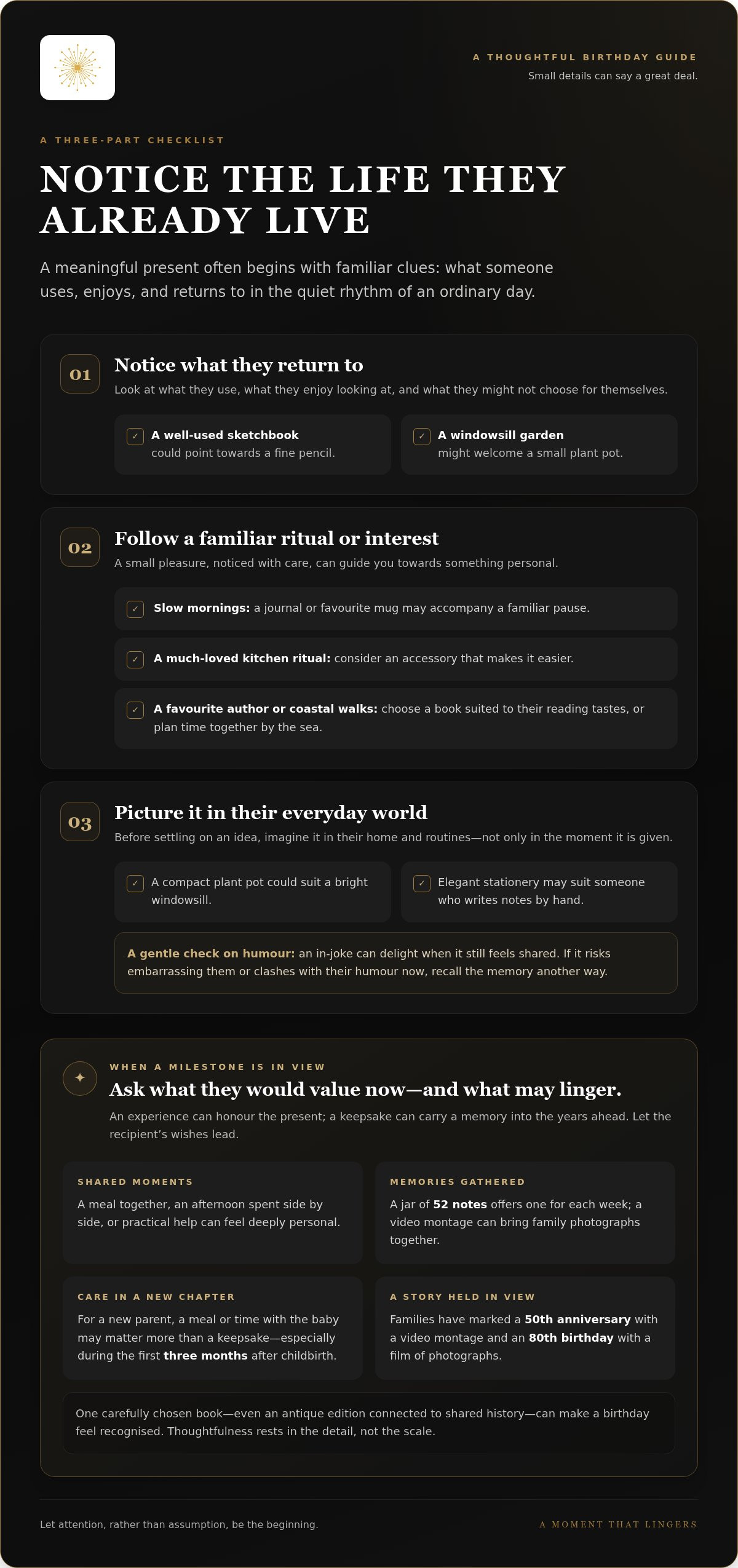
Start with what the recipient already welcomes into their day. Notice what they use, what they enjoy looking at, and what they might not buy for themselves. A friend who fills a sketchbook may appreciate a fine pencil; someone who tends a windowsill garden might enjoy a small plant pot. These details make observation a practical starting point.
Next, look for a daily ritual that brings the person quiet pleasure. For someone who loves slow mornings, a journal or favourite mug can accompany that familiar pause. A keen cook might appreciate a kitchen accessory that makes a well-loved routine easier. The object needn’t be elaborate. Its meaning comes from recognising a small pleasure they return to.
Interests can point towards experiences or things to enjoy together. If your sister often talks about a particular author, choose a book suited to her reading tastes rather than a general bestseller. If a friend loves coastal walks, plan time together on one. What someone mentions unprompted is often a better clue than what looks impressive from the outside.
If you’re less familiar with someone’s tastes, choose something useful and visually pleasing. Stationery, a mug, a kitchen accessory, or a small plant pot can work without guessing at a specialised hobby. Look at the recipient’s home and routines: a compact pot may suit a bright windowsill, while elegant stationery may appeal to someone who writes notes by hand.
Shared humour can guide a personal choice, but context matters. An in-joke from years ago may delight someone who still tells the story; it may feel misplaced if it clashes with their home or sense of humour now. Before choosing, picture the gift in their space and imagine their response. If the joke depends on embarrassing them, recall the memory another way.
Use a simple three-step check when choosing a meaningful present: name a habit you’ve noticed, connect it to an item or experience, then ask whether it suits the recipient’s everyday life. A friend who collects travel journals, for example, might enjoy a beautiful notebook for a future journey. A reader who treasures quiet evenings may prefer a book chosen for their interests to a generic gift.
Let the gift reflect attention, not assumption. A familiar ritual, a much-mentioned interest, or a detail from someone’s home can guide you better than broad ideas about what people usually like. A choice that fits their real habits is more likely to become part of their story.
3. Personalization, colour, and recipient preferences
A personal touch begins with noticing, not guessing. Recall the colour your sister wears often, the blue linen on your friend’s favourite chair, or the botanical prints your parent keeps nearby. These details hint at what feels familiar to them. Choose something that belongs comfortably in their world, rather than reflecting only your own taste.
Colour can carry a quiet memory. A soft green notebook might recall a garden you visited together; a deep blue scarf could suit someone who often chooses cool tones. Notice what the recipient already wears or keeps in view. If their home is filled with warm neutrals, a striking colour may feel out of place unless it connects to a cherished story.
Personalisation needn’t mean adding a name or date. It might be a book by an author they love, a photograph from a shared journey, or a card recalling a detail only the two of you remember. For a friend who has moved, a note about the street café you discovered together can give a simple present a deeper thread of meaning.
Consider the recipient’s style before choosing a message or motif. Someone who prefers clean lines may appreciate a simple design; a relative who collects travel mementoes may welcome a map or image linked to a favourite place. A gift should feel like an extension of their tastes, not an invitation to display something that doesn’t suit their home or character.
A gift card can still feel considered with a personal note. Explain why you chose it and what you hope the recipient might enjoy choosing. For example, a note to a keen gardener might suggest a future visit to a plant nursery together. Your words turn the gift into an invitation, rather than an afterthought.
Before deciding, follow three simple steps: notice a preference, connect it to a detail, then choose a form that feels natural. If your cousin wears muted colours and loves the changing seasons, a small print of autumn leaves may suit better than a bright, unrelated design. If your partner keeps family photographs nearby, a framed picture from a shared day may say more than a generic message.
Leave room for the recipient’s own interpretation. A handwritten card can explain why a colour, image, or phrase came to mind without insisting on what it must mean. The most personal gifts leave space for memories to unfold. A small detail, chosen with care, can quietly remind someone how closely they’ve been seen.
4. What makes a birthday gift meaningful?
A gift gains meaning through the thought it brings into someone’s life. A photograph from a shared journey can recall a quiet morning better than a generic keepsake. A favourite story, chosen because it shaped a conversation, shows that you listened. The object itself may be simple; the connection behind it gives the birthday its deeper resonance.
Begin with one clear reason for choosing the gift. Perhaps it honours a quality you admire, marks a change the recipient has made, or recalls a moment you shared. For a friend who helped you through a difficult time, write about one specific act of kindness. That detail makes your appreciation tangible, rather than leaving it as a general compliment.
Meaning also depends on how well a present fits the recipient’s life. A large item may create an obligation if their home is already full; an elaborate activity may not suit someone who prefers a quiet afternoon. Picture the gift in its real setting. Would it bring pleasure, or require space, upkeep, or attention the person hasn’t asked to give?
A novelty present can prompt a laugh, but ask whether it will still be enjoyed after five minutes. A playful mug referencing a familiar phrase may become part of someone’s morning; a joke that embarrasses them may quickly lose its appeal. The distinction is the recipient’s comfort. Choose humour they share, not a punchline at their expense.
Words can complete the gesture. A handwritten card with genuine words explains your choice and gives the recipient a thought to revisit later. Name a real detail: the walk where you lost your way, the song you both remember, or the advice they offered. Specificity matters more than polished phrasing. A short, honest message can make even a modest present feel considered.
Before giving anything, ask yourself three questions: Does it reflect this person, suit their present circumstances, and carry a thought you can express sincerely? A book connected to a conversation may meet all three tests; a costly item chosen only to impress may not. Let your answers guide the final choice. The most lasting birthday gifts needn’t declare their meaning loudly. Each time the recipient sees them, they can quietly bring a memory to mind.
A handwritten card with sincere words helps a birthday gift feel complete. It keeps the focus on the thought behind the present and gives your appreciation a clear place alongside it.
5. What are meaningful birthday gifts for a partner, friend, parent, or child?
The relationship offers its own clues. A partner may treasure a gesture rooted in a shared memory; a child may value something that invites play. Begin with what you know about the person, then choose something that belongs to the life you share. A familiar place, a favourite story, or a quiet ritual can make the choice feel distinctly theirs.
For a partner, gather small reminders of your life together. A photograph from a favourite journey, paired with a note about the day, can bring its details back into view. Or plan an experience that reflects something you both enjoy, such as revisiting a gallery. The thought lies in choosing a moment that feels like the two of you.
For a friend, celebrate the history between you. A jar holding 365 small photographs or notes can offer a memory for each day. Another possibility is a video montage of photographs spanning your friendship, set to favourite songs and given on a CD. Choose images that tell a story, from early adventures to ordinary afternoons, rather than selecting them only for how they look.
A parent may appreciate a gift that honours family memories. Bring together a photograph, a familiar recipe, or a handwritten recollection of a tradition they helped create. A note about Sunday suppers, for example, could accompany a copied family recipe. Keep it specific: name the dish, the people around the table, and the detail you still remember.
For a child, let curiosity guide your choice. Imaginative play, a bedtime companion, a creative activity set, or an illustrated book can suit different interests and moods. A child who loves stories may welcome a new book to read together; one who enjoys making things may prefer an activity that leaves room for their own ideas. A gift feels personal when it follows the child’s interests, not an adult’s expectations.
For a particularly avid young reader, a much-loved story can become part of a birthday memory. One youngest son was reading The Hobbit at age 7. The example is a reminder to follow the child’s actual enthusiasms: a book that meets their curiosity may matter more than one chosen simply because it is popular.
Whether you’re choosing for a partner, friend, parent, or child, let the relationship shape the gesture. If nature’s quiet beauty feels right for the person you have in mind, explore a birthday gift inspired by nature.
For children, imaginative play, bedtime companions, creative activity sets, or illustrated books can make thoughtful gifts. An unused vintage book found at an antiques fair can also become a sentimental birthday present.
Taraxacum Orbis - Dandelion Sphere: Dandelion Spheres
Taraxacum Orbis - Dandelion Sphere offers Dandelion Spheres for birthdays when you want a gift that holds a moment of nature in view. Each botanical art object centres on the delicate form of a real dandelion, making a fleeting image tangible. It may suit someone who loves wild places, quiet symbolism, or the childhood ritual of making a wish before sending seeds into the air.
For someone who appreciates nature's quiet artistry, a Dandelion Sphere offers more than a passing novelty. It can serve as a lasting reminder of time, hope, and the beauty of impermanence. Botanical Art Objects and Dandelion Cubes offer related forms, while Luxury Gift Objects bring this sense of wonder to a considered birthday gesture.
If a preserved moment of nature feels right for someone you love, explore Dandelion Spheres at dandelionsphere.com or contact Taraxacum Orbis - Dandelion Sphere.
Let the next birthday carry a wish
Some birthdays invite us to pause and notice how far someone has travelled. Others offer a chance to share a hope for the season ahead. Let that feeling guide your choice. A meaningful birthday gift needn’t explain everything; it can hold a memory, honour a beginning, or quietly remind someone how well they’re known.
Perhaps the right gesture is already taking shape in a shared story, a favourite colour, or the image of a dandelion wish carried by the wind. Take a moment to listen for it. The most lasting choices often begin with attention rather than spectacle.
If a moment of nature feels fitting for the person you’re celebrating, explore the Dandelion Sphere collection. May your choice bring a little wonder to their day, and linger long after the candles fade.
Frequently Asked Questions
How to choose a meaningful birthday gift based on someone's interests and personality?
Consider how the recipient feels about surprises and what kind of attention makes them comfortable. A friend who dislikes being centre stage may prefer a quiet delivery at home to a public celebration. Someone who enjoys choosing for themselves might appreciate two carefully selected options. This small distinction helps you shape the moment around their temperament, rather than making the gift feel like a performance.
What are thoughtful personalized birthday gift ideas?
Choose a detail that belongs uniquely to the recipient. A portrait of their beloved pet can celebrate a companion in their everyday life; a bespoke star chart can mark a date they hold dear. Personalisation needn’t be prominent. A discreet reference, chosen with care, can make an object feel as if it could only have been meant for them.
What meaningful birthday gifts can you give on a small budget?
Create something that brings a little delight without relying on a purchase. A short crossword or quiz can feature the recipient’s favourite fictional characters, beloved films, or familiar family pets. Leave space for them to complete it over breakfast or during a relaxed visit. The pleasure comes from reflecting their particular world with a touch of playfulness.
How can you make a birthday gift more personal with a handwritten note or presentation?
Write a simple wish for the year ahead, such as hoping they find time for more long walks or peaceful mornings. Wrap the gift in reusable cloth or a favourite scarf, then tie it with ribbon. The recipient can use the cloth afterwards, making the gesture practical as well as beautiful.
Disclaimer
The content on this website is provided for inspiration and informational purposes only. Articles reflect the philosophy and storytelling of Dandelion Sphere and are not intended as professional advice. While every effort is made to ensure accuracy, no guarantees are given regarding completeness or current applicability.


