
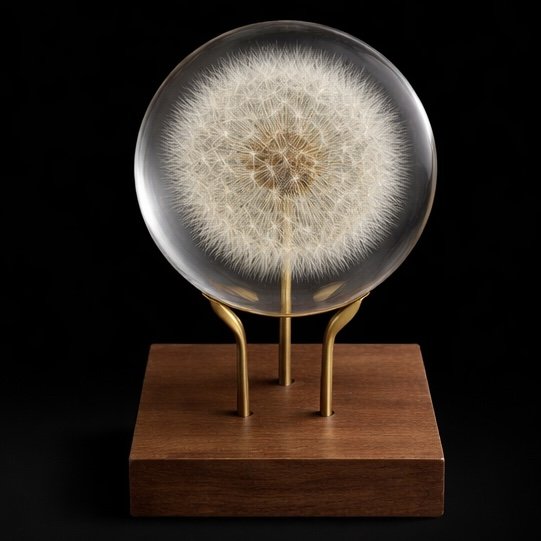
A meadow. A summer afternoon. A child holds a white orb of wishes. She breathes. The moment dissolves into the wind. We long to catch them. To keep the stillness. You understand this quiet longing. The search for a botanical art collector piece often feels like a chase after shadows. You desire more than a flat, mass-produced print. You seek the depth of the wild. A moment suspended in time. A memory made tangible.
Finding a sculpture that survives the seasons is a delicate task. It requires an eye for the eternal. This guide will help you distinguish between a simple object and a true piece of poetry whilst you navigate the space between science and art. You'll learn to identify works that bridge the distance between observation and emotion. We will explore how to select a focal point that brings a sense of calm to your home's centre. A piece of nature that never fades. A wish, held forever.
Key Takeaways
- Recognise the shift from scientific illustration to emotional resonance by choosing objects that prioritise the poetry of nature.
- Identify a high-quality botanical art collector piece by examining the absolute clarity of the suspension and the perfect symmetry of the fragile specimen within.
- Master the art of curation by placing spheres amongst traditional botanical works to create a serene focal point in a minimalist home.
- Learn to observe how light interacts with the sphere to transform a quiet corner into a sanctuary of suspended time.
- Discover why a dandelion captured in its fullest bloom serves as a lasting symbol of hope and a legacy for future observers.
Defining the Modern Botanical Art Collector Piece
A meadow in May. A white orb. A breath. The wind takes it. For centuries, we tried to capture this. We used ink. We used dried leaves between heavy pages. This was the origin of botanical illustration. It was a science. A map of the wild. But a map is not the journey. A drawing is not the wind. It lacks the pulse of the living world. It is a record, but perhaps not a feeling.
Today, the botanical art collector piece has evolved. It's moved from the page to the palm. It's no longer about naming a species. It's about holding a second. A single, unrepeatable breath of life. We seek emotional resonance. We seek the soul of the plant. Not just its shape. This is the physical preservation of a fleeting three-dimensional breath. It's a way to touch the infinite. To keep what was meant to vanish.
The 3D specimen offers a deeper truth. A print is a memory of a memory. A shadow on a wall. But a sphere is a presence. It has weight. It has light. It invites you to look closer. To see the architecture of a seed. To feel the stillness. This is the role of the artisan's craft. To capture what is fragile. To make it eternal. A fleeting moment. Held forever.
The Evolution of Botanical Curation
In the 1600s, collectors kept herbariums. Pressed flowers. Faded colours. They were records of the past. Today, we look for the present. The dandelion was once a common weed. Now, it's a sacred object. A symbol of a wish carried by the wind. Contemporary collectors value this feeling whilst they seek a connection to the wild. They don't just want the documentation. They seek a botanical art collector piece that feels alive. Even in its stillness. They value the poetry of nature over the map of the scientist. They want the moment. Not the map.
Artisan Object vs. Mass Decoration
There's a difference between a mere object and a quiet heirloom. Mass-created things lack a soul. They're hollow. A true collector piece begins with selection. Each dandelion is chosen with deep care. One amongst thousands. It must be perfect. Symmetrical. Healthy. This ensures the soul of the meadow is preserved without blemish whilst the world outside continues its restless pace.
A true collector's object is defined by several quiet virtues:
- Crystalline clarity: A clear window into nature with no cloudiness or yellowing.
- Substantial weight: A tactile presence that feels significant in the hand.
- Perfect symmetry: The preservation of the dandelion's natural geometry.
It's a memory made tangible. It's a piece of poetry you can hold. It's a legacy of a single summer afternoon. A moment suspended in time. Held forever.
From Illustration to Sculpture: The 3D Specimen
Think of a summer field. The air is heavy with the scent of warm grass. You find a dandelion. It is perfect. A silver globe of potential. You blow. The seeds scatter. The moment is gone. For centuries, collectors sought to preserve this beauty through flat pages. They turned to institutions like the Hunt Institute for Botanical Documentation to see the history of these plants in two dimensions. But a drawing is a ghost. It lacks the volume of the living world. A true botanical art collector piece must offer more. It must offer the depth of the moment itself.
The transition from a flat print to a three-dimensional sculpture is a journey of perspective. In a sphere, there is no front. There is no back. Every angle reveals a new secret. You see the way the seeds anchor to the centre. You see the delicate umbrellas that catch the breeze. It is a gallery held in the palm of your hand. This is not just a depiction of nature. It is the physical preservation of a fleeting three-dimensional breath. It is a memory made tangible. It is a wish, held forever.
The Alchemy of Preservation
The removal of air through a slow, deliberate process ensures a museum-grade clarity that allows the light to pass through the suspension without interruption. This requires immense patience. The artisan must wait whilst the medium settles. Any rush would cause the fragile structure to collapse. The goal is a bubble-free environment. A space where the specimen remains the only focus. It is a quiet, meditative labour. It ensures the dandelion stays suspended in time. Perfect. Still. Eternal.
The Poetry of Three Dimensions
The spherical form is not accidental. It mimics the geometry of the earth. The geometry of the eye. Light does not just hit the surface; it enters. It refracts. It highlights the individual silken threads of every seed. This creates a stillness that two-dimensional art cannot achieve. You are not looking at a picture of a dandelion. You are looking at the dandelion itself. It exists in a state of perpetual grace. Amongst your collection, it acts as a quiet anchor. A point of reflection.
To hold one is to feel the weight of a summer afternoon. You might choose to explore the Dandelion Spheres that capture these quiet stories. Each one is a singular second. A moment suspended in time. It is the poetry of nature, given a permanent home. A fleeting moment. Held forever.
Curating Nature: Integrating Crystalline Art into a Private Collection
A room is a story. It breathes. It holds the echoes of our journeys. When we bring nature indoors, we often choose the flat page. A pressed leaf. A vintage drawing. These are beautiful ghosts. But a private collection finds its soul in the contrast between the old and the new. Integrating a botanical art collector piece into your space is an act of quiet curation. It's an invitation to slow down. To observe. To feel the weight of a single, suspended second amongst the rushing hours.
A collection should evolve. It should move from the two-dimensional to the three-dimensional. You might look to the archives of the Hunt Institute for Botanical Documentation to understand the history of this pursuit. There, the record of life is vast. But in your home, the record is personal. It's a memory made tangible. It's a wish, held forever. By placing a clear orb amongst traditional prints, you create a layered aesthetic. A dialogue between the past and the present. The shadow and the light.
Dialogue Between Mediums
Contrast is the heart of beauty. Place a sphere beside a vintage illustration of a dandelion. The ink on paper shows the map. The sphere shows the life. One is a record of what was. The other is a moment suspended in time. You see the fragility of the silken seeds. You feel the permanence of the suspension. They speak to each other. They tell a story of the seasons. You can organise your pieces by the cycle of the year. A spring bloom. A summer seed. An autumn rest. It's the poetry of nature, curated by your own hand.
Minimalist Placement Strategies
The botanical art collector piece does not shout. It whispers. In a minimalist home, it becomes the quiet centrepiece. A focal point for the eye. A sanctuary for the mind. Place a single sphere on a sunlit windowsill. Watch the light. It enters the crystalline form. It dances amongst the seeds. The object changes as the day moves. It's a living sculpture. You might create a nature corner. A smooth stone. A piece of weathered wood. A dandelion sphere. This small altar becomes a space for mindfulness. A place to breathe. A fleeting moment. Held forever.
Each piece you choose should resonate. It's not about filling a shelf. It's about finding a stillness that speaks to you. A legacy of the meadow. A piece of poetry you can hold. It's a simple, profound truth. Nature's artistry, given a permanent home.
The Collector’s Eye: Evaluating Clarity and Form
A winter morning. The air is sharp. Clear. You look through a window at the frost. If the glass is clouded, the beauty is lost. The same is true for a botanical art collector piece. It is a window into a summer that has passed. To truly hold that time, the window must be invisible. It must be as clear as a mountain stream. This clarity isn't merely a technical detail. It's the vessel for the memory itself. A way to ensure the poetry of nature remains pure.
As a collector, you seek a stillness that doesn't yellow with the years. You look for a form that honours the flower. A piece that feels as if the dandelion is simply resting. Suspended in a breath of light. This requires a discerning eye. It asks you to look past the object and see the intent. The artisan's touch is found in the absence of flaws. In the perfect polish that makes the medium disappear. It's a quiet, dedicated pursuit of perfection.
Evaluating the Crystalline Medium
A medium that resists the touch of the sun is vital for keeping the meadow's true colours alive for generations. You should look for a suspension that remains crystalline. Free from the haze of time. There should be no distortions. No ripples to bend the light. Every silken thread of the seed head should be sharp. Defined. This ensures that the intricate details of the seeds aren't obscured. It's the difference between a simple object and a work of art that captures the soul of the wild. It's a commitment to permanence. A way to keep a moment suspended in time.
Specimen Integrity and Selection
The search for the perfect moment is a patient one. You look for a seed head that is full. Unbroken. This silver globe hasn't yet felt the wind's pull. It's rare for such a fragile thing to survive the journey into stillness intact. The source of the flower matters. It must be gathered with reverence. Handled as if it were a secret. You observe the symmetry. The health of the encased dandelion. When you find a piece where every seed is in its place, you're holding a miracle. A memory made tangible.
Each selection is a story of a single afternoon. A wish carried by the wind, caught before it could vanish. You might choose to view the collection of Dandelion Spheres to find a piece that speaks to your own sense of wonder. Every sphere is a testament to nature's artistry. A quiet focal point for a mindful home. It's a fleeting moment. Held forever.
A Stillness Held: The Dandelion Sphere as a Legacy
The meadow sleeps. The golden heads of spring have turned to silver. Each one is a cathedral of light. A botanical art collector piece is the only way to keep this architecture from the wind. We remember the breath that scattered the seeds. The laughter in the tall grass. But the wind eventually stills. The seasons turn. This object offers a way to keep that light. To hold the beginning of the story. It's more than an object. It's a legacy. A testament to the artisan's reverence for the wild. A memory made tangible.
An heirloom should carry weight. Not just in the hand, but in the heart. These spheres are anchors for the soul. They're bridges between generations. You look into the clear suspension. You see a summer afternoon from years ago. You see the same perfection your children will see. It's a stillness held. A piece of poetry that doesn't fade. It celebrates the brief. It honours the eternal. It's a way to touch the infinite whilst the world outside continues its restless pace.
The Philosophy of the Wish
A wish is a fragile thing. It's a thought carried by the wind. When you place a sphere in your home's centre, it becomes a physical anchor. A quiet place for your intentions to rest. It's a conversation between you and the field. You see the seeds ready to fly. Yet they stay. This is the power of a moment suspended in time. It's a gift that captures a fleeting second. A reminder that beauty doesn't have to be temporary. It can be held. It can be cherished amongst your most quiet treasures.
Beginning Your Collection
Your journey as a collector starts with a feeling. An intuition. Don't look for a specimen that merely fits a space. Look for one that speaks to your soul. Choose the piece that brings you a sense of calm whilst you observe its intricate geometry. The value of an artisan-made botanical art collector piece lies in its truth. In its ability to stop time. You might explore the Dandelion Sphere collection and find your moment of stillness. Each one is a singular breath. A memory given permanence. A fleeting moment. Held forever.
Embracing the Eternal Breath
The meadow is silent now. The golden hours of summer have faded into the long shadows of the year. We've seen how a botanical art collector piece transcends the flat page. It moves beyond the map. It enters the soul. You now understand the importance of crystalline clarity. The weight of a moment held. The way light reveals the silent architecture of a wish. It's a dialogue between the viewer and the field. A conversation that never ends.
Every sphere is a testament to the poetry of the ephemeral. We select each specimen with reverence from the heart of the meadow. One amongst thousands. We preserve it in a suspension that remains crystal-clear and UV-stable for generations. This is your legacy. A memory made tangible. It's a way to keep the stillness in a restless world. A sanctuary for your thoughts. A fleeting moment. Held forever. Curate your sanctuary with a handcrafted Dandelion Sphere. May your home always hold the quiet poetry of the wild.
Frequently Asked Questions
Is a resin-encased dandelion considered a true botanical art collector piece?
A dandelion held in crystalline suspension is indeed a true botanical art collector piece. It represents a profound shift from the flat, scientific records of the past to a three-dimensional experience of the wild. By capturing the volume and depth of the plant, we move beyond mere illustration. It's a way to hold a fleeting moment forever whilst celebrating the intricate architecture of the natural world. This creates a lasting connection to the meadow.
Will the dandelion inside the resin sphere ever change colour or decay?
The dandelion remains in a state of perpetual grace within its clear sanctuary. Once the air is removed and the specimen is perfectly encased, the cycles of decay are halted. It stays exactly as it was on that one summer afternoon. The silken threads and golden centre are held in a moment suspended in time. It is a memory made tangible that will not change with the passing seasons or the years.
How should I clean and maintain my botanical art object?
Cleaning your botanical art object is a simple act of mindfulness. Use a soft, dry microfibre cloth to gently remove dust from the surface of your crystalline orb. It's best to avoid any harsh chemicals or abrasive materials that might disturb the clarity of the medium. Treat the piece with the same quiet reverence you would show a fragile blossom found amongst the tall grass of a meadow in June.
Can I place my Dandelion Sphere in direct sunlight?
Placing your sphere in indirect light is the best way to protect the delicate specimen whilst allowing it to glow. Although the medium is designed to be UV-stable, keeping it away from harsh, direct rays ensures the meadow's true colour remains vibrant for generations. The play of soft light through the suspension highlights the individual seeds. It creates a sanctuary of stillness in any room where it's placed.
What is the difference between a mass-produced paperweight and an artisan botanical sphere?
A mass-produced object is often hollow and lacks the soul of the artisan's touch. In contrast, an artisan sphere is a singular second of life given permanence. It's a botanical art collector piece chosen for its perfect symmetry and emotional resonance. The weight and crystalline clarity of a handcrafted piece provide a tactile presence that a simple decoration can never hope to replicate. It's a legacy held in the hand.
How do you keep the dandelion seeds from blowing away during the resin pouring process?
Keeping the seeds intact requires a process of profound patience and stillness. The dandelion is placed with a quiet, steady hand. The medium is then introduced with such deliberate care that the seeds don't feel even a breath of movement. It's a meditative labour that honours the fragility of the flower. This ensures the silver globe remains intact and perfect within its new, eternal home, untouched by the wind.
Is each Dandelion Sphere unique, or are they all the same?
Nature never repeats her work; therefore, every sphere is entirely unique. Each dandelion is hand-selected amongst thousands for its singular form and character. No two orbs will ever be identical because no two moments in the meadow are the same. When you hold your sphere, you are holding a singular second of time. It is a wish that belongs only to you, captured forever in light.
What does the dandelion symbolize in botanical art history?
The dandelion has long served as a symbol of hope, wishes, and new beginnings. In the history of botanical art, it represents the beautiful transition between states of being. It reminds us that even the most common elements of the wild hold a sacred poetry. By preserving this form, we celebrate the cycle of life and the quiet strength found in nature's most delicate creations, held forever as a memory.
Disclaimer
The content on this website is provided for inspiration and informational purposes only. Articles reflect the philosophy and storytelling of Dandelion Sphere and are not intended as professional advice. While every effort is made to ensure accuracy, no guarantees are given regarding completeness or current applicability.


