
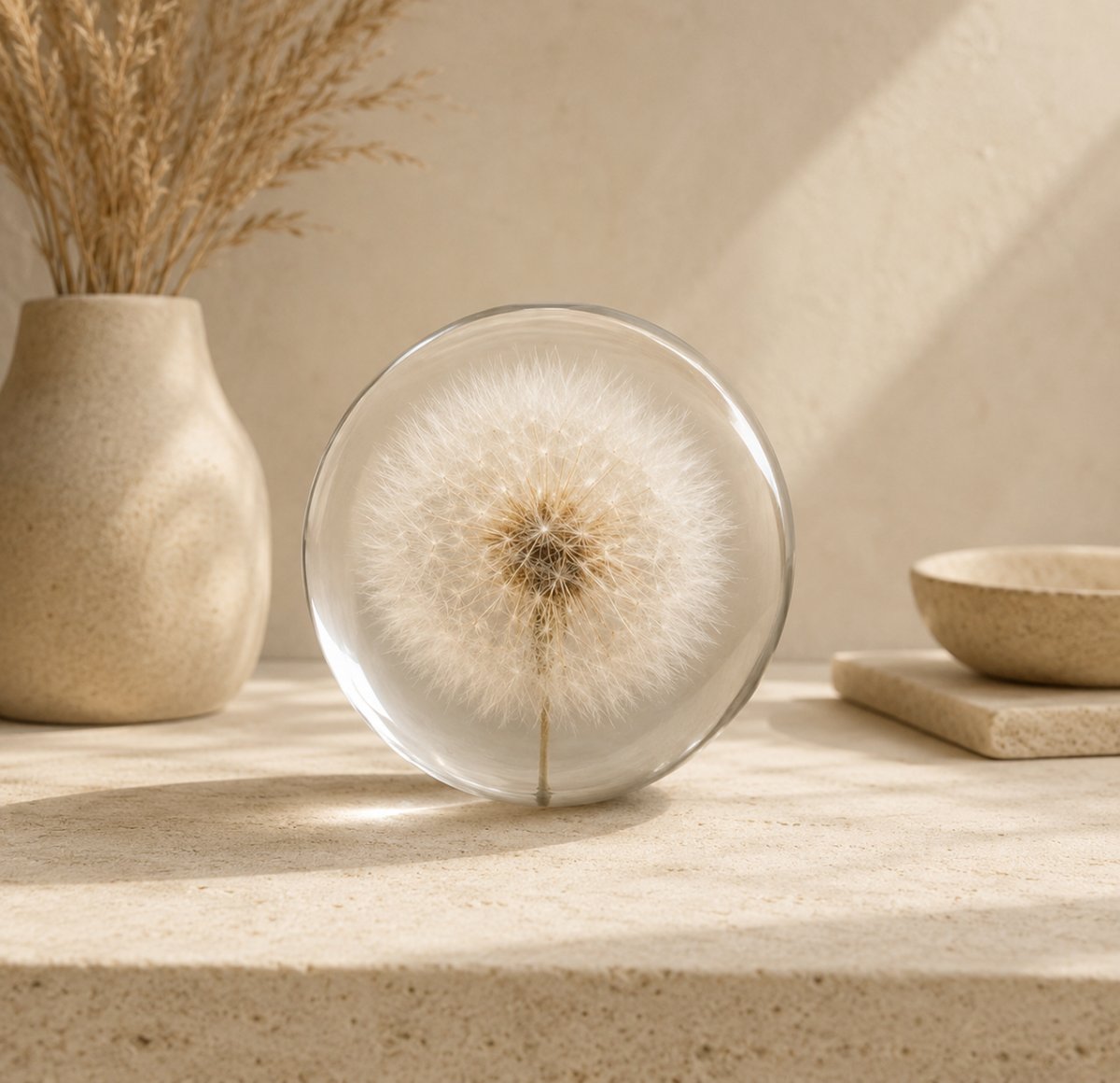
What if a single, wild breath of summer could be caught? Held. Suspended. The garden fades. The petal falls. In our modern rooms, we often feel the weight of the mass-produced. The soulless. We sense a quiet disconnect from the earth. A botanical interior accent is not a mere object. It is a dialogue between nature and space. A captured second of natural poetry. It anchors a room in stillness.
You understand the ache for something real. You feel the loss of the fleeting bloom. This exploration promises to show you how one thoughtful element can turn a living space into a sanctuary of reflection. We'll observe how to invite the outdoors in. We'll find a sense of permanence amongst the ephemeral. A memory made tangible. A wish carried by the wind, finally at rest.
Key Takeaways
- Discover how a botanical interior accent serves as a silent bridge between the wild meadow and the curated room.
- Learn to choose objects that echo the soul of the natural world rather than the hollow weight of a mass-produced replica.
- Master the use of light and white space to let your natural centrepiece breathe whilst revealing its delicate, hidden architecture.
- Explore the deep emotional resonance of preserved wildflower art and its connection to childhood memories and summer breezes.
- Find stillness in the Dandelion Sphere. A sculptural poem. A fleeting moment, held forever.
What Defines a Botanical Interior Accent?
A summer meadow at dusk. The air is heavy with the scent of sun-warmed grass. A single dandelion clock stands. It's perfect. It's fragile. We often try to carry these feelings home. We buy leaf-printed cushions. We paint our walls in shades of moss. Yet, the essence remains outside. The true botanical interior accent is different. It is a bridge. A quiet dialogue between the wild, untamed earth and the deliberate, curated room. It's an invitation to pause whilst moving through a space. A fragment of the world, held still.
This is more than a decorative choice. It is a philosophy of presence. We seek objects that possess a soul. A singular specimen that commands attention through its delicate, intricate detail. It isn't about filling a corner. It's about anchoring a room in stillness. A memory made tangible. It's the poetry of nature, brought indoors to stay. Each piece acts as a silent witness to the passage of time, capturing a state of being that is usually lost to the wind.
The Poetry of Natural Form
Nature was the original architect. It designs with a logic that's both complex and profoundly simple. We're naturally drawn to these patterns. The radial symmetry of a seed head. The delicate arc of a stem. These forms possess a quiet authority. They don't shout for attention. They wait to be noticed. When we place a single botanical specimen in a room, we aren't just adding an object. We're introducing a story of growth. A moment suspended in time. It's a celebration of the quiet poetry found in the everyday details we so often overlook.
Beyond the Green Palette
Many interior trends focus on the green palette. They speak of specific paint colours or transient fashions. But a botanical interior accent moves past the surface. It is three-dimensional art. It's the interplay of light and organic texture. This connection aligns with biophilic design principles. These concepts suggest our well-being depends on a tangible link to the natural world. As our spaces become more digital, our hunger for the organic grows. The global indoor plant market is projected to reach USD 32.7 billion by 2032, according to industry research, reflecting a collective move back towards the earth. A solitary object creates a focal point of serenity. It's a wish carried by the wind, finally at rest. A fleeting moment, held forever.
Choosing Accents that Echo the Soul of Nature
A seed head. A map of survival. A story of time. When we choose a botanical interior accent, we aren't simply selecting an ornament. We're choosing a companion for our thoughts. We're looking for an object that tells a story of growth and resilience. We seek the weight of the real. The global market for artificial flowers is projected to reach USD 2.91 billion by 2034, according to recent industry data. Yet, there is a hollow quality to the mass-produced. A replica has no history. It has no soul. It's a silent echo of a life it never lived.
The difference is felt in the palm. And in the heart. We favour the artisanal over the industrial. We look for the subtle imperfections that prove an object was born of the earth. Consider the weight of the piece. Not just its physical gravity, but its emotional presence. Does it invite you to remember? Does it make you wonder? A true natural treasure carries a specific resonance. It's a memory made tangible. It's a wish carried by the wind, finally caught. Perhaps you seek this weight. A botanical interior accent that speaks of a summer held forever.
The Authentic Specimen
There's an irreplaceable aura to a real flower. Even in its stillness. Preservation isn't about stopping time. It's about honouring the original life of the plant. It's a bow to the architecture of the wild. We avoid the novelty of the artificial. We lean toward the timeless. A real specimen carries the energy of the meadow it once inhabited. It keeps the secrets of the sun and the rain. This authenticity creates a connection that no factory can duplicate. It's the poetry of nature, whispered in a quiet room. It's a moment suspended in time, keeping its dignity.
The Crystalline Suspension
Beauty thrives in clarity. When a specimen is held in a crystalline medium, it defies the natural cycle of decay. It's a victory over the ephemeral. The clear medium acts as a lens. It invites closer inspection. It reveals the intricate architecture of a dandelion or the delicate veins of a leaf. You see the world in miniature. Every detail is magnified. Every fragile state is preserved. This suspension creates a dialogue between the viewer and the object. It forces us to slow down. To breathe. To observe the quiet poetry of everyday life. It's a glimpse into the infinite, held within a finite space.
How to Organise Your Space Around a Botanical Centrepiece
A room is like a breath. If it's too full, it's a gasp. We often crowd our shelves with noise. We mistake clutter for character. But a botanical interior accent requires room to breathe. It asks for white space. This isn't emptiness. It's a pause. It's a frame of stillness around a moment suspended in time. By clearing the surrounding noise, you allow the object's voice to be heard. The poetry of nature is quiet. It doesn't compete. It simply is. It exists in the gap between what we own and what we feel.
Place your specimen where the eye naturally rests. At eye level. This encourages a moment of mindfulness. A brief escape from the digital hum. Pair it with textures that share its origin. The grain of aged oak. The cool, honest weight of stone. The soft weave of linen. These materials don't distract. They ground. They create a sanctuary where the ephemeral feels permanent. Statistics from the 2024 interior design market suggest that residential spaces now account for over 60% of global design focus. We're turning inward. We're seeking a sense of peace that only the organic can provide.
Sculpting with Light
Light is the medium of discovery. Position your accent near a window. Watch the daily display change. The morning sun reveals the intricate architecture of a seed head. It's a gallery atmosphere. Soft. Focused. The evening light casts long, dancing shadows across the wall. These shadows aren't just absences of light. They're part of the sculpture. They're the echo of a wish carried by the wind. By using light as a tool, you turn a static object into a living dialogue. You see the passage of time through the movement of the sun across the glass.
The Minimalist Mantle
Think of a solitary sphere on a desk. A quiet centre amongst the chaos of daily life. You don't need a collection. One singular botanical interior accent is enough to anchor a space. It invites you to stop. To breathe. To look. This is the power of the minimalist mantle. It reduces the surrounding noise to highlight the singular beauty of a life held forever. It's a memory made tangible. It's a reminder that even in the busiest day, there's a place for stillness. A place for the delicate. A place for the soul to rest whilst the world continues its frantic pace.
The Emotional Resonance of Preserved Wildflower Art
A field in late July. Golden light. You remember the grass against your shins. The scent of wild clover. You found a dandelion. You made a wish. You blew. The seeds scattered into the blue. The moment was gone. This is why a botanical interior accent carries such weight. It isn't just an object. It's a vessel. It holds the summer breezes of your childhood. It offers the comfort of a wish that does not blow away. In a world that never stops moving, it is a gift of stillness. It is a quiet rebellion against the rush. A way to tether ourselves to the earth whilst the hours slip by.
There is a profound sense of peace in the presence of the preserved. We often feel disconnected from the natural cycles of the world. Our spaces feel mass-produced. Soulless. But a fragment of the earth brought indoors changes the energy of a room. It invites reflection. It asks us to consider the passage of time through a flower that never fades. It creates a sanctuary where the ephemeral is given a voice. A place where we can finally catch our breath.
A Memory Made Tangible
Nostalgia is an anchor. We look at a preserved bloom. We don't just see a plant. We see a specific afternoon. We see the light as it filtered through an old window. The dandelion is a universal symbol. It represents hope. It's the first gift a child offers. It's the first time we understood that magic lives in the weeds. The dandelion stands as a silent witness to the seasons, holding the breath of the meadow within its fragile crown. It's a memory made tangible. A fleeting moment, held forever. It connects us to the rhythm of beginnings and endings. It reminds us of a wish carried by the wind, now finally at rest.
The Beauty of the Brief
We often try to own nature. We pick the flower. It wilts. We try to keep it. It fades. There's a shift when we move from owning to observing. We acknowledge the fragility of life whilst celebrating its form. We find peace in the preservation of the delicate. This is the poetry of nature. It's a moment suspended in time. It's the beauty of the brief. By bringing such an element into our home, we reflect on our own journey. We see a beauty that persists. It reminds us that whilst the world rushes, some things can remain. It's a dialogue between the temporary and the eternal. You might find your own quiet centre by choosing a botanical interior accent that speaks to your soul. It is an invitation to slow down. To breathe. To remember that beauty doesn't have to be fleeting to be real.
A Fleeting Moment, Held Forever: The Dandelion Sphere
The dandelion. A crown of white. A breath of wind. We have explored the bridge between the wild meadow and the curated room. Now, we arrive at the heart of this silent dialogue. The Dandelion Sphere. It is more than an object. It is a sculptural poem. Within its bounds, a single, perfect dandelion is offered a crystal-clear sanctuary. Each piece represents a unique dialogue between the artisan and the earth. This is the ultimate botanical interior accent for the thoughtful collector. It doesn't merely decorate a space. It anchors it. It holds the room in a state of reverent stillness.
There is a profound weight to such an object. It is a fragment of the earth brought indoors to stay. We often feel the fleeting beauty of a garden is lost too quickly. The petal falls. The seed scatters. But here, the poetry of nature is given a sense of permanence. It becomes a conversation piece that evokes emotion without saying a word. It is a silent witness to the seasons. A wish carried by the wind, finally at rest. By choosing such a piece, you invite a sense of timelessness into your daily life.
The Alchemy of Stillness
The alchemy of stillness is a patient pursuit. To keep a delicate seed head perfectly intact is to defy the wind. Not a single parachute is lost. Not a single wish is scattered. The clarity of the medium allows for infinite wonder, inviting the eye to travel through the intricate architecture of the plant. You see every spine. Every fine, silver hair. It is a legacy of nature that remains unchanged through the years. Whilst the seasons turn and the garden fades, the sphere remains constant. It is a moment suspended in time. A memory made tangible. It offers a sense of permanence amongst the ephemeral.
Inviting Serenity Home
Our homes should be more than shelters. They should be galleries of the soul. The Dandelion Sphere is the quiet companion your desk or mantle needs. It is a gift for the nature lover who cherishes the overlooked beauty of a common weed. It invites you to look closer. To find the infinite within the finite. In the rush of a day, it provides a quiet centre. It is a reminder of summer breezes and the childhood act of making a wish. We invite you to experience the stillness of our Dandelion Spheres. Find a botanical interior accent that resonates with your own story. A fleeting moment, held forever.
A Quiet Promise of Permanence
The journey from the meadow to the room is one of intention. We've seen how a singular botanical interior accent anchors the soul. It's the white space. The light. The memory made tangible. We choose the real. The replica has no story. It has no breath. By honouring these connections, we transform our living spaces into galleries of stillness. A sanctuary of reflection.
Every artisanal creation from Dandelion Sphere is a unique dialogue. A real dandelion flower. Captured at the height of its fragile beauty. These pieces are sent across the world to collectors who cherish the delicate. Explore our collection of Dandelion Spheres and hold a fleeting moment forever. Let your home be a place where the poetry of nature remains. Where a wish carried by the wind is finally at rest. A moment suspended in time. Held.
Frequently Asked Questions
What makes a botanical interior accent different from a standard ornament?
A botanical interior accent is a bridge between the wild meadow and the curated room. Unlike a standard ornament, it possesses a soul. It's a captured second of natural poetry. It anchors a space in stillness. It invites you to pause. To breathe. It is a memory made tangible rather than a mass-produced object. It creates a dialogue between the viewer and the earth.
How do I care for a preserved dandelion sculpture to ensure its clarity?
Gentle care preserves the crystalline clarity of the medium. Use a soft, lint-free cloth to remove dust from the surface. Avoid abrasive materials. This ensures the intricate details of the seed head remain visible. It keeps the moment suspended in time. Treat it as a quiet treasure. A legacy to be held with reverence and patience.
Are the dandelions inside the spheres real specimens from nature?
Every dandelion is a real specimen gathered from the earth. No two are identical. Each represents a unique dialogue between nature and the artisan. We don't use replicas. We honour the original life of the plant. You're holding a fleeting moment, held forever. It is the authentic poetry of nature, whispered in a quiet room.
Can I place my botanical accent in direct sunlight?
It's best to place your botanical interior accent away from direct sunlight. Whilst light is the medium of discovery, harsh rays can alter the delicate state of the specimen over time. Position it in soft, indirect light. This creates a gallery atmosphere. It allows the shadows to dance without risking the clarity of the crystalline sanctuary.
Why is the dandelion chosen as a primary botanical subject for these art pieces?
The dandelion is a universal symbol of hope and childhood wishes. It is the ultimate expression of the ephemeral. One breath scatters it. By preserving it, we catch a wish carried by the wind. We give permanence to the most fragile state of nature. It's a silent witness to the seasons. A reminder of the beauty found in impermanence.
How does a minimalist botanical accent improve the atmosphere of a workspace?
A minimalist accent creates a quiet centre amongst the digital noise of a workspace. It encourages moments of mindfulness. You look away from the screen. You see a moment suspended in time. It lowers the pulse. It tethers you to the earth. It reminds you of the quiet poetry of everyday life whilst the world continues its frantic pace.
Is the medium used for preservation durable enough for long-term display?
The medium is designed to offer a sense of permanence for generations. It creates a durable sanctuary that protects the fragile seed head from decay. It defies the natural cycle of the seasons. Your specimen will remain unchanged through the years. It's a natural keepsake. A legacy of nature that stays perfectly still whilst time moves forward.
What is the best way to style a botanical sphere in a modern living room?
Embrace white space to let the sphere breathe. Place it on a minimalist mantle or a side table made of honest materials like oak or stone. Use soft, focused light to reveal its architecture. Don't crowd it with other objects. Let it stand as a solitary focal point of serenity. It asks for a pause in the room's narrative.
Disclaimer
The content on this website is provided for inspiration and informational purposes only. Articles reflect the philosophy and storytelling of Dandelion Sphere and are not intended as professional advice. While every effort is made to ensure accuracy, no guarantees are given regarding completeness or current applicability.


