

Can a silent object hold the weight of a world that never stops shouting? It is a question for the modern heart. The day is loud. It is heavy. Environments often feel spiritually thin. Hollow. We watch the bloom fade. We feel the grief of the fleeting moment. You understand this ache for contemplative art pieces that offer a deeper connection to the earth. An anchor.
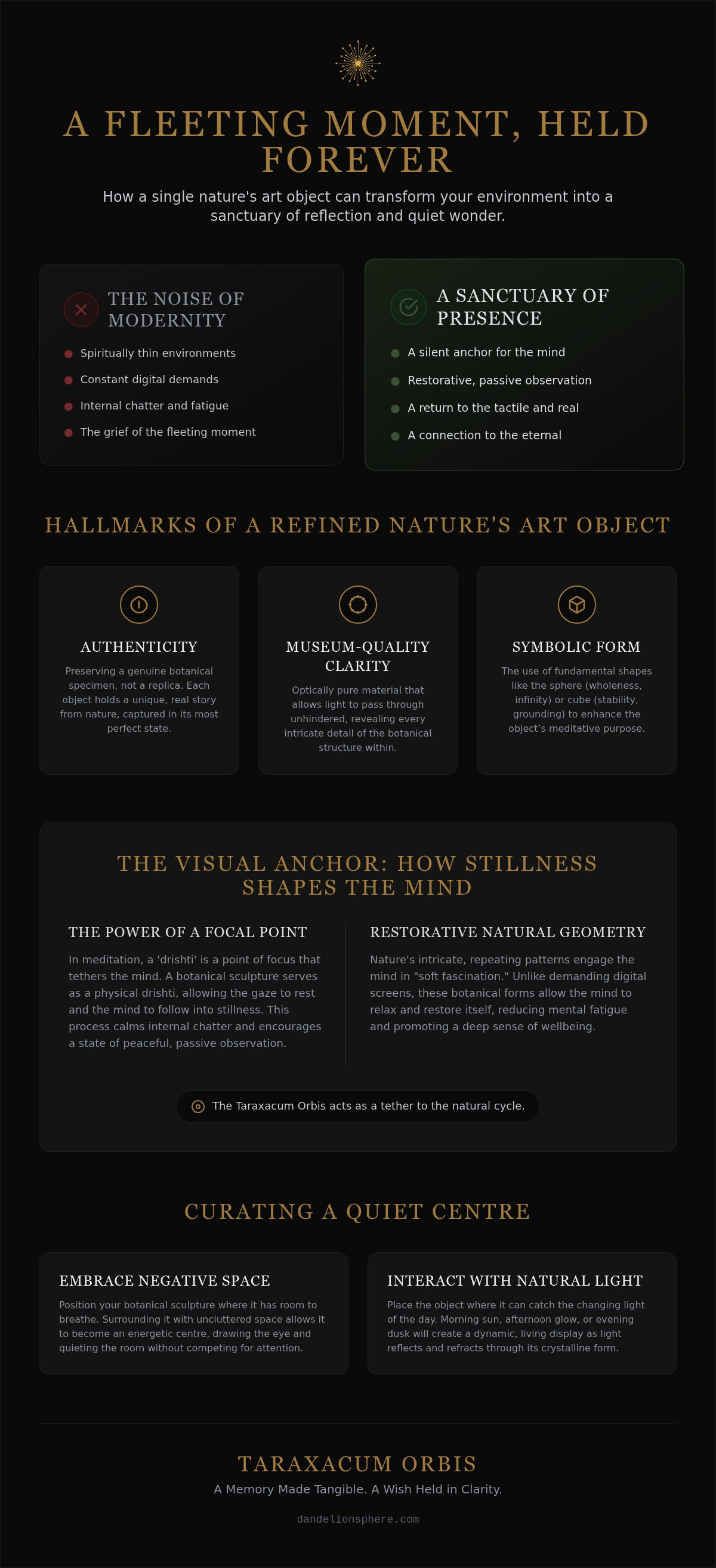
This article reveals how a single nature’s art object can transform your environment into a sanctuary of reflection and quiet wonder. We will explore how the Taraxacum Orbis acts as a tether to the natural cycle. A botanical orb is more than a sight. It is a ceremony. A collector's piece. It is a way of honouring the delicate.
It preserves a single, fragile second. Forever. We invite you to slow your pace. To breathe. To observe the intricate architecture of the wild. Find a window into the eternal. A way to hold the ephemeral. Still. Perfect. Serene.
Key Takeaways
- Discover how a nature’s art object acts as a silent anchor, transforming modern noise into a sanctuary of presence.
- Explore the restorative power of natural geometry and why the mind finds deep stillness in botanical patterns.
- Identify the hallmarks of refined contemplative art pieces, prioritising authenticity and the preservation of real botanical specimens.
- Learn to organise a dedicated space for reflection by embracing negative space around your botanical sculpture.
- Uncover the philosophy of the Taraxacum Orbis, where a single fleeting second is held in timeless clarity.
The Silence of Form: Understanding Meditative Art Objects
A meditative art object is a tether. It pulls the wandering spirit back to the now. It isn't a distraction. It's a focal point. A physical gravity. These objects encourage presence in a world that thrives on absence. Selecting one isn't about simple aesthetics. It isn't about matching a room's colour. It's about the capacity to quiet the mind. To stop the internal chatter. To find a place where the soul can rest.
The transition is subtle. It moves from external noise to internal stillness. Digital screens offer a false connection. They flicker. They demand attention. They exhaust. A botanical sculpture does the opposite. It stands. It waits. It offers a resting place for the eyes. It's a potent anchor. It's real. It's quiet. It's a way to engage with the practice of contemplation without the weight of digital fatigue. It's a return to the tactile. To the breath. To the silence found within the form.
The Art of the Wish: A Childhood Memory Suspended
We remember the dandelion. A gold sun in the grass. Then a silver ghost. We held them as children. We made a wish. We blew the seeds to the wind. It was our first lesson in the fleeting. In hope. In the ephemeral nature of life. To capture this state in a nature’s art object is to suspend time itself. It invites a sense of wonder that we often lose as adults. The wish is no longer scattered. It's held. It's tangible. It's a memory made physical. A wish held forever in clarity. It's a quiet dialogue with our younger selves. A moment of pure, suspended magic.
Beyond Function: The Purpose of a Collector’s Piece
There is a profound difference between a common object and a collector’s piece. One merely fills space. The other defines it. In a curated home, the philosophy is simple. Less. But better. Contemplative art pieces aren't mere additions to a shelf. They are energetic centres. A single botanical orb can transform the atmosphere of a room. It creates a dialogue between nature and the space it occupies. It's a quiet artisan’s story. It's a way to preserve the delicate. It's an intentional choice for a mindful life. It's the Taraxacum Orbis. A statement of intent. A commitment to finding beauty in the small. In the overlooked. In the eternal stillness of a single seed.
The Visual Anchor: How Stillness Shapes the Mind
In traditional meditation, the eye often seeks a drishti. A point of focus. This focal point is not a destination. It's a tether. It prevents the mind from drifting into the past or the future. These contemplative art pieces serve as that silent anchor. They provide a physical space for the gaze to rest. When the eyes find stillness, the mind follows. It's a psychological shift from active seeking to passive observing. The noise of the world fades. The internal landscape clears.
Nature provides the perfect map for this journey. It doesn't use straight lines or harsh angles. It uses fractals. Intricate, repeating patterns that the human brain is wired to recognise. This creates a state known as soft fascination. It's a restorative form of attention. Unlike a digital screen, which demands effort to process, a nature’s art object allows the mind to relax. This intentionality mirrors the Art of the Contemplative Commons, where space and object unite to foster deep wellbeing. A three-dimensional botanical sculpture offers a depth that flat imagery cannot reach. You can move around it. The perspective changes. The immersion is total. It exists in your physical world, not just on a surface.
The Geometry of Peace: Spheres and Cubes
Form carries meaning. The sphere is a symbol of wholeness. It has no beginning. It has no end. It reflects the infinite cycles of life and the earth. A botanical orb like the Taraxacum Orbis represents this perfect unity. It's the universe in a single seed head. Alternatively, a Dandelion Cube offers a different energy. The cube is a symbol of stability. It's grounded. It holds the ethereal, floating seeds within a structured frame. It's the grounding of a wish. Choosing a form is an act of intuition. You might seek the flow of the sphere or the solid peace of the cube. Each shape speaks to a different state of being. You can find the form that resonates with your spirit in our collection of nature’s art objects.
Light as a Medium: Reflections on Clarity
Clarity is the bridge between the viewer and the specimen. Every collector’s piece must possess museum-quality transparency. If the material is hazy, the connection is lost. Light must be allowed to penetrate the object. It must dance through the delicate parachutes of the dandelion. This creates a shifting landscape that changes with the hour. In the morning, the light is sharp. In the evening, it's golden. The Dandelion Globe becomes a living thing. Transparency is a symbol of openness. Of truth. There are no hidden corners. Just the fragile beauty of nature, held in a state of perfect, clear grace. It invites you to look closer. To see the detail. To find the wonder in the light.
Qualities of a Refined Nature’s Art Object
A refined object doesn't demand the eye. It waits. It rewards the patient observer with layers of hidden detail. Authenticity is the first pillar. A nature’s art object must contain the real. The once-living. This presence creates a bridge to the wild that a synthetic imitation cannot build. It's a fragment of the earth, held in a state of perfect preservation. It carries the weight of a life once lived in the sun.
Artisanship is the second pillar. It's the difference between a simple item and a collector’s piece. The finish must be flawless. Museum-quality clarity allows the eye to travel deep into the heart of the specimen. Minimalism ensures the form remains quiet. It doesn't clutter the space. It cleanses it. Finally, there is permanence. The ability to hold a fragile second indefinitely. This is the hallmark of truly refined contemplative art pieces. They are anchors that do not change. They do not fade.
Honouring Nature’s Design: The Botanical Specimen
The architecture of a dandelion seed head is a masterwork of natural engineering. Each parachute is a lesson in symmetry. In delicate strength. Preserved wildflower art connects us to the seasons whilst we remain still in our interior spaces. It's a reminder of the spring fields. The summer heat. The reverence required to capture this state is immense. One must handle the specimen with a hushed breath. Any disruption shatters the magic. It's a dialogue with the fragile. It's a way to keep the wild close, even amongst the stone and glass of the city.
The Artisan’s Touch: Beyond the Assembly Line
Creation is a slow, deliberate act. It mirrors the meditation it eventually facilitates for the owner. This contemplative art process ensures that every Taraxacum Orbis carries a specific energy. It isn't born on an assembly line. It's born in a studio of silence. Mass-produced items lack this resonance. They are hollow. They are loud. An artisanal botanical orb possesses subtle, unique marks of its natural origin. These aren't flaws. They are signatures of the individual specimen. They mark the piece as one of a kind. A story told in crystal and seed. A moment of truth, held forever.
Curating a Quiet Centre: Integrating Botanical Sculptures
Presence requires space. An object needs room to breathe. It isn't about filling a gap in a room. It's about creating a gap in the day. A sanctuary. Choose a spot where the world feels thin. Where the noise of the street doesn't reach. This is the home for your contemplative art pieces. They aren't mere additions to a shelf. They are invitations. To stop. To look. To be. The placement of a nature’s art object is an act of curation. It's a statement of intent. You're deciding that stillness matters. That the ephemeral deserves a permanent home.
Negative space is the secret. Don't crowd the botanical orb. Let the air around it feel heavy with silence. When an object is isolated, it gains weight. It becomes a gravitational force. It pulls the wandering eye back to the centre. This is how we organise a life. One quiet focal point at a time. It's a way to reclaim the domestic space from the clutter of the modern mind. It's a return to the essence of form.
A Dialogue Between Nature and Space
Placement is a silent conversation. Position your botanical sculpture where the morning light can find it. Watch the rays pierce the crystal. See the seeds glow. A desk becomes a place of peace. A bedside table becomes a portal to dreams. It's about the botanical interior accent. It bridges the wild and the domestic. It brings the meadow into the glass. The forest into the stone. Light is the medium that completes the work. It changes with the hour. It moves. It breathes. The collector’s piece responds to the rhythm of the sun. It reminds us that we, too, are part of that rhythm.
The Meditative Ritual: A Moment of Connection
A daily ritual grounds the soul. Sit. Breathe. Place the nature’s art object before you. Focus on a single seed. One tiny parachute. This is micro-meditation. It narrows the world until only beauty remains. The dandelion is a wise teacher. It speaks of the passage of time. Of the grace of letting go. It held the wind once. Now it holds the silence. Observe the intricate geometry. Notice the absolute stillness. This is the heart of contemplative art pieces. They are mirrors for our own inner quiet. A way to find the centre when the world feels off-balance. We learn to appreciate the delicate. We learn to value the fleeting. We learn to stay. Find your own anchor amongst our collection of botanical art objects and begin the ritual.
Taraxacum Orbis: A Fleeting Moment Held Forever
The journey toward stillness finds its physical home at the centre of the sphere. The Taraxacum Orbis is the final word in the dialogue between nature and the interior space. It's the ultimate meditative object. A botanical orb that holds an entire world within its crystal-clear walls. It captures the quiet alchemy of the dandelion. A specimen so fragile that a single breath would end its silver form. Yet, it remains. It's a collector’s piece designed to be a legacy of beauty. A quiet companion for a lifetime of reflection. It's a window into a world that doesn't rush. It's a way to hold the ephemeral. To keep the delicate from fading. It's a testament to the power of the small.
Amongst all contemplative art pieces, these are a favourite for those seeking a meaningful keepsake. They don't just fill a space on a shelf. They preserve a specific state of being. They hold a wish. They hold the memory of a summer field, long after the grass has turned. They hold the intent of the artisan who gathered the seed with a hushed breath. It's a gift of permanence in a world of the fleeting. For the self. Or for a loved one. It ensures that the delicate beauty of the natural cycle is never truly lost. The seasons turn. The world shouts. But inside the sphere, the silence is absolute. It's a sanctuary you can hold in your hand.
The Poetry of the Dandelion Sphere
Every handcrafted piece is a study in the Alchemy of Stillness. It's a unique second of nature’s artistry. No two seed heads are the same. Each has its own geometry. Its own story. Its own soul. This is the heart of the nature’s art object. We invite you to visit the Dandelion Sphere Journal for further reflection. There, you can explore the philosophy of the fragile. The power of the quiet. The way a single seed can change the energy of a room. It's a place to slow down. To absorb the message of the wild.
Choosing Your Sphere of Serenity
The choice is an act of intuition. The classic Dandelion Sphere offers wholeness. It's a botanical sculpture that feels infinite. It has no beginning. No end. The Dandelion Cube offers a different peace. It's a stable anchor. It grounds the ethereal seeds within a structured frame. It's a symbol of foundation. You can learn more by reading about the botanical art collector piece. When you're ready to select your anchor of peace, explore the Shop. Find the form that resonates with your spirit. The one that holds your moment. Still. Clear. Eternal.
Embracing the Eternal Now
Stillness is a choice. It's a practice. It begins with the objects we invite into our most sacred spaces. We've explored how contemplative art pieces serve as silent guardians. They bridge the gap between the wild meadow and the quiet room. Each piece captures a real dandelion seed head in perfect stillness. It's a museum-quality nature object for the discerning collector. Hand-finished with a commitment to clarity and timelessness. These sculptures are more than mere objects. They are anchors. They remind us of the beauty in the fleeting. They offer a moment to breathe. To stay. To find wonder in the delicate architecture of a single seed. It's a return to the essence of form. A way to hold the light. Forever. A way to remember the wish.
Explore our collection of Dandelion Spheres and find your centre.
May your environment become a sanctuary of quiet wonder. A place where the spirit finds its rest. May you find the peace you seek in the small. In the overlooked. In the eternal.
Frequently Asked Questions
What is a meditative art object?
A meditative art object is a physical anchor designed to call the spirit back to the present moment. It's a vessel for stillness. Unlike functional items, its sole purpose is to encourage a state of quiet observation. It acts as a bridge between the chaotic external world and the serene internal self. By holding the gaze, it allows the mind to settle into a rhythm of peace. It's an invitation to pause. To breathe.
How does a botanical sculpture help with meditation?
A botanical sculpture provides a natural drishti, or focal point, for the eyes. It uses the concept of soft fascination to restore mental energy. The intricate, fractal patterns found within real plant life engage the brain without exhausting it. This allows the observer to enter a flow state more easily. It's a tangible prompt for daily practice. It replaces digital noise with the hushed geometry of the earth. It grounds the meditation in the real.
Why are dandelions used in contemplative art pieces?
Dandelions are chosen for these contemplative art pieces because they represent the perfect union of the fragile and the eternal. They are symbols of childhood hope and the Art of the Wish. Their silver seed heads are notoriously ephemeral, lasting only a few seconds in the wind. By preserving them, we capture a moment of impossible delicacy. It's a lesson in holding the fleeting. It's a reminder of life's transitions and the beauty of the now.
Where should I place a meditative art object in my home?
Place your object in a space where the light can find it. A dedicated altar, a quiet bedside table, or a minimalist workspace are ideal. It needs negative space to breathe. Ensure it's positioned at eye level to encourage a natural, restful gaze. Avoid cluttered areas that compete for your attention. The goal is to create a zen focal point. A place where you can sit undisturbed for a few moments of reflection each day.
Can looking at nature art reduce stress?
Observing nature art has a documented restorative effect on the human psyche. It lowers the heart rate and reduces the mental fatigue caused by modern urban life. By focusing on the organic complexity of a real specimen, the mind shifts away from stressors. It enters a state of appreciative wonder. This connection to the natural world fosters a sense of belonging and permanence. It's a visual balm for the overwhelmed soul. A way to find calm.
How do I clean my botanical orb without scratching it?
Use only a soft, dry microfibre cloth to gently remove dust from your botanical orb. Avoid all chemical cleaners, soaps, or abrasive materials that might mar the museum-quality clarity. Handle the piece with clean, dry hands or soft cotton gloves to prevent oil transfer. Treat the object with the same reverence as a fine gallery sculpture. A light, circular motion is all that's required to maintain its timeless finish. Keep it out of direct, harsh sunlight.
Is a Dandelion Sphere suitable for a professional workspace?
A Dandelion Sphere is an exceptional addition to a professional environment. It acts as a silent guardian against the pressure of deadlines and digital clutter. In a space often defined by urgency, it provides a necessary counterpoint of stillness. It signals a commitment to mindfulness and high-end craftsmanship. It's a sophisticated nature’s art object used in contemplative art pieces to encourage brief intervals of micro-meditation. This practice can improve focus and foster a more intentional, calm approach.
What makes a nature’s art object a good gift for a nature lover?
A nature’s art object is a profound gift because it offers the impossible: a piece of the wild, held forever. For those who find solace in the meadows and forests, it's a way to bring that peace indoors. It's a handcrafted collector’s piece that honours the delicate architecture of the earth. It speaks of a shared appreciation for the ephemeral. It's a meaningful keepsake that celebrates life's cycles. It's a wish, preserved in clarity. A timeless legacy.
Disclaimer
The content on this website is provided for inspiration and informational purposes only. Articles reflect the philosophy and storytelling of Dandelion Sphere and are not intended as professional advice. While every effort is made to ensure accuracy, no guarantees are given regarding completeness or current applicability.


