

Could a shaft of afternoon light slowly alter a moment of summer, held within a clear form? Does resin art fade in sunlight? It can: prolonged exposure may gradually affect a botanical’s colour or the clarity and surface appearance of the material around it. The extent of any change varies from piece to piece.
That doesn’t mean a bright home is no place for botanical art. It means the position matters. A sunny windowsill and a softly lit shelf offer different conditions, and no display can promise that nature will remain untouched by time.
Here, you’ll find practical ways to assess direct sun, bright windows and everyday indoor light, then choose a more considerate place for a botanical piece. The aim is not to keep time still, but to care for a fleeting moment as it becomes part of your home.
A Dandelion Sphere holds a real dandelion within a clear form, a quiet reminder of nature’s artistry. Thoughtful placement lets it remain part of your days without promising that its appearance will never change.
Key Takeaways
- Sunlight may gradually alter colour, clarity or surface appearance, though the extent of change varies between pieces.
- Ultraviolet light can contribute to gradual change, and the flower and the material around it may respond differently.
- Direct sun, indirect daylight and a shaded interior offer different display conditions.
- Observe how daylight moves through your home, choose a position outside prolonged direct sun and reassess it as the seasons change.
- A Dandelion Sphere holds a real dandelion in a clear form. Thoughtful placement honours the moment without promising it will never change.
Does sunlight fade botanical art? The honest answer
A dandelion’s pale seeds seem to hold a little light of their own. Yet a preserved moment is not untouched by the world around it. Sunlight may gradually affect a botanical piece’s appearance, but neither change nor complete stability can be promised. Exposure and materials both matter.
The flower and the clear material around it may not respond to light in the same way. The dandelion’s natural colour may soften, while the surrounding form may look different in clarity or sheen. The pace and extent of any change cannot be assumed from one piece to another.
Here, fading is a broad term. It might mean a change in the botanical’s colour, a loss of clarity in the surrounding material, or a difference in how the surface catches light. These are possible changes, not a fixed sequence or a certainty. The Conservation and restoration of paintings offers a wider perspective on how light can affect the appearance of art materials.
What does fading look like in a botanical piece?
The dandelion’s fine strands may seem less distinct, or its soft ivory tone may look different from its original colour. Yellowing describes a warmer cast; cloudiness is a loss of transparency; fading usually refers to colour becoming less vivid. These are different visual changes, not interchangeable terms.
Look at the piece in consistent light. A shift in appearance alone cannot reveal its precise cause. Reflections, dust, the angle of observation and changes in surrounding light can all affect what the eye perceives. One glance cannot tell you exactly what has changed, or why.
Does every bright room pose the same concern?
No two bright rooms are quite alike. A direct sunbeam resting on a shelf differs from a softly lit room where daylight is diffused. Ultraviolet radiation, an invisible part of sunlight, can contribute to gradual change in some materials. How much light reaches a piece depends on more than whether a room feels bright.
Consider where the sun falls through the day, how its path shifts with the seasons, and how long the piece sits in direct light. A position beside a window may receive a passing beam in one season and a longer stretch in another. There is no universal safe duration for every piece or home. Notice the light as it moves, then choose a place where the preserved dandelion can be seen without sitting in strong, direct sun.
Why sunlight can change colour and clarity over time
A preserved dandelion holds the hush of a meadow, yet light continues to meet it where it rests. Over time, this contact may leave a trace. Light can gradually alter some materials, though not every botanical piece will visibly change. What the eye notices depends on the flower, the clear material around it and the conditions in which the piece is displayed.
Sunlight and the light we see
Sunlight carries more than the brightness visible to us. Some parts cannot be seen, yet may still affect certain materials over time. A room that appears bright does not reveal exactly how much of this less visible light reaches a particular surface. Nor does a dimmer-looking room tell the whole story. The path of daylight, the position of the piece and the materials themselves all play a part.
Light’s influence can build gradually, rather than appearing after one sunny afternoon. The Library of Congress guidelines on limiting light damage offer useful context on caring for collections through thoughtful display and storage. They provide general guidance, not a prediction of how a particular botanical object will look over time.
This possibility is not a reason to fear every bright room. It is a reminder that light is one influence among several. The length and kind of exposure matter, as do the qualities of the object itself. A piece in a softly lit room has a different experience from one that regularly sits in a strong beam, but no simple rule describes every home or every botanical piece.
Why the flower and its clear surroundings may differ
A botanical piece brings together two distinct elements: the flower, with its natural colour and delicate form, and the clear material that holds it. They need not respond to light in the same way. The flower’s tones may alter while the surrounding form appears much as before; alternatively, the clear material may look different while the flower seems unchanged. There is no fixed order.
Each flower carries its own natural variation, and the surrounding material has its own qualities. Appearance is also shaped by the conditions around the piece: how the light reaches it, how often it does so and how those patterns shift over time. For that reason, appearance alone cannot explain exactly what caused a change. It can only invite closer, gentler attention.
Light exposure, material composition and time all influence how a botanical piece may change. The balance is particular to each piece. If you are drawn to botanical art objects that hold a real dandelion in a clear form, you can view the Dandelion Sphere collection with this understanding: preservation honours a fleeting moment without placing it beyond time.
Direct sun, bright windows and display choices compared
A room can be full of daylight and still have quieter places within it. The distinction is not simply between light and darkness, but between a steady sunbeam and the softer brightness that fills a room. Avoiding prolonged direct exposure is a sensible precaution, not a guarantee against change.
| Display position | Likely exposure | Practical concern | Considerate placement |
|---|---|---|---|
| Sunny windowsill | May receive direct sun for part of the day | Repeated or lengthy sunbeams bring more direct light to the piece | Choose a spot set back from the beam |
| Bright room, indirect daylight | Daylight reaches the room without falling directly on the piece | Light conditions still shift with the season and time of day | Place it where the sun does not rest directly |
| Shaded interior shelf | Less direct daylight | Appearance may still change over time | Keep it visible in a calm, sheltered position |
This table offers general guidance, not a promise that a particular position will prevent every change. The room, its windows and the piece itself all matter. Use it to notice the quality of light before choosing where a botanical moment will live.
What changes beside a sunny window?
A direct beam can settle on a displayed piece for hours, then return on successive days. Sunlight does not stay still: it travels across a room as the day passes, and its path shifts with the seasons. A shelf that seems shaded in the morning may catch the afternoon sun later on.
Before choosing a permanent position, observe the room at different times of day. Notice whether a clear patch of sunlight reaches the surface, and whether the pattern changes as the day passes. A brief look on one occasion may not show the full rhythm of the light.
Choosing a calmer place to display botanical art
A shelf, side table or other surface away from prolonged direct sun can offer a more considerate setting. A naturally bright room need not be ruled out: a position further from the window, or outside the sun’s path, may still let the piece sit within gentle daylight.
Think of the display as part of the room’s quiet composition. Consider where the light rests, what draws the eye, and how the piece sits among the objects around it. For a reflection on placing botanical art within a considered interior, read the botanical interior accent.
There is no need to treat light as an emergency. Simply notice its daily passage and choose a place where a preserved dandelion can be appreciated without sitting for long periods in direct sun. The aim is thoughtful care: not to hold time still, but to let a fleeting moment remain part of the home.
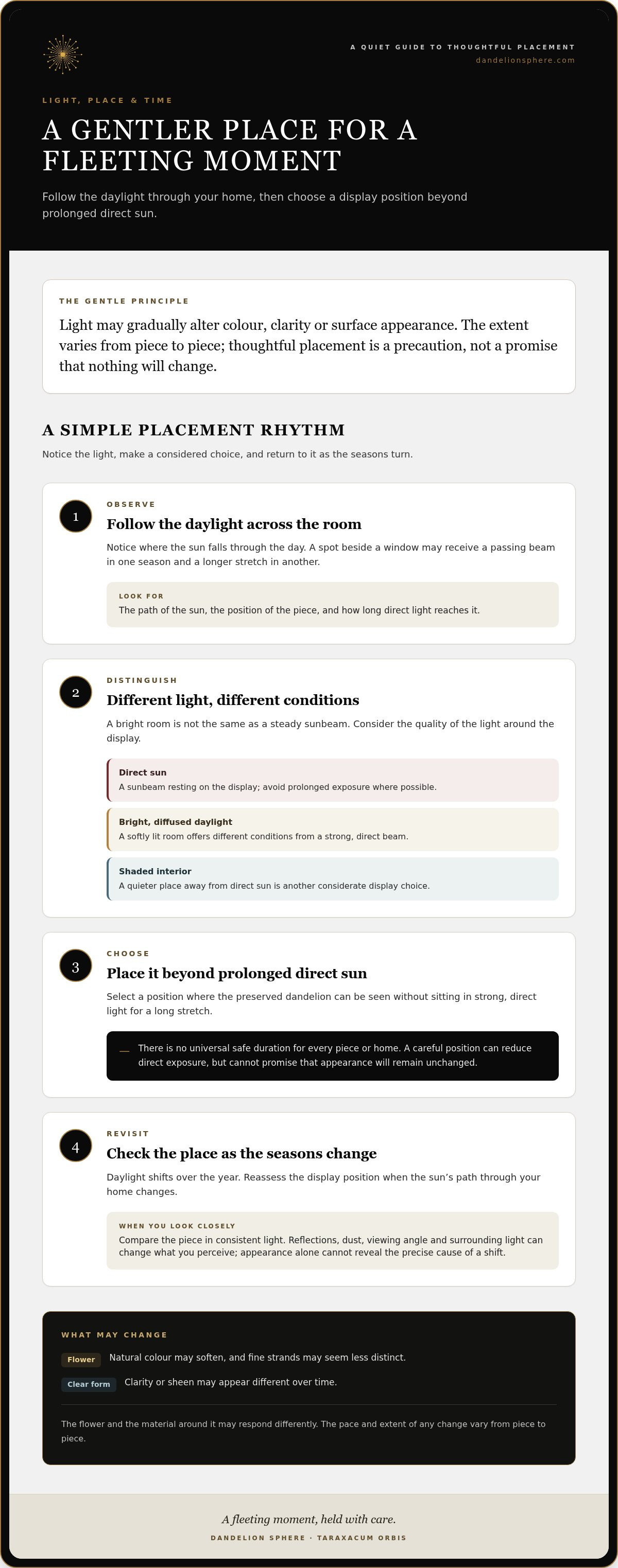
How to care for a botanical orb without fear of light
Care need not become a vigil. A botanical orb can sit in a much-loved room, seen and enjoyed, while its position is chosen with a little attention. The aim is not to keep every trace of time away. It is to avoid leaving the piece for long stretches in direct sun, and to respond calmly as the light changes.
A simple display check through the seasons
Try this gentle routine. It asks for observation, not constant adjustment. A few quiet checks can help you understand how daylight moves through your home and whether the chosen surface remains a considerate place.
- Observe the light. Notice whether a direct sunbeam reaches the surface at different times of day. Look beyond the moment you usually pass through the room; the sun may cross the space later.
- Select a position. Choose a shelf or surface outside prolonged direct sunlight. A bright interior can still have softer places, further from the window or beyond the sun’s path.
- Reassess with the seasons. As daylight shifts over the year, look again at the piece’s surroundings. If extended direct exposure becomes part of its daily setting, move it to a calmer position.
There is no need to measure every passing beam or treat a sunny afternoon as an emergency. Notice what reaches the piece during ordinary days. A position that feels gently lit now may receive more direct sun as the seasons turn, so occasional awareness is more useful than assuming the room will always remain the same.
Preservation, care and the limits of permanence
Preservation holds a natural moment close. It does not remove that moment from time or promise that its appearance will never change. Thoughtful placement can reduce direct exposure, but cannot guarantee an unchanged future. This is not a reason to hide a botanical piece away; it is an invitation to let care and enjoyment sit beside one another.
A collector’s piece gathers meaning through the life around it: the room it inhabits, the changing light and the memories it brings back. Caring for it can be as simple as noticing where it rests and making a considered choice when its surroundings change. For a wider reflection on living with collected botanical art, visit the Dandelion Sphere journal.
A Dandelion Sphere contains a real dandelion held within a clear form, a fleeting moment made tangible. Let it be part of the room, not a source of worry. A considered position allows you to enjoy its delicate presence while being mindful of direct sunlight.
A fleeting moment, held with care: Dandelion Sphere
A dandelion’s season is brief. One day, its seed head is whole; then a breath of wind carries its delicate seeds elsewhere. We remember such moments not because they lasted, but because they touched something in us. A preserved dandelion offers another way to pause with that memory, while leaving room for the truth that time continues.
The poetry of nature’s changing forms
Perhaps you remember making a wish over a dandelion as a child, watching its seeds scatter into summer air. The act was small; the hope it carried was not. In a Dandelion Sphere, a real dandelion is held within a clear form, inviting the eye to linger on the fine structure of a flower that once belonged to an open field.
It is a moment gathered, not a promise that every trace of change can be kept away. Light and time remain part of the story. Thoughtful placement is a quiet gesture of care: a way to let the botanical be seen while being mindful of where it rests. Its meaning need not depend on perfect stillness. There is poetry, too, in knowing that preservation honours a fleeting form without denying nature’s passage.
A botanical object for a considered collection
Dandelion Sphere creates botanical art objects with real dandelion flowers. Each sphere offers a quiet reminder of nature’s detail: the delicate spokes of the seed head, its airy balance and the chance encounter of a flower in bloom. It can sit among collected objects as a small point of stillness, gathering personal meaning through the memories it calls forth.
The name Taraxacum Orbis is associated with Dandelion Sphere, joining the familiar flower to the idea of a world held in a single form. Not a world beyond time, but a small nature’s art object that brings the turning seasons to mind, even on an ordinary day indoors.
Knowing how light may affect a botanical piece can make its care feel less uncertain. Choose a thoughtful place, notice how the room changes, and let appreciation take the lead rather than worry. A collected piece need not remain untouched by time to be meaningful. Sometimes its quiet presence is enough: a wish carried by the wind, remembered long after the meadow has changed.
To spend a moment with these botanical forms, view the botanical spheres.
Make space for a moment that matters
Some objects ask for more than a place on a shelf. They invite us to remember a season, a wish, or the small wonder of finding a dandelion in the grass. Caring for one can begin with a simple choice: giving it a place in your home where it feels at ease, and where you can pause to notice it.
The question “does resin art fade in sunlight” can open onto a more personal one: what would you like this piece to bring to mind each day? Not perfect stillness, but a moment of nature held close. A quiet presence. A little space for memory to gather.
Dandelion Sphere’s botanical art honours that fleeting beauty, allowing a real dandelion to become part of a considered collection. A small piece of nature can bring a lasting sense of wonder to the everyday.
If you feel drawn to such a reminder, explore the Dandelion Sphere collection.
Frequently Asked Questions
Does sunlight fade botanical art?
Sunlight may gradually alter botanical art, though the extent and appearance of any change vary. To notice subtle differences over time, take a photograph in soft, consistent light and keep it as a personal reference. Avoid comparing images taken under different bulbs or at different times of day, as changes in illumination can make colours appear different.
Can sunlight make clear art turn yellow?
It can contribute to a warmer or yellowed appearance in some clear materials, but that change is not certain for every piece. Reflections from nearby walls, warm-toned lamps or the colour of a surface beneath the object can also influence what you see. Look at the piece in neutral daylight against a plain background before deciding whether its appearance has shifted.
How do I protect botanical art from sunlight?
Choose a place where direct sun does not regularly fall, such as an interior shelf rather than a windowsill. Before settling on the spot, consider how the room is used: a table beside a window may be moved nearer the glass during cleaning or rearranging. A position set back from the window makes thoughtful display part of the room’s usual arrangement.
Does indirect sunlight damage preserved flowers?
Indirect daylight is less direct exposure than a sunbeam falling on the piece, but it does not promise that its appearance will never change. Light can still reach a display from a bright window, even when the sun does not fall directly on it. For a quieter setting, choose a position where daylight is softened by distance or a curtain, while keeping the piece visible and enjoyed.
Can heat affect a botanical piece displayed near a window?
It may. A sunny window can become warm as well as bright, adding to the conditions a botanical piece experiences. Notice whether the surface feels particularly warm during the day, and consider moving the piece away from both the glass and nearby heat sources such as a radiator. A comfortable room position is preferable to one exposed to concentrated warmth.
Will a preserved dandelion stay unchanged forever?
No one can promise that a preserved dandelion will remain exactly as it is forever. Its natural beauty is held in a moment, but the flower and the materials around it remain part of a changing world. Care can express appreciation without demanding perfect permanence. Let the piece bring a little wonder to your home, and allow its meaning to live in memory as much as in appearance.
Disclaimer
The content on this website is provided for inspiration and informational purposes only. Articles reflect the philosophy and storytelling of Dandelion Sphere and are not intended as professional advice. While every effort is made to ensure accuracy, no guarantees are given regarding completeness or current applicability.


