
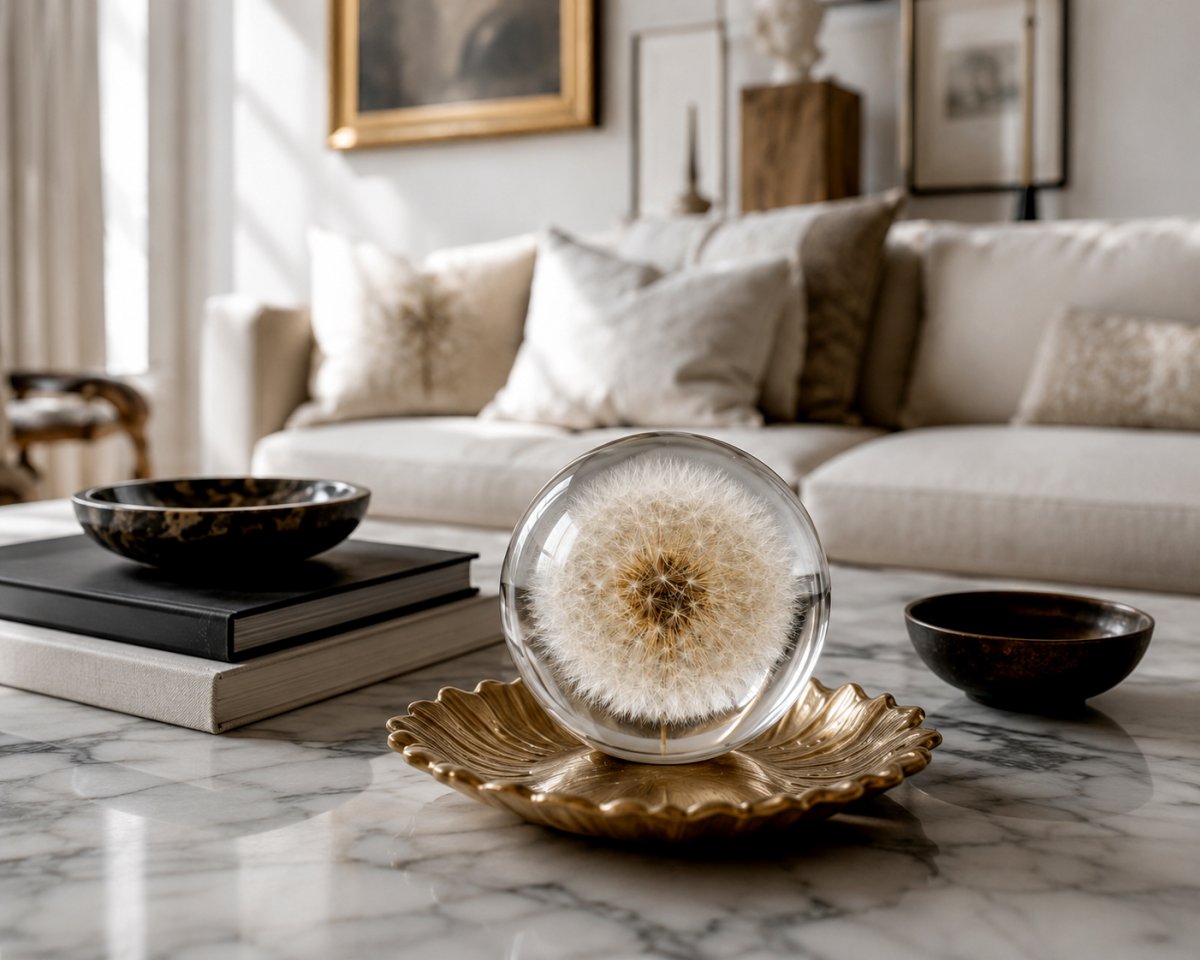
The Ephemeral Meadow: The Allure of Nature's Artistry
There is a memory of a sun-drenched meadow that lives in the mind. The hum of unseen life, the warmth of the air, the particular gold of the light just before dusk. At the centre of this memory is the delicate architecture of a dandelion seed head—a perfect sphere of potential, a clock telling the time of the season. It is a thing of such fleeting perfection that to touch it is to destroy it. To breathe near it is to release its hold on the present.
This feeling is universal. The quiet desire to capture the passing seasons, to hold a single, perfect breath of summer in our hands long after the meadow has faded. We seek to bring fragments of the wild outside into the sanctuary of our homes, not as trophies, but as companions. This art form serves as a bridge between these two worlds. It is an invitation to pause, to look closer, and to appreciate nature’s quiet artistry, which forms the very foundation of this aesthetic. It is more than an object; it is a held moment, a silent story of sun and earth.
A Moment Suspended in Time
We live in a world defined by impermanence. Seasons turn, flowers bloom and wither, moments arrive and are gone. It is a beautiful, yet poignant, reality. This is why we seek to freeze time, to hold onto the moments that stir something within us. A botanical orb is a physical vessel for such a memory. It is the childhood wish made on a dandelion clock, now held in a state of eternal stillness. It is the quiet of the meadow, captured. This art form is the alchemy of stillness for the modern interior.
The Shift Towards Biophilic Living
In our increasingly digital lives, there is a deep, instinctual need to reconnect with the natural world. This is the heart of biophilic living—the idea that bringing natural wonders into our homes and workspaces can have profound psychological benefits. A botanical sculpture is a focal point for this connection. The simple act of observing a perfectly preserved seed head, with each tiny parachute poised for a flight that will never come, has a remarkably calming effect. It stills the mind. In a world of noise and haste, fine botanical art creates a serene, mindful atmosphere, reminding us of a slower, quieter rhythm that exists just beyond our walls.
Nature’s Quiet Artistry: The Essence of Botanical Preservation
The journey of a botanical sculpture begins not in a workshop, but in the wild. It is an act of discovery, of finding the one specimen that tells the most compelling story. From the meadow to the studio, the entire process is one of hushed reverence. It is a meticulous act of storytelling, not of manufacturing. Each natural wonder is treated with the care of a rare manuscript, its fragile form honoured and preserved for a future it was never meant to see.
The aim is always to present the specimen as if it were still breathing the meadow air. This requires a medium of absolute purity. A crystal clear botanical sculpture must be flawless, as any imperfection would distract from nature’s intricate design. The clarity is not merely a technical achievement; it is an act of respect, a way of honouring the wild perfection of the original bloom and ensuring its story is told without interruption.
The Poetry of the Seed Head
Look closely at the seed head of a dandelion. It is a marvel of natural engineering, a perfect sphere of delicate geometry. Each seed, with its fine pappus, is a masterpiece of form and function. To preserve this structure intact is a profound challenge. The fragility of the specimen demands a level of patience and skill that borders on meditation. The process cannot be rushed; it is a slow, deliberate collaboration between the artisan and the specimen. There are no technical shortcuts, only a deep understanding of the material and the moment. The goal is to capture the seed head as it is, held in a state of grace, suspended in clarity for all time.
Honouring the Specimen
Only the finest, most flawless specimens are chosen to become a collector’s piece. They are gathered at the peak of their transient beauty, often in the quiet hours of the early morning before the wind has a chance to carry their seeds away. Once preserved, the visual effect is mesmerising. As light passes through a perfectly clear sphere, it illuminates every filament of the seed head, casting intricate shadows and revealing details invisible to the naked eye in the wild. The object becomes a lens, focusing our attention on the profound beauty of a single, humble weed. It is a dialogue between the ephemeral and the eternal, a story of a single life held forever. To understand this delicate balance is to appreciate the true poetry of the preserved dandelion sphere. You can explore this narrative further in our journal, A Breath Held Forever.
A Gallery of Seconds: Selecting a Museum-Quality Nature Object
In a marketplace filled with fleeting trends, it is important to understand the distinction between a simple craft item and a true statement object. A museum-quality botanical sculpture is not an accessory; it is a piece of fine art. It possesses a certain gravity, a presence that commands a quiet corner of a room and invites contemplation. When selecting such a piece, the discerning eye looks for the soul of the artisan—the invisible hand that guided the specimen into its final, perfect state.
The weight of the object, its flawless finish, and the life captured within it are all hallmarks of quality. It should feel substantial, timeless. It is an investment in stillness, a piece that will not fade with the changing seasons of interior fashion but will instead become a cherished heirloom, a gallery of a single, perfect second passed down through generations.
The Importance of Optical Clarity
The single most important characteristic of a fine botanical sculpture is its optical clarity. A complete absence of bubbles, dust, or haze allows the eye to focus entirely on the botanical detail within. This crystal-clear finish is the result of a painstaking, multi-stage process that cannot be replicated in mass production. It is this purity that transforms the object from a curiosity into a piece of art. Lesser, cloudy alternatives, often found amongst mass-market goods, obscure the very beauty they claim to preserve. True clarity ensures the piece remains a timeless decorative sculpture for decades, its internal world untroubled by the passage of time.
Artistry vs. Production
There is a vast difference between a mass-produced souvenir and a handcrafted nature sculpture. One is a product; the other is a story. A handcrafted object is born from a singular vision. Each one is unique, as no two dandelions are ever identical. The artisan honours this individuality, working with the specific form of the plant to create a composition that feels both deliberate and entirely natural. This focus on unique, one-of-a-kind specimens and limited editions is what elevates the work to the level of a collector’s piece. It is the celebration of a single, unrepeatable moment in nature’s vast and beautiful history. Our Checklist for Curating Eternal Summer offers further guidance on selecting a piece with true artistic merit.

Harmonising the Home: Integrating Botanical Art for Interior Serenity
A fine botanical art object does more than simply occupy space; it creates it. Placed with intention, it can establish a quiet centre in a room, a point of focus that draws the eye and calms the spirit. The true art of placement lies in understanding the dialogue between light, space, and the preserved meadow held within the sphere. The goal is not to fill a space, but to give it breath. Minimalist styling is key—allowing one significant object to stand alone on a mantelpiece, a bookshelf, or a desk, rather than cluttering it with lesser things. In this way, the sculpture becomes more than a beautiful object; it becomes a conversation piece that invites reflection and a deeper connection to the natural world.
Sculpting with Light
Light is the final, essential element in bringing a botanical sculpture to life. Placing a botanical orb near a window allows the changing light of the day to interact with it in a dynamic, ever-shifting performance. In the morning, the sun’s rays will pass through the sphere, illuminating the delicate seeds and casting a bright, focused circle of light on the wall behind. As the day progresses, the shadows and reflections created by the sphere will move and change, marking the passage of time. In this way, light breathes life back into the preserved specimen, animating its stillness and connecting your interior space with the cycles of the world outside.
The Minimalist Centrepiece
A single, powerful statement object can anchor an entire room. Placed in the centre of a desk or a mantelpiece, a botanical sculpture can create a focal point for mindfulness and calm. It serves as a gentle reminder to pause, breathe, and appreciate the beauty in simplicity. The clarity of the sphere pairs beautifully with the textures of natural materials. Consider placing it on a surface of reclaimed wood, a slab of cool slate, or alongside a simple ceramic vessel. This contrast of textures—the organic warmth of the wood against the cool, smooth perfection of the sphere—creates a rich, tactile experience that is both sophisticated and deeply serene. This approach is particularly effective in creating The Serene Workspace, a place for focus and quiet contemplation.
The Taraxacum Orbis: A Collector’s Piece of Eternal Summer
At the Dandelion Sphere studio, we are dedicated to the poetry of the brief. We believe that the most profound beauty is often found in the most fleeting of moments—a single dandelion seed head, perfect for only a day. Our work is a quiet meditation on this idea. Each Taraxacum Orbis we create is a fragment of summer made tangible, a moment of wild, untamed beauty captured with hushed reverence.
Our commitment is to honour the specimen above all else. We see ourselves not as manufacturers, but as curators of the meadow. We invite you to become a curator of your own quiet moments, to find a piece that speaks to a memory, a feeling, or a wish you once made on a summer’s afternoon.
A Legacy of Bloom
The dandelion is more than a flower; it is a symbol of resilience, of hope, of the childhood magic of making a wish. To hold a Dandelion Sphere is to hold that wish forever. This deep emotional significance makes the sphere a uniquely meaningful gift for life’s most delicate milestones—a birth, a union, a quiet remembrance. They are not mere objects, but vessels of meaning. We refer to our pieces as Museum-Quality Nature Objects, created for the discerning collector who seeks not just beauty, but a story and a soul in the objects they choose to live with.
Begin Your Collection
We invite you to explore the Dandelion Sphere Shop to find a unique companion for your home. Each piece is a one-of-a-kind sculpture, a silent poem written by the sun and the wind, now waiting to continue its story with you. For more reflections on nature, time, and the art of preservation, we encourage you to visit our Journal.
A breath held forever. A wish that never fades.
Reflections on a Held Moment: Frequently Asked Questions
We receive many thoughtful questions about our botanical sculptures. Here, we offer a few reflections on the most common enquiries.
- How is a real dandelion preserved inside a botanical orb without falling apart? The preservation of such a delicate specimen is a slow, multi-stage process rooted in patience and reverence. Before it is ever encased, the dandelion seed head undergoes a careful stabilisation treatment to fortify its fragile structure. This is done with meticulous care to ensure every seed and filament remains perfectly in place. The process is a quiet art, a gentle negotiation with nature to persuade a fleeting moment to last forever.
- Will the dandelion seeds change colour or fade inside the sculpture over time? No, they will not. Once sealed within the crystal-clear medium, the dandelion is protected from the elements that cause decay and fading, such as oxygen and UV light. The colours and intricate details are held in a state of suspended animation, ensuring the sculpture remains as vibrant and detailed decades from now as it is today. It is a fragment of summer, shielded from the passage of seasons.
- Is a botanical sculpture suitable for a minimalist interior? It is not only suitable; it is ideal. The philosophy of minimalism is about finding profound beauty in simplicity and intention. A single, perfectly preserved botanical sculpture embodies this. Its clean lines and natural subject matter create a point of serene focus without adding clutter. It is an object that does not shout for attention but rather invites a quiet moment of contemplation, making it a perfect centrepiece for a minimalist space.
- What is the best way to clean and care for a fine botanical art object? Care is as simple as the object itself. To maintain its crystal clarity, gently dust the surface with a soft, clean microfibre cloth. Avoid using harsh chemical cleaners or abrasive materials, as these can damage the flawless finish. Treat it as you would any piece of fine art—with a light and gentle touch.
- Can these nature-inspired sculptures be used as a unique memorial gift? Yes, and they are often chosen for this very purpose. A dandelion seed head represents the beautiful cycle of life, release, and the continuation of spirit. Encased in a timeless sphere, it becomes a poignant and elegant symbol of eternal remembrance—a wish for peace, a beautiful life celebrated, and a memory held forever. Its silent, enduring presence can offer a quiet comfort in a time of loss. For those seeking such a piece, our journal on selecting a thoughtful memorial gift may offer solace and guidance.
- What makes a handcrafted nature sculpture different from a mass-produced item? The difference lies in intent and soul. A mass-produced object is an identical copy, lacking a unique story. A handcrafted botanical sculpture is a singular collaboration between an artisan and a specific, one-of-a-kind natural specimen. It contains the subtle imperfections and perfect asymmetries of a life lived in the wild. It holds the energy of the meadow and the focused, reverent attention of the person who preserved it. It is not a product; it is a presence.
- How does light affect the appearance of a crystal clear botanical sculpture? Light transforms the sculpture from a static object into a dynamic piece of art. It acts as a key, unlocking the intricate details within. Direct sunlight will make the seed head glow from within, casting sharp, beautiful caustics and shadows that dance across a room. Softer, ambient light will give it a more gentle, contemplative quality. Throughout the day, as the light changes, the sculpture offers a continuously evolving perspective on the natural wonder held inside.
Disclaimer
The content on this website is provided for inspiration and informational purposes only. Articles reflect the philosophy and storytelling of Dandelion Sphere and are not intended as professional advice. While every effort is made to ensure accuracy, no guarantees are given regarding completeness or current applicability.


